
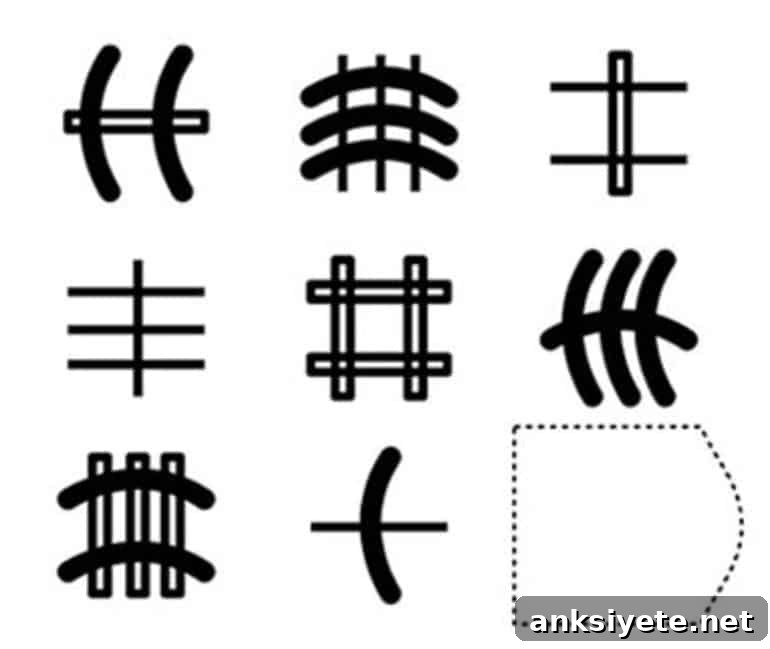
Summary: Recognizing when your thinking is going astray is a key skill for solving complex problems.
Source: University of Washington
Ever get stuck on a puzzle?
You search for a pattern or a rule and can’t quite find it, so you step back and try a different approach. New research from the University of Washington suggests that this moment—realizing your current strategy isn’t working and shifting course—is a critical part of effective problem-solving.
Researchers combined behavioral testing with a computational model and functional MRI (fMRI) scans to examine how people reason and make decisions when presented with visual intelligence puzzles. The team recruited roughly 200 participants and used a standard set of matrix puzzles to study the mental steps involved in discovering the correct solution.
“There are two fundamental ways your brain can steer you through life — toward things that are good, or away from things that aren’t working out,” said Chantel Prat, associate professor of psychology and co-author of the study published Feb. 23 in the journal Cognitive Science. “Because these processes are happening beneath the hood, you’re not necessarily aware of how much driving one or the other is doing.”
Using a decision-making task developed by Michael Frank at Brown University, the researchers measured how each person’s brain balanced two complementary learning behaviors: moving toward rewarding options and avoiding less-rewarding ones. Their main goal was to understand which of these tendencies best predicts success at complex reasoning.
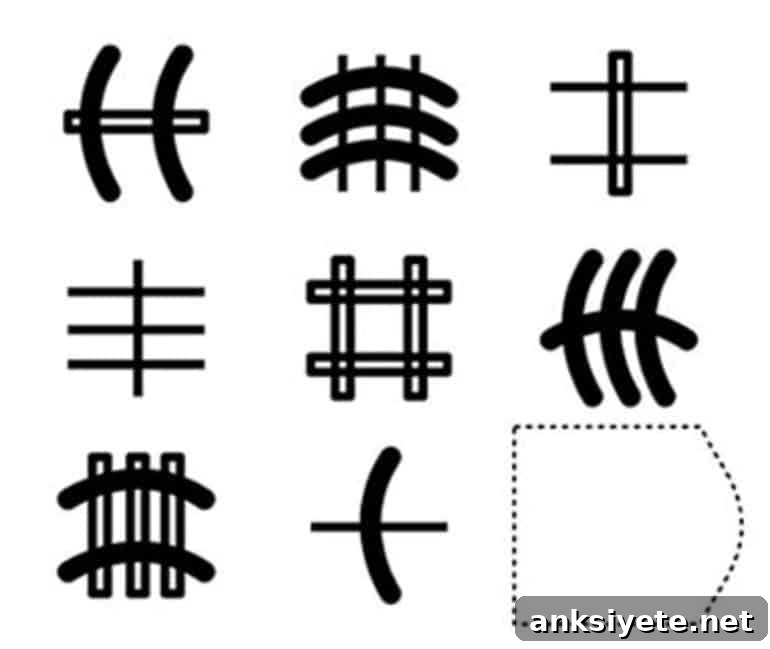
The team built a computational model describing the sequence of steps they believed people perform when solving Raven’s Advanced Progressive Matrices (Raven’s), a widely used test of nonverbal reasoning. The model breaks the problem-solving process into four core stages:
- Spot a key feature or element in the pattern;
- Determine where that feature appears across the sequence;
- Formulate a rule that changes or manipulates the feature;
- Test whether the rule consistently explains the whole pattern.
At each stage the model checks whether the current rule or strategy is yielding progress. When tested on actual Raven’s problems, the model performed best when it could abandon features and approaches that failed to advance understanding. In other words, the ability to detect that one’s “train of thought is on the wrong track” was essential for finding the right answer.
To see whether these computational findings matched human behavior, the researchers ran three experiments with different participant groups. In the first experiment, participants completed the full Raven’s test on paper while also taking Frank’s decision-making task, which separately measures the ability to “choose” good options and to “avoid” bad ones. Results showed that performance on the Raven’s puzzles correlated with the ability to avoid worse options, but not with the ability to identify the best option on the decision task.
The second experiment used a shorter, computerized version of the Raven’s task suitable for an MRI environment. This experiment confirmed the earlier finding: people who were better at avoiding poor choices in the decision task also tended to be stronger problem solvers on the matrix puzzles.
The third experiment recorded brain activity with fMRI while participants solved the computerized puzzles. Guided by the computational model, the researchers examined which neural pathways predicted better problem-solving. Their analysis highlighted the basal ganglia — described by Prat as an “executive assistant” to the prefrontal cortex, the brain’s executive center.
The basal ganglia support the prefrontal cortex through parallel pathways: one pathway amplifies signals judged relevant, and the other suppresses signals deemed irrelevant. These ‘turn up’ and ‘turn down’ mechanisms map onto the decision task’s “choose” and “avoid” behaviors. fMRI results indicated that participants who more effectively engaged the pathway that suppresses unhelpful information tended to solve the puzzles more successfully.
“Our brains have parallel learning systems for avoiding the least good thing and getting the best thing,” Prat explained. “Much research emphasizes how we learn to seek rewards, but avoiding poor options is just as important—sometimes even more so. For complex problem-solving, knowing what to reject can be more critical than immediately recognizing what’s working.”
Co-authors of the study include Andrea Stocco, associate professor, and Lauren Graham, assistant teaching professor in the UW Department of Psychology. The research was funded by the UW Royalty Research Fund, a UW startup fund award and the Bezos Family Foundation.
About this cognition research news
Source: University of Washington
Contact: Kim Eckart – University of Washington
Image: The image is credited to UW Department of Psychology
Original Research: Closed access.
“Individual Differences in Reward‐Based Learning Predict Fluid Reasoning Abilities” by Andrea Stocco, Chantel S. Prat, Lauren K. Graham. Cognitive Science (DOI: 10.1111/cogs.12941)
Abstract
Individual Differences in Reward‐Based Learning Predict Fluid Reasoning Abilities
Reasoning and problem-solving in novel situations, as measured by Raven’s Advanced Progressive Matrices (RAPM), predict performance across cognitive tasks and real-world outcomes. This study presents evidence that RAPM success depends on the ability to reallocate attention based on internally generated feedback about progress. The authors propose that the basal ganglia nuclei—structures linked to reward processing and cognitive control—support this capacity.
The hypothesis was implemented in a neurocomputational model of the RAPM task to generate behavioral and neural predictions. These predictions were tested and supported by one neuroimaging and two behavioral experiments. Effective connectivity analysis of the imaging data further confirmed a role for the basal ganglia in modulating attention. Together, the results suggest that individual differences in reward-related neural circuits underlie human fluid reasoning abilities.