
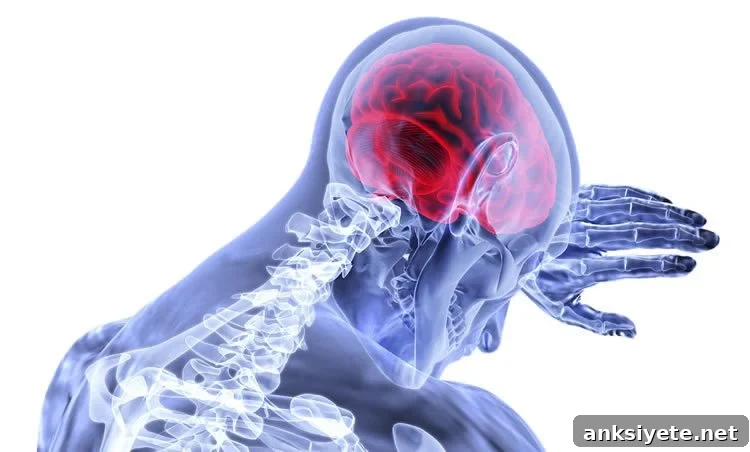
Summary: Researchers reveal a small region of Ataxin-2, a protein important for forming long-term memories, may also drive the progression of amyotrophic lateral sclerosis (ALS).
Source: Trinity College Dublin.
Scientists have identified a short segment of the Ataxin-2 protein that is essential for long-term memory formation but also appears to promote neurodegeneration in an animal model of ALS. When fruit flies were engineered to express an Ataxin-2 variant lacking this region, the insects failed to form long-term memories yet showed strong resistance to neurodegeneration.
The social impact of ALS—and the public attention it received during the “ice bucket challenge”—underscores the urgency of understanding neurodegenerative diseases. This study isolates a specific molecular mechanism that contributes to neuronal loss in ALS models and points to a potential avenue for therapies aimed at protecting nerve cells. The research was funded by Science Foundation Ireland and carried out by teams at the Trinity College Institute of Neuroscience, NCBS Bangalore, and the Howard Hughes Medical Institute at the University of Colorado, Boulder. The findings are published in the journal Neuron.
Professor Mani Ramaswami, Chair of Neurogenetics at Trinity College Dublin, said: “This work, by collaborating young researchers based in Irish, Indian and American laboratories, provides a great example of the ability of fundamental research in model organisms to produce biologically and clinically interesting information.”
Neurodegenerative diseases commonly feature the abnormal accumulation of specific proteins inside nerve cells. These proteins can aggregate into filamentous amyloids that are believed to trigger processes leading to neuronal death. In Alzheimer’s disease, for example, amyloid-beta accumulates, while proteins such as TDP-43, FUS and Ataxin-2 have been linked to ALS.
The research team tested whether the tendency of Ataxin-2 to assemble into aggregates contributes to ALS progression. They genetically modified Drosophila (fruit flies) to produce a version of Ataxin-2 that cannot form the same protein assemblies, while leaving other functions of the protein intact.
Arnas Petrauskas, a researcher at Trinity, explained: “Flies expressing the altered, non-aggregating Ataxin-2 displayed striking resistance to neurodegeneration. This suggests the normal ability of Ataxin-2 to form aggregates is required for the progression of at least some forms of ALS, providing support for the amyloid hypothesis in this context.”
Unexpectedly, the same Ataxin-2 region required for aggregate formation was also necessary for long-term memory. Flies carrying the modified protein had normal short-term memory but showed significant deficits in long-term memory.
Fruit flies naturally show a reduced response to familiar smells in a process called habituation. Short-term habituation occurs after a brief exposure, while long-term habituation forms from repeated exposures over days. Flies lacking the specific Ataxin-2 domain retained short-term responses but were impaired in the long-term memory that allows them to remember familiar odors over extended periods.
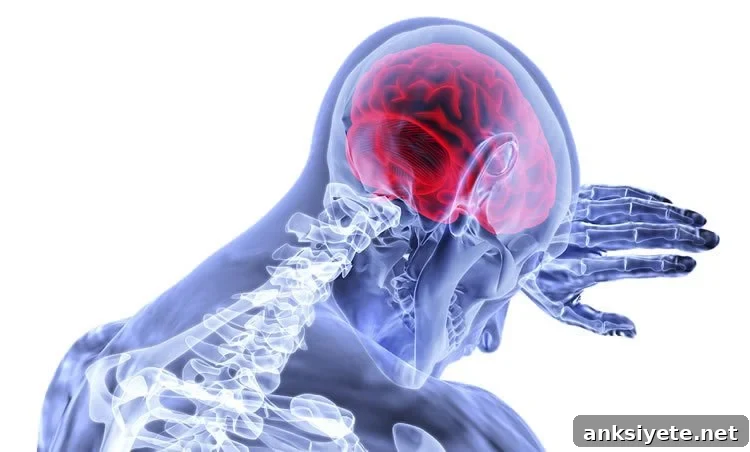
How are memory formation and disease progression connected? Proteins implicated in ALS—such as TDP-43, FUS and Ataxin-2—also participate in the cellular regulation of protein production. A key function of Ataxin-2 is to help assemble ribonucleoprotein (RNP) granules, structures that store messenger RNAs (mRNAs) in a silent state until they are needed. This local control of mRNA translation at synapses supports long-term synaptic changes underlying long-term memory.
The new data show Ataxin-2 concentrates several RNA-binding proteins involved in memory storage, but by creating a concentrated environment it can also promote the aggregation of those proteins into amyloid structures linked to disease. In other words, Ataxin-2’s role in forming RNP granules contributes to long-term neuronal plasticity and memory, while the same mechanism increases vulnerability to neurodegeneration. This represents a biological “trade-off”: the same molecular machinery that enables memory can, under some conditions, promote pathological protein aggregation.
In an accompanying commentary, Aaron Gitler, Professor of Genetics in the Stanford Neuroscience Institute and an independent expert in motor neuron disease research, observed that “manipulating RNP granule formation by genetically altering Ataxin-2’s disordered regions, or by other means, could be therapeutic in ALS. Beyond Ataxin-2, identifying additional proteins that build RNP granules is now an active research priority.”
About this neuroscience research article
Funding: Science Foundation Ireland.
Source: Fiona Tyrrell, Trinity College Dublin.
Publisher: NeuroscienceNews.com (article organized by NeuroscienceNews).
Image Source: NeuroscienceNews.com image in the public domain.
Original Research: Article titled “RNP-Granule Assembly via Ataxin-2 Disordered Domains Is Required for Long-Term Memory and Neurodegeneration” published in Neuron on May 16, 2018. Authors: Baskar Bakthavachalu, Joern Huelsmeier, Indulekha P. Sudhakaran, Jens Hillebrand, Amanjot Singh, Arnas Petrauskas, Devasena Thiagarajan, M. Sankaranarayanan, Laura Mizoue, Eric N. Anderson, Udai Bhan Pandey, Eric Ross, K. VijayRaghavan, Roy Parker, and Mani Ramaswami.
DOI: 10.1016/j.neuron.2018.04.032
Abstract
RNP-Granule Assembly via Ataxin-2 Disordered Domains Is Required for Long-Term Memory and Neurodegeneration
Highlights:
- Ataxin-2 (Atx2) is essential, but its intrinsically disordered regions (IDRs) are not required for development and viability.
- Atx2 IDRs are necessary for efficient assembly of RNP granules in neurons.
- Atx2 IDRs are required for translation-dependent long-term memory (LTM) but not short-term memory (STM).
- Deleting Atx2 IDRs prevents neurodegeneration caused by C9ORF72 dipeptide repeats or FUS in fly models.
Summary:
Human Ataxin-2 is implicated in ALS and type 2 spinocerebellar ataxia. Drosophila Atx2 has conserved polyQ elements and IDRs that mediate liquid-liquid phase separation in vitro. In vivo, these IDRs are essential for forming neuronal mRNP assemblies. Flies lacking Atx2 IDRs develop normally and remain fertile, yet they exhibit deficits in long-term memory formation and are protected from specific forms of induced neurodegeneration. These results indicate that higher-order mRNP assemblies support long-term neuronal plasticity and that reducing RNP-granule formation can alleviate certain neurodegenerative processes.
Citation suggestions:
MLA: Trinity College Dublin. “What Helps Form Long Term Memory Also Drives ALS.” NeuroscienceNews. 22 May 2018.
APA: Trinity College Dublin (2018, May 22). What Helps Form Long Term Memory Also Drives ALS. NeuroscienceNews.
Chicago: Trinity College Dublin. “What Helps Form Long Term Memory Also Drives ALS.” NeuroscienceNews. Accessed May 22, 2018.