
Summary: A new study reveals that selenium is essential for the postnatal development of a specific population of interneurons.
Source: Helmholtz.
Exactly 200 years after the discovery of selenium by Swedish chemist Jöns Jacob Berzelius — who named it after the moon goddess Selene — researchers report a clear biological reason why this trace element is indispensable for mammals. Beyond its industrial uses in chemistry and electronics, selenium is a vital micronutrient for humans and many animals. A team led by Dr. Marcus Conrad at the Institute of Developmental Genetics (IDG), Helmholtz Zentrum München, has now shown for the first time why selenium can be a limiting factor in mammalian physiology.
Scientific serendipity resolves a long-standing question
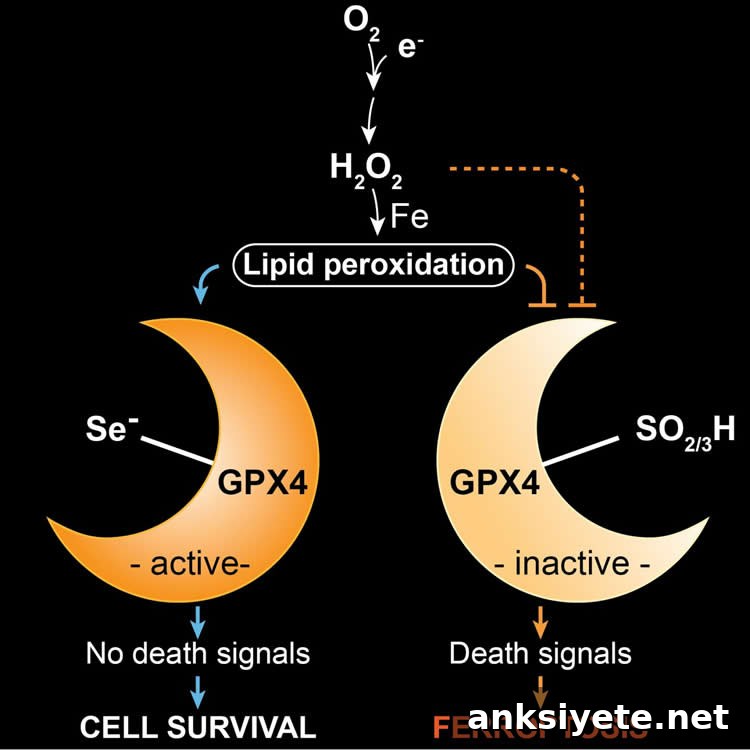
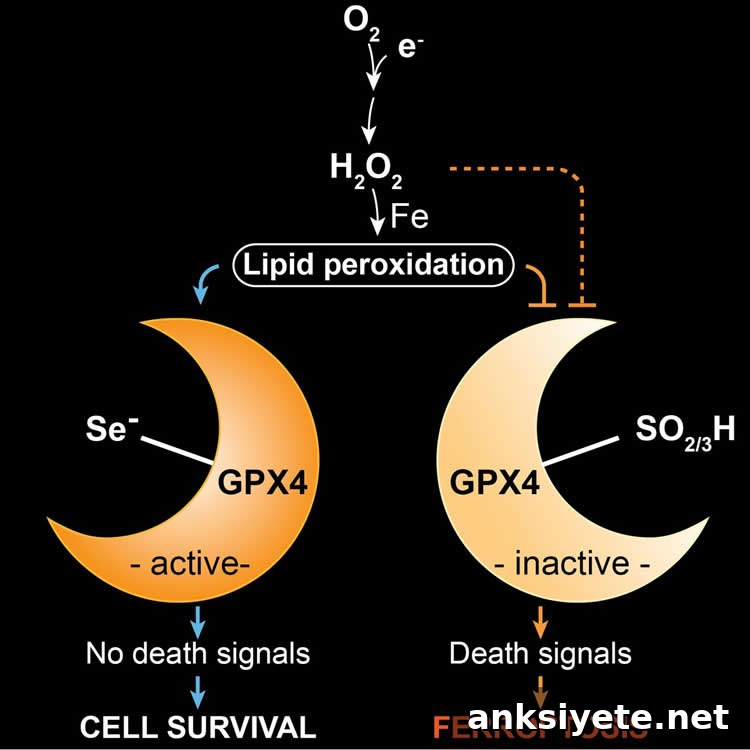
The Conrad laboratory has long studied ferroptosis, a newly characterized form of regulated cell death dependent on iron and oxidative damage. Central to this pathway is the enzyme glutathione peroxidase 4 (GPX4), a selenoprotein that contains the amino acid selenocysteine. To probe GPX4’s role in ferroptosis and organismal biology, the team generated and analyzed genetically altered mouse models in which the selenocysteine residue of GPX4 was replaced by the sulfur-containing amino acid cysteine.
“When we replaced selenium with sulfur in GPX4, the mutant mice consistently died within three weeks because of severe neurological problems,” explained study leader Marcus Conrad. This unexpected outcome prompted further investigation to determine which cells and circuits were most vulnerable to loss of the selenium-containing form of GPX4.
Using detailed anatomical and molecular analyses, the researchers discovered that a distinct subpopulation of specialized interneurons was missing in mice that lacked selenocysteine-containing GPX4. “We found that these interneurons are lost during postnatal development when the sulfur-containing GPX4 variant is present,” said first author Irina Ingold. The loss of that interneuron population accounts for the fatal, seizure-prone phenotype observed in the mutant animals.
The team further showed that ferroptosis in these neurons is triggered by oxidative stress, a condition that arises during periods of high metabolic or neuronal activity. Selenium in GPX4 confers robust protection against oxidative damage and prevents hydroperoxide-induced ferroptotic cell death in the vulnerable interneurons. As José Pedro Friedmann Angeli, another IDG scientist on the study, summarized: selenium-containing GPX4 shields specific developing neurons from oxidative stress and ferroptosis, thereby ensuring their survival and proper circuit function.
These findings illuminate why certain selenoenzymes are essential in some organisms but dispensable in others. While fungi and many plants lack a strict requirement for selenoproteins, mammals rely on at least a subset of these selenium-dependent enzymes for critical developmental processes. Moving forward, Conrad and colleagues plan to dissect the molecular triggers that initiate ferroptosis in different cell types and to explore how ferroptosis contributes to diseases such as cancer and neurodegeneration, with the ultimate aim of finding ways to mitigate these conditions.
GPX4 (glutathione peroxidase 4) is one of roughly 25 human selenoproteins and uniquely incorporates the 21st amino acid, selenocysteine, where selenium replaces sulfur. GPX4 plays a decisive role in preventing ferroptosis, a form of programmed cell death driven by iron-dependent lipid peroxidation. Although details of ferroptosis remain under active investigation, its importance as a regulated cell-death mechanism complements established processes such as apoptosis.
Source: Marcus Conrad, Helmholtz Zentrum München.
Publisher: NeuroscienceNews.com.
Image credit: Ingold et al., Cell.
Original research: “Selenium Utilization by GPX4 Is Required to Prevent Hydroperoxide-Induced Ferroptosis,” published in Cell, December 28, 2017. DOI: 10.1016/j.cell.2017.11.048.
MLA: Helmholtz. “Selenium Protects a Specific Type of Interneurons in the Brain.” NeuroscienceNews. December 29, 2017.
APA: Helmholtz (2017, December 29). Selenium Protects a Specific Type of Interneurons in the Brain. NeuroscienceNews.
Chicago: Helmholtz. “Selenium Protects a Specific Type of Interneurons in the Brain.” NeuroscienceNews. December 29, 2017.
Abstract
Selenium Utilization by GPX4 Is Required to Prevent Hydroperoxide-Induced Ferroptosis
Highlights
- Selenium-containing GPX4 is required for full viability of mice postnatally.
- The GPX4 variant with cysteine (GPX4-Cys) is highly vulnerable to inactivation by hydroperoxides.
- Hydroperoxide exposure induces ferroptosis in cells expressing the GPX4-Cys variant.
- When partial GPX4 activity is retained, overall selenoproteins can be dispensable for cell viability in certain contexts.
Summary
Selenoproteins are a rare class of proteins that incorporate selenocysteine, an amino acid that differs from cysteine by the presence of selenium instead of sulfur. The biochemical advantage of selenolate-based catalysis has been unclear because many selenoproteins have cysteine-containing homologs. This study demonstrates that selenocysteine in the essential mammalian selenoprotein GPX4 is unexpectedly not required for normal embryogenesis. However, survival of a specific interneuron subtype during postnatal development depends exclusively on selenocysteine-containing GPX4; without it, mice develop fatal epileptic seizures. Mechanistically, selenocysteine enables GPX4 to resist irreversible overoxidation, while the cysteine variant renders cells highly sensitive to peroxide-induced ferroptosis. Remarkably, deleting all other selenoproteins in cells expressing GPX4-Cys showed that, provided some GPX4 activity remains, selenoproteins are not strictly required for cell viability. These results identify a precise and indispensable biological role for selenium in mammals.
Original article: “Selenium Utilization by GPX4 Is Required to Prevent Hydroperoxide-Induced Ferroptosis,” by Irina Ingold et al., Cell, published online December 28, 2017. DOI: 10.1016/j.cell.2017.11.048.