
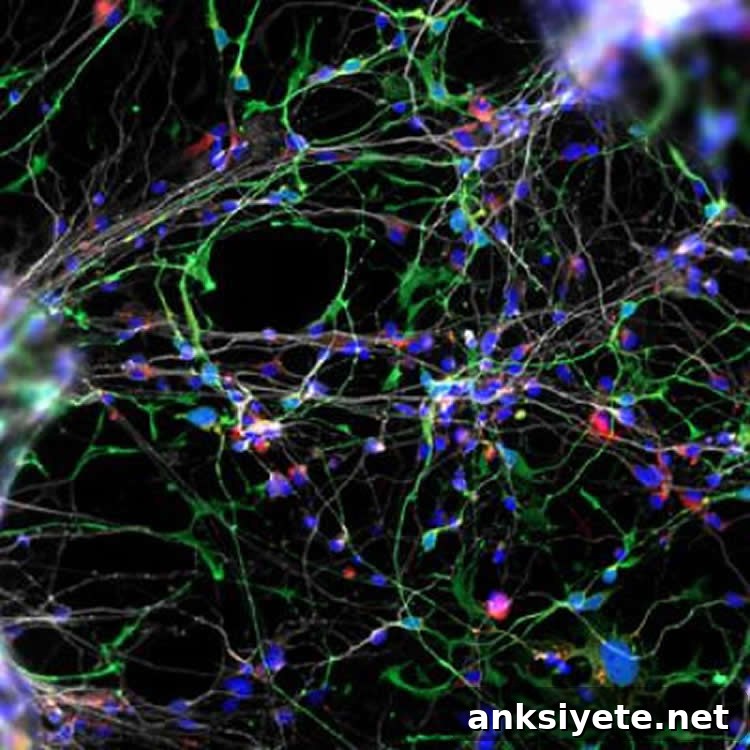
Summary: Researchers have built a human neurodevelopmental model of Williams syndrome that offers new insight into how genetics shapes the social brain.
Source: UCSD.
Rare genetic deletion creates an unusually social behavioral profile and provides a window into the biology of social cognition, with potential relevance to autism and other social disorders.
Researchers at the University of California San Diego, in collaboration with colleagues at the Salk Institute and other institutions, have developed a human cellular model of Williams syndrome (WS) that connects molecular genetics to brain development and social behavior. This multidisciplinary study—spanning stem cell biology, neuroanatomy and behavioral neuroscience—provides new data about how a defined genetic deletion alters early neural development and the organization of cortical neurons.
The work was published online August 10 in Nature.
Williams syndrome is caused by the deletion of one copy of roughly 25 contiguous genes on chromosome 7, a precise microdeletion at 7q11.23. The disorder affects about 1 in 10,000 people worldwide and is characterized by a distinctive pattern of physical, cognitive and social traits. People with WS often show a characteristic facial appearance, cardiovascular anomalies, developmental delays and specific cognitive profiles: marked weaknesses in spatial reasoning alongside relatively preserved language skills and a strong interest in faces and social interaction.
One of the most striking and consistent features of WS is hypersociability. As co-author Ursula Bellugi, director of the cognitive neuroscience laboratory at the Salk Institute and adjunct professor at UC San Diego, has documented over decades, individuals with Williams syndrome tend to be unusually friendly, highly trusting and readily approach strangers, even while also showing elevated anxiety.
Despite clear behavioral hallmarks, the pathway from the WS genetic deletion to the observed brain and behavioral differences has been only partially understood. The new study creates a living, human cellular model to trace that pathway. Co-senior author Alysson Muotri, associate professor at UC San Diego School of Medicine, adapted techniques his team previously used to model autism: reprogramming donated dental pulp cells into induced pluripotent stem cells (iPSCs) and then directing them to form neural progenitor cells and cortical neurons in vitro.
Dental pulp cells collected from children with Williams syndrome were converted into neural progenitors that self-organized into networks resembling early developing human cortex. The researchers found that WS-derived neural progenitor cells had reduced proliferation caused by elevated cell death, producing fewer progenitors overall. Muotri explains that this deficit in progenitor replication would lead to a reduced cortical surface area in WS brains. This cellular observation was validated in living participants through magnetic resonance imaging (MRI) analyses performed by Eric Halgren and collaborators at UC San Diego.
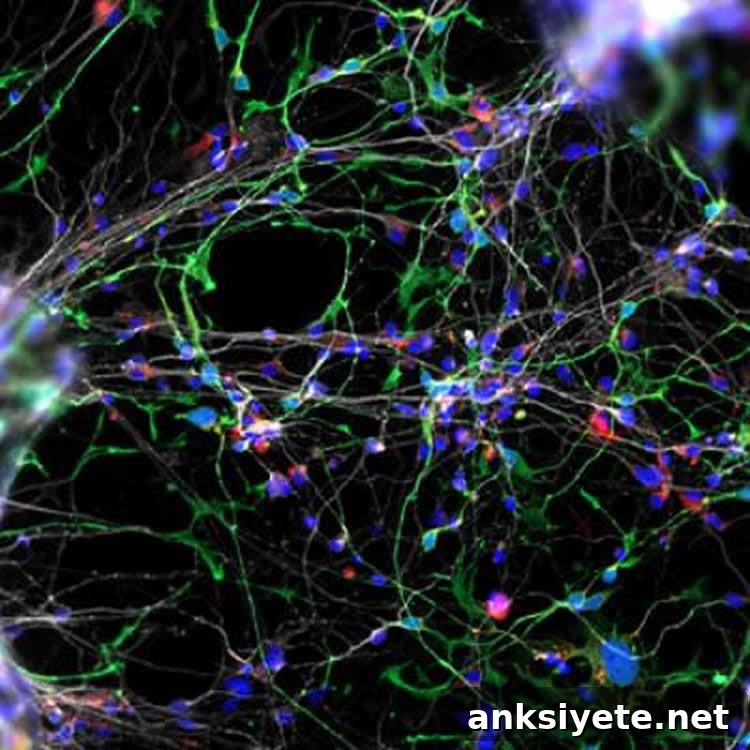
Neurons derived from WS iPSCs displayed distinct morphological and functional characteristics. They were more highly arborized—showing extensive dendritic branching—and formed greater numbers of synapses than neurons from typically developing controls. These features were accompanied by altered calcium signaling and shifts in network connectivity, suggesting that WS neurons form dense, highly connected circuits. The authors propose that such cellular and network differences could help explain the unusually social and affiliative behaviors seen in WS, while also offering comparative insight into conditions such as autism, where social engagement is often reduced.
To confirm that the in vitro observations reflected the human brain, the team compared their results with rare post-mortem WS cortical tissue studied by Katerina Semendeferi and colleagues. Golgi staining of layer V/VI cortical neurons revealed comparable increases in dendritic complexity in WS samples, supporting the idea that these morphological changes arise during prenatal development and persist after birth.
The investigators also leveraged a unique clinical case of an individual with an atypical WS deletion to narrow a key cellular phenotype to a single candidate gene, frizzled 9 (FZD9), implicating specific molecular pathways that may drive progenitor vulnerability and altered neuronal development.
Co-authors include Thanathom Chailangkarn, Cleber A. Trujillo, Beatriz C. Freitas, Timothy T. Brown, Branka Hrvoj-Mihic, Lisa Stefanacci, M. Collin Ard, Kari L. Hanson, Sarah Romero, Anders M. Dale, Roberto H. Herai, Diana X. Yu, Maria C. N. Marchetto, Cedric Bardy, Lauren McHenry, Anna Järvinen, Yvonne M. Searcy, Michelle DeWitt, Wenny Wong, Philip Lai, Fred Gage, Bob Jacobs, Li Dai and Julie R. Korenberg, among others.
Funding: This research received support from the California Institute for Regenerative Medicine, the National Institutes of Health (including P01 NICHD033113 and other grants), NARSAD, the Engmann Foundation, the JPB Foundation, the Helmsley Foundation and the Royal Thai Government.
Source: Scott LaFee, UCSD. Image Source: Image credited to UC San Diego Health. Original Research: “A human neurodevelopmental model for Williams syndrome” (Nature, published online August 10, 2016; DOI: 10.1038/nature19067).
A human neurodevelopmental model for Williams syndrome
Williams syndrome is a neurodevelopmental disorder marked by unusually high sociability alongside a pattern of cognitive strengths and weaknesses. Nearly all clinically diagnosed individuals share the same microdeletion on chromosome 7q11.23. Using induced pluripotent stem cells from individuals with Williams syndrome and controls, the authors examined neural progenitor cells and cortical neurons in vitro. WS progenitors showed slower proliferation and increased apoptosis, a phenotype linked to the FZD9 gene in an individual with an atypical deletion. At the neuronal stage, layer V/VI cortical neurons from WS lines had longer total dendrites, more spines and synapses, altered calcium oscillations and modified network connectivity. Comparable morphometric changes were verified in post-mortem WS cortical tissue. This human cellular model closes a gap in our understanding of the cellular basis of Williams syndrome and offers a platform to explore molecular mechanisms underlying the social brain.