
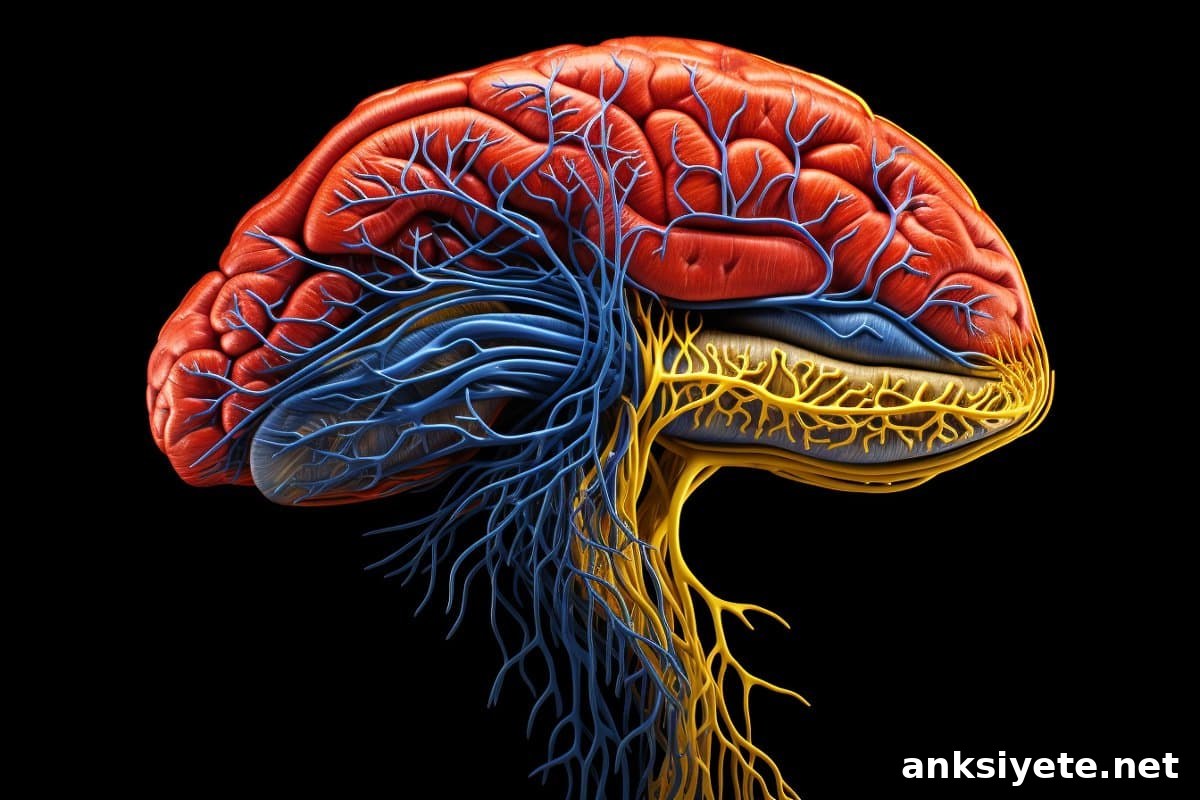
Summary: Researchers have identified a distinctive feature of human brain communication networks: the transmission of information through multiple parallel pathways. This pattern was not found in macaque or mouse brains.
Using diffusion and functional MRI together with information theory and graph theory, the team mapped “brain traffic” to compare how signals travel across mammalian brains. Their analysis shows that humans deploy multiple parallel routes for information transfer between the same brain regions, a pattern that may underlie advanced cognitive abilities and has implications for understanding brain evolution and clinical applications.
Key Facts:
- EPFL researchers report that human brains transmit information through multiple parallel pathways, a pattern not observed in macaques and mice.
- The finding was made by combining diffusion MRI, functional MRI, information theory and graph theory into a single analytical framework.
- Parallel pathways in humans may support higher cognitive functions and suggest new directions for studying brain resilience and neurorehabilitation.
Source: EPFL
In a cross-species comparison of brain communication networks, EPFL scientists found that only human brains route information via multiple parallel pathways, providing fresh insight into mammalian brain evolution.
EPFL senior postdoctoral researcher Alessandra Griffa often uses travel metaphors to describe brain communication. Signals travel from a source to a target along polysynaptic routes that pass through many regions, like a road with multiple stops. As a researcher in the Medical Image Processing Lab (MIP:Lab) in EPFL’s School of Engineering and a coordinator at CHUV’s Leenaards Memory Centre, Griffa sought to trace how information actually moves along those routes, not just where the structural fibers lie.
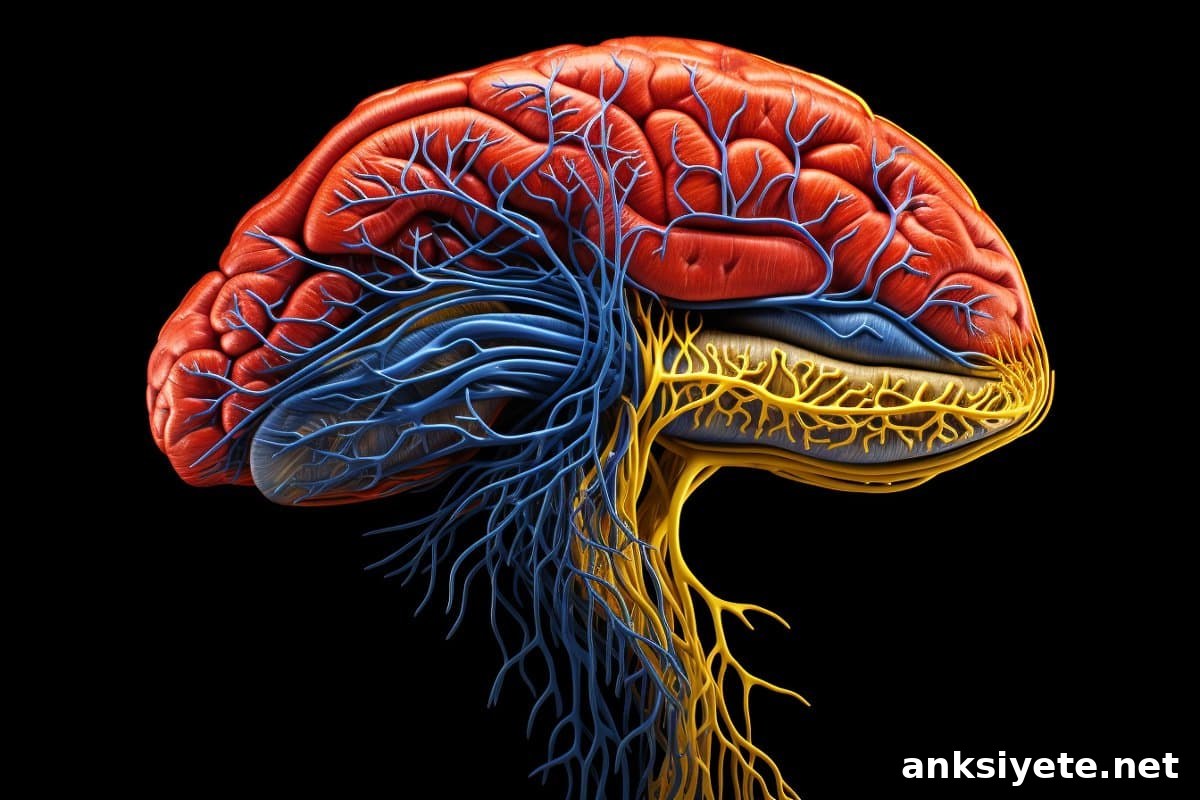
To build comparable “brain traffic maps,” the team analyzed open-source diffusion-weighted imaging (DWI) and resting-state functional MRI (fMRI) datasets collected from awake humans, macaques and mice. DWI provided the structural “road maps” of white-matter connections, while fMRI revealed which brain regions activate together along those routes, indicating information flow. Combining these imaging modalities allowed the researchers to identify not only existing fiber pathways but also which routes actually carried signals in resting conditions.
The core novelty of the study lies in integrating two mathematical frameworks: graph theory, which models the network of polysynaptic connections (the road network), and information theory, which quantifies how information is transmitted along those routes (the traffic). This multimodal, multimethod approach enabled detection of information-routing patterns that single-modality analyses miss.
Griffa explains the basic intuition: messages passed from one brain region to another can remain intact or progressively degrade at each stop, resembling the childhood “telephone” game. Using information-theoretic measures, the team assessed whether information between a source and a target followed a single dominant path or multiple independent parallel routes.
Their analyses revealed a clear difference across species. In macaque and mouse brains, information tended to travel along a single polysynaptic pathway between regions. In human brains, by contrast, the same source-target pairs often exchanged information through several parallel paths. These parallel channels were highly individualized — the specific arrangement of parallel routes was unique enough to identify individuals, much like a neural fingerprint.
“Parallel processing across whole-brain networks in humans has been hypothesized before, but it had not been observed on this scale,” Griffa notes. The observed parallelism suggests a richer, redundant routing architecture in humans compared to the other mammals studied.
Implications for evolution and medicine
The simplicity of the model is one of its strengths: by bringing together structural and functional data with graph and information theory, the method opens new avenues in evolutionary and computational neuroscience. One possible link is to brain expansion in human evolution. As brain volume and cortical complexity increased, wiring patterns may have evolved to support multiple, parallel information channels that enable more flexible and abstract processing.
Griffa suggests that parallel information streams could allow the brain to hold multiple representations of the same input, supporting abstraction and advanced cognitive functions that are prominent in humans. While this idea remains speculative — the study did not test cognitive performance directly — it points to explicit hypotheses that can be tested in future work.
A practical research direction is to examine whether parallel routes confer resilience to brain networks. Griffa, whose research focuses on memory and cognition, is particularly interested in whether parallel transmission supports recovery after brain injury or helps protect against age-related cognitive decline. Some people maintain healthy cognition into advanced age while others do not; exploring whether parallel pathways contribute to that variability could inform rehabilitation and preventive strategies.
Future studies could extend the model to simulate how information is combined and transformed across multiple channels, moving from mapping transmission to modeling computation. Such steps would help clarify whether and how parallel routing contributes to complex information processing in the human brain.
About this neuroscience research news
Author: Celia Luterbacher
Source: EPFL
Contact: Celia Luterbacher – EPFL
Image: The image is credited to Neuroscience News
Original Research: Open access.
“Evidence for increased parallel information transmission in human brain networks compared to macaques and male mice” by Dimitri Van de Ville et al. Nature Communications
Abstract
Evidence for increased parallel information transmission in human brain networks compared to macaques and male mice
Brain communication—information transmitted through white-matter connections—underpins the brain’s computational abilities that support behavior from shared sensory perception to complex human cognition. How communication strategies at the macroscale evolved to support increasingly sophisticated functions remains a key question.
Applying a graph- and information-theory framework to map information-related pathways in male mouse, macaque and human brains, the researchers identified a communication gap: non-human mammals tend to share information via single polysynaptic pathways, whereas human brains frequently use multiple parallel pathways between the same regions. In humans, parallel transmission prominently connects unimodal and transmodal systems.
The organization of these information-related pathways is also individually specific across species, suggesting a personalized architecture of information routing. Overall, the work provides evidence that distinct communication patterns are linked to the evolution of mammalian brain networks.