
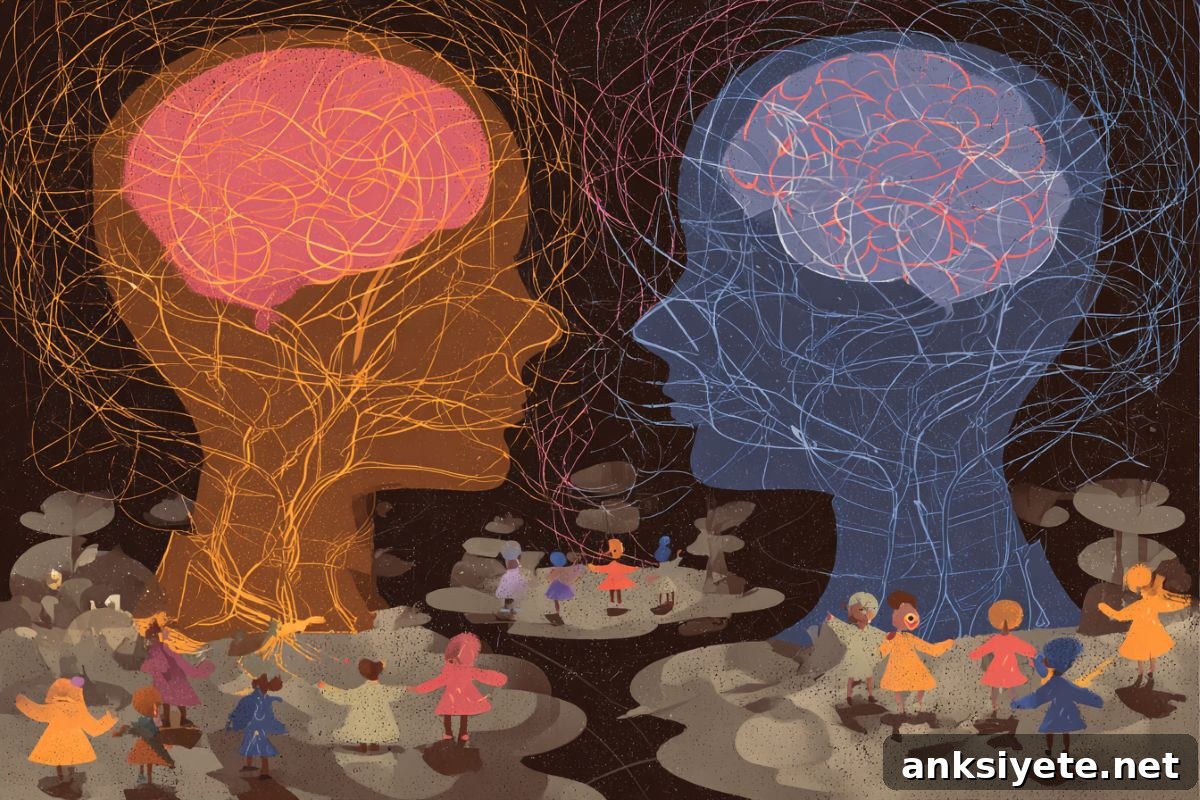
Summary: Survival is often framed as an individual struggle, but new research shows that social species can operate as a single, self-regulating system. When one member’s social drive falters, the group adapts to preserve the collective’s wellbeing.
A UCLA study finds that the prefrontal cortex—the brain’s decision-making and social-evaluation center—does more than monitor an individual’s needs. It continuously models the behavior of others in the group. If one animal becomes passive, the remaining members automatically alter their behavior to maintain the group’s temperature and cohesion.
Key Facts
- Huddle dynamics: In cold conditions, mice use four distinct social moves to join or leave a huddle: actively joining, being sought out, leaving, or being left behind.
- Modeling the other: Neural recordings show the prefrontal cortex encodes not only an animal’s own decisions but also the choices of its partners, effectively simulating the group’s state.
- Automatic compensation: Silencing the prefrontal cortex in some mice made them passive, but their groupmates increased activity to compensate. This maintained total huddle time and stabilized core body temperatures.
- Group thresholds: Certain coordinated behaviors emerged only in larger groups, indicating the brain adjusts strategies based on group size and available partners.
- Health implications: Because social withdrawal figures prominently in disorders such as depression and schizophrenia, identifying these resilience circuits could inform approaches to mitigate social isolation.
Source: UCLA
Rethinking survival
We often picture survival as “every animal for itself,” but this research suggests groups can function like unified systems that self-correct when members are compromised. The study, published in Nature Neuroscience, used mouse huddling in cold conditions as a model to explore how collective behavior and neural circuits support group survival.
Why this matters
Social isolation is a growing public-health concern, and many psychiatric conditions involve disrupted social engagement. These results highlight that social resilience can be a biological, circuit-level property: groups are capable of detecting and compensating for an impaired member to maintain collective homeostasis. That insight has relevance for understanding social behavior and mental health.
What the researchers did
The team observed freely moving groups of mice during cold exposure, combining behavioral tracking with thermal imaging and internal temperature loggers to quantify the thermoregulatory benefits of huddling. They defined four behavioral roles mice adopt around the huddle and recorded neural activity in the dorsomedial prefrontal cortex, a region associated with decision-making and social processing. To test causal function, researchers used chemogenetic tools to selectively silence that cortical region in some animals while leaving others intact, then measured how the group responded.
Key findings
Neural data revealed that distinct ensembles in the dorsomedial prefrontal cortex represent active versus passive decisions to enter or exit a huddle. When that cortical activity was reduced in targeted mice, those animals stopped initiating movement and waited passively. The rest of the group reacted without any individual coordinating the response: non-manipulated mice increased their activity, sought out the passive individuals, and preserved overall huddle duration and body temperatures.
This automatic compensation demonstrates that collective resilience is an emergent property of social groups, underpinned by cortical mechanisms that monitor both self and others. The work also showed that huddling behavior scales with group size, with some collective responses arising only when a sufficient number of individuals are present.
Next steps
Future research will examine how the brain weighs internal physiological signals (for example, “I am cold”) against social cues (“a groupmate is passive”) and how the prefrontal cortex communicates with hypothalamic circuits that regulate body temperature. Understanding these interactions will clarify how social information is integrated with homeostatic drives to produce coordinated group behavior.
Expert perspectives
“When one individual in a group is compromised, the group doesn’t fall apart—it adapts,” said Tara Raam, first author and postdoctoral scholar at UCLA’s Social Neuroscience Laboratory. “That collective resilience is encoded in the brain, and we are beginning to map the circuits behind it.”
Weizhe Hong, senior author and professor in the UCLA Departments of Neurobiology and Biological Chemistry, added: “This research shows the brain not only supports individual survival but also helps groups coordinate shared responses to environmental challenges.”
Key Questions Answered:
A: Not a hive mind in the literal sense, but a coordinated system. Similar to a sports team, individuals adjust when a teammate falters; the brain mechanisms observed here detect struggling group members and drive compensatory behavior to protect the whole group.
A: The investigators propose that the prefrontal cortex evaluates social information alongside internal homeostatic signals and communicates with hypothalamic circuits that regulate temperature. The relative strength of social versus internal signals likely determines whether an animal initiates a rescue or prioritizes its own comfort.
A: Mental-health research often focuses on individuals, but these findings emphasize that social health has collective dimensions. The resilience of a social network—how effectively it reintegrates withdrawn members—may be governed by neural circuits that can be studied and, potentially, targeted in treatment strategies.
Editorial Notes:
- This article was edited by a Neuroscience News editor.
- The journal paper was reviewed in full.
- Additional context was added by staff editors.
About this social neuroscience research news
Author: Alana Prisco
Source: UCLA
Contact: Alana Prisco – UCLA
Image credit: Neuroscience News
Original Research: Closed access. “Cortical regulation of collective social dynamics during environmental challenge” by Tara Raam, Qin Li, Linfan Gu, Gabrielle M. Elagio, Kayla Y. Lim, Jay Y. Taimish, Xingjian Zhang, Norma P. Sandoval, Stephanie M. Correa & Weizhe Hong. Nature Neuroscience. DOI: 10.1038/s41593-026-02224-0
Abstract
Cortical regulation of collective social dynamics during environmental challenge
Animal groups often coordinate behavior collectively to survive environmental challenges, yet the neural circuits that enable such coordination are not well understood. This study shows that mice self-organize into huddles under cold stress and that huddling stabilizes core body temperature by increasing physical contact and reducing heat loss.
Behavioral analysis revealed active (self-initiated) and passive (partner-initiated) strategies to enter or exit the huddle. Microendoscopic calcium imaging identified distinct neuronal ensembles in the dorsomedial prefrontal cortex that encode those decision types. Chemogenetic silencing of this cortical region reduced active decisions in manipulated mice but produced compensatory increases in the behavior of unmanipulated partners, preserving overall group-level huddle time.
These results reveal a cortical mechanism that enables social groups to adapt collectively and maintain homeostasis during environmental challenge.