
Summary: People who act in pro-social ways during the pandemic — for example, wearing masks, donating supplies, or helping those who are ill even at personal cost — are more likely to feel a strong connection to other people across the world.
Source: University of Washington
New research from the University of Washington finds that people who perceive a broad connection to others — what psychologists call “identification with all humanity” — are more likely to follow public health advice and to help others during the COVID-19 pandemic.
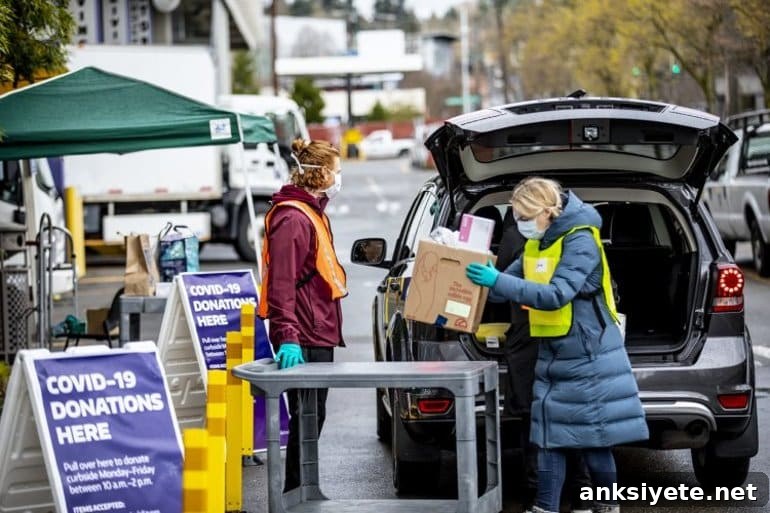
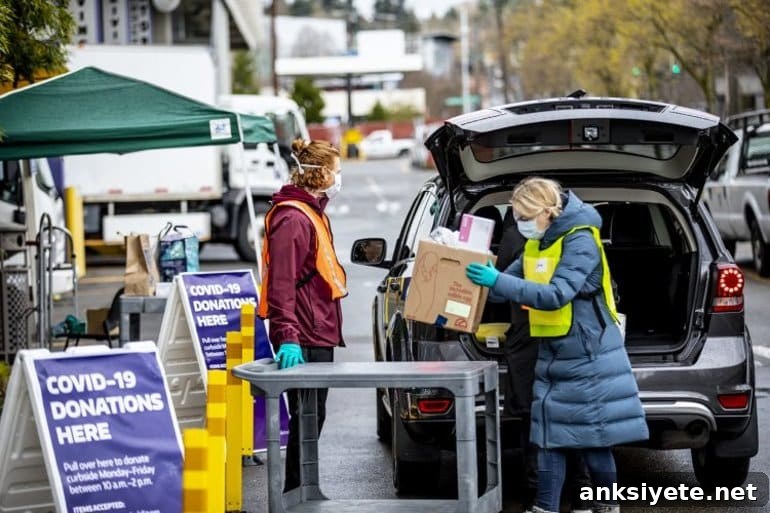
The study shows that this global sense of togetherness predicts pandemic-era prosocial actions — such as donating personal protective equipment, driving someone with COVID-19 symptoms to a hospital, or waiting with a sick person for an ambulance — more reliably than identification with a local community or a nation.
Published March 10 in PLOS ONE, the analysis uses roughly 2,500 responses collected from participants in more than 80 countries via an online international study launched in April of the previous year.
The authors suggest these findings could inform public health communications: emphasizing people’s shared connections with others might increase compliance with health measures, encourage vaccination uptake and promote behaviors that protect the community.
“We aimed to measure how much people identify with all humanity and whether that outlook explains differences in how people respond during the COVID-19 pandemic,” said Rodolfo Cortes Barragan, a postdoctoral researcher at the UW Institute for Learning & Brain Sciences (I-LABS) and co-leader of the study. He conducted the work with Nigini Oliveira, a postdoctoral researcher in the Paul G. Allen School for Computer Science and Engineering.
In psychological research, identification with all humanity is a measurable belief that reflects an individual’s feeling of connectedness and moral concern for people everywhere. To study its relationship to pandemic behavior, a multidisciplinary UW team designed an online survey featuring scenarios grounded in social psychology and game theory. The survey was translated into six languages and hosted on LabintheWild, a virtual research platform co-created by co-author Katharina Reinecke of the Allen School to enable behavioral studies across cultures.
Participants considered situations that might arise during the pandemic and indicated how likely they would be to take certain actions. The scenarios asked whether respondents would:
- Follow World Health Organization guidelines focused on social distancing and hygiene
- Donate their household masks to a hospital in need
- Drive a person showing COVID-19 symptoms to the hospital
- Shop for groceries for a neighboring family
- Call an ambulance and wait with a sick person until it arrived
Along with demographic information and details about local pandemic restrictions, the survey measured psychological variables, including how strongly participants felt connected to their local community, their nation, and humanity in general. One question asked, for example, “How much would you say you care (feel upset, want to help) when bad things happen to people all over the world?”
After controlling for gender, age, education and other factors, the researchers found that identification with all humanity was the strongest and most consistent predictor of willingness to follow health guidance and to help others in the five scenarios. Identification with local community ranked second, and identification with nation ranked third. The authors note that national identification and nationalism can sometimes favor certain groups over others, whereas a global identification encourages broader concern.
“People vary in their social responses to the pandemic. Our research shows that how much someone feels connected to strangers worldwide predicts cooperation with public health measures and altruistic behavior,” said Andrew Meltzoff, co-director of I-LABS and a co-author of the study.
The study team acknowledges that the pandemic context has changed since data collection: vaccines are now being distributed, guidance has evolved, and COVID-19 has tragically claimed millions of lives worldwide. The researchers note that if they ran the survey today, they would adapt scenarios to reflect current public health challenges, including how to care for others while maintaining physical distance.
The authors address a common concern with surveys — that respondents may answer in socially desirable ways — and argue that the clear differences between scores for identification with humanity, community and country make broad self-presentation bias unlikely. Participants would have no obvious reason to emphasize one identification type while downplaying the others.
This project is part of a larger interdisciplinary effort that brings together computer scientists and psychologists to study moral decision-making across cultures and to explore how cultural differences affect human and machine learning. One long-term goal is to use tools from artificial intelligence and global online engagement to better understand how culture shapes social and ethical behavior.
“Combining the methods of computer science with psychological science helps reveal patterns in moral behavior that can serve the public good,” said co-author Rajesh Rao, Hwang Endowed Professor of Computer Science and Engineering at UW.
Insights from the ethical dilemmas in this research may guide policy and outreach during COVID-19 and future humanitarian crises by highlighting which psychological traits motivate people to help others. “Although many people may not always act helpfully, our findings identify specific characteristics that predict who is most likely to do so,” Barragan said. He added that future interventions could strengthen people’s sense of connection to others and thereby increase prosocial behavior during emergencies.
Additional co-authors include Koosha Khalvati, a doctoral student in the Allen School, and Rechele Brooks, a research scientist with I-LABS.
Funding: The study received support from the University of Washington, the Templeton World Charity Foundation and the National Science Foundation.
About this psychology research news
Source: University of Washington
Contact: Kim Eckart – University of Washington
Image: The image is credited to Dennis Wise/U. of Washington
Original Research: Open access. “Identifying with all humanity predicts cooperative health behaviors and helpful responding during COVID-19” by Rodolfo C. Barragan et al., PLOS ONE
Abstract
Identifying with all humanity predicts cooperative health behaviors and helpful responding during COVID-19
Public health recommendations during the COVID-19 pandemic aim to limit viral spread, but not everyone follows expert guidance. This study tested whether a psychological belief — identification with all humanity — predicts cooperation with public health measures and helpful behavior during the pandemic.
The research involved a global online sample (N = 2,537) and measured four WHO-recommended health behaviors alongside four pandemic-related moral dilemmas designed to capture willingness to help others at potential personal cost. Using generalized linear mixed models with demographic, contextual and psychological predictors, the analysis found that identification with all humanity was the most consistent and consequential predictor of cooperative health behavior and helpful responding.
Identification with all humanity significantly predicted each outcome while controlling for other variables (P values ranged from < 10−22 to < 0.009). The average effect size for this predictor was more than twice that of other factors. The construct of identification with all humanity may therefore be a useful target for interventions aimed at promoting cooperative health behavior and compassionate responses during pandemics and other humanitarian crises.