
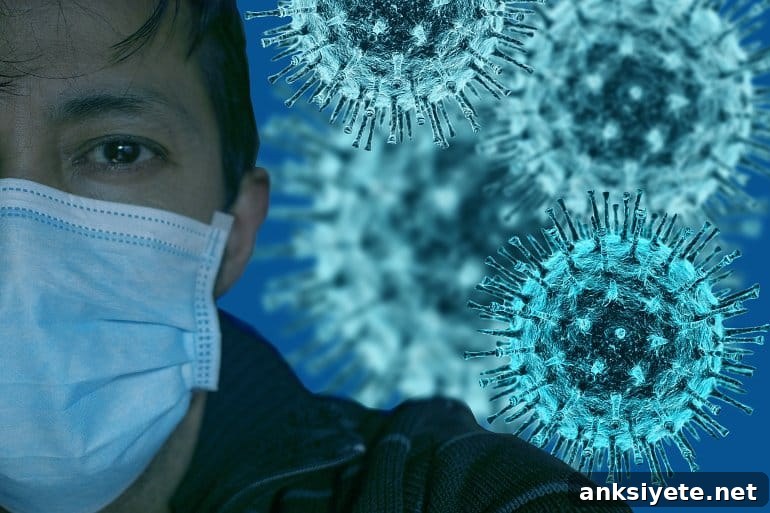
Summary: Although SARS-CoV-2 rarely appears to infect brain cells directly, new autopsy research shows the virus can still produce substantial neurological injury. Investigators conclude that much of the brain damage seen in people who die with COVID-19 is likely driven by inflammation—either system-wide or focused in the brain’s blood vessels—rather than by direct viral invasion of neurons or glia.
Source: Columbia University
New findings from neuropathologists, neurologists, and neuroradiologists at Columbia University Vagelos College of Physicians and Surgeons indicate that SARS-CoV-2, the virus that causes COVID-19, most likely does not infect brain cells directly but can still cause major neurological harm.
“There has been persistent debate about whether the virus invades the brain, but in more than 40 COVID-19 autopsies we found no convincing evidence of virus inside neurons or glia,” says James E. Goldman, MD, PhD, professor of pathology & cell biology (in psychiatry), who led the study together with Peter D. Canoll, MD, PhD, professor of pathology & cell biology, and Kiran T. Thakur, MD, Winifred Mercer Pitkin Assistant Professor of Neurology.
At the same time, the research team documented consistent and significant neuropathological changes that help explain why severely ill patients develop confusion, delirium, and other serious neurological complications, and why people with milder illness commonly report prolonged cognitive symptoms such as “brain fog.”
Published in the journal Brain, this study is the largest and most detailed series of COVID-19 brain autopsies to date. The authors argue that the neurological abnormalities frequently observed in patients with COVID-19 most likely arise from inflammatory responses triggered by infection elsewhere in the body or inflammation within the brain’s vasculature.
No detectable virus inside brain cells
The team examined brains from 41 patients who died while hospitalized with COVID-19. Patients ranged from 38 to 97 years old; about half had been intubated and all had significant lung injury due to the infection. The cohort included a range of hospital stays, from patients who died shortly after arrival to those who remained hospitalized for months. Many patients underwent extensive clinical and laboratory testing, and some had brain imaging before death.
To search for viral presence within brain cells, researchers applied multiple, complementary techniques: RNA in situ hybridization to localize viral RNA within intact cells, immunohistochemistry to detect viral proteins, and highly sensitive RT-PCR assays for viral RNA. Despite this thorough approach, they did not observe SARS-CoV-2 RNA or protein inside neurons or glial cells. Very low amounts of viral RNA detected by RT-PCR were interpreted as likely coming from blood within brain vessels or from the leptomeningeal coverings, not from brain parenchyma.
“We examined more regions and used more methods than many prior reports, and our results consistently show no viral RNA or protein in brain cells,” Goldman explains. While isolated reports have claimed direct viral detection in neurons or glia, the Columbia team suggests those findings may reflect contamination or virus confined to blood vessels rather than true brain-cell infection.
The authors sampled more than two dozen brain regions, including the olfactory bulb, which has been proposed as a pathway for nasal-to-brain spread. Even in that area they did not find viral protein or RNA in brain tissue, although viral material was present in the nasal mucosa and high olfactory mucosa in some patients.
Hypoxic injury and immune activation
Although direct infection of brain cells was not evident, every case displayed significant brain pathology, falling mainly into two categories. First, there was widespread hypoxic-ischemic injury consistent with severe respiratory failure: large strokes in some patients and numerous microscopic areas of hypoxic damage in others. Many of the small lesions are consistent with temporary loss of blood flow due to microthrombi, a known complication of severe COVID-19.
Second, the study identified pronounced activation of microglia, the resident immune cells of the brain. The neuropathologists observed clusters of microglia surrounding and engulfing neurons in a process called neuronophagia—an indicator of neuronal injury and immune-mediated clearance.
Because viral RNA or protein was not found in the affected neurons, the investigators propose that systemic inflammatory mediators—such as elevated cytokines associated with severe SARS-CoV-2 infection—or inflammation of blood vessels likely activated microglia. In addition, hypoxia can mark neurons with “eat-me” signals that make them more vulnerable to activated microglia, so the combination of oxygen deprivation and immune activation can lead to irreversible neuronal loss even without direct viral infection.
These activated microglial clusters were most prominent in the lower brainstem, which controls breathing, heart rate, and consciousness, and in the hippocampus, a region central to memory and mood regulation. The researchers note that microglia-driven neuronal loss is permanent, and suggest that such damage could contribute to post-COVID cognitive and psychiatric symptoms, though the precise clinical consequences and their prevalence among survivors remain to be determined.
Ongoing questions and future research
The team emphasizes that further study is needed to understand why some people continue to experience neurological symptoms after apparent recovery. Current efforts include autopsy studies of patients who died months after recovering from acute infection, and comparisons with brains from patients who suffered critical illness from acute respiratory distress syndrome (ARDS) before the COVID-19 pandemic. Those comparisons aim to clarify which neuropathological findings are specific to SARS-CoV-2 infection and which reflect consequences of severe systemic illness and hypoxia.
The study, titled “COVID-19 Neuropathology at Columbia University Irving Medical Center/New York Presbyterian Hospital,” was published April 15, 2021 in Brain. Contributors include a multidisciplinary team of pathologists, neurologists, neuroradiologists, and researchers from Columbia and collaborating institutions. Funding came from an Encephalitis and COVID-19 Seed Funding Award from the Encephalitis Society, a U.S. National Institutes of Health grant (1K23NS105935-01), and departmental support from Columbia University Vagelos College of Physicians and Surgeons.
About this coronavirus research news
Source: Columbia University
Contact: Helen Garey – Columbia University
Image: The image is in the public domain
Original Research: Early-access paper published in Brain.