
Neurophysiological Evidence of Human Empathy for Robots in Perceived Pain
Empathy is a fundamental human capacity: we routinely sense and respond to the pain and distress of others, offering comfort and support. As humanoid robots become more common in daily life, understanding how humans respond to robots in social and emotional contexts is increasingly important. Do people feel empathy for robots that appear to be harmed, and if so, how does that neural response compare with empathy for fellow humans?
Researchers from the Department of Information Science and Engineering at Toyohashi University of Technology, in collaboration with colleagues from the Department of Psychology at Kyoto University, provide the first neurophysiological evidence that humans can empathize with robots in perceived pain while also identifying differences in the temporal dynamics of that empathy compared with empathy for human others.
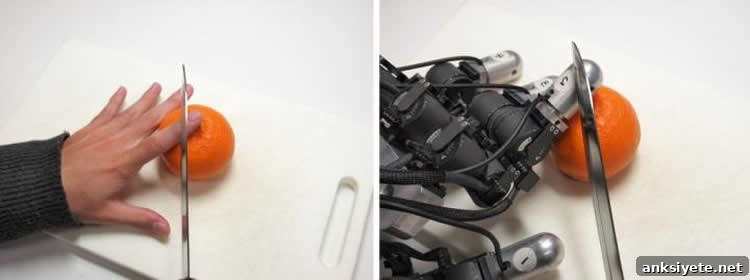
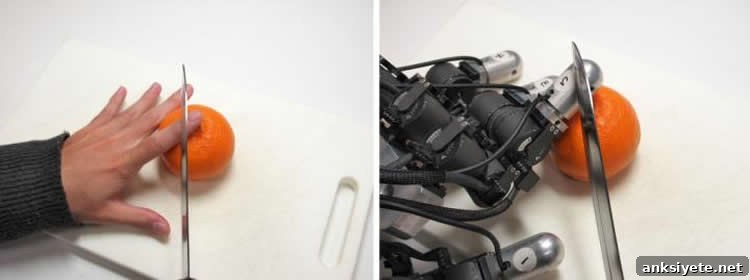
In this electroencephalography (EEG) study, 15 healthy adult participants viewed images showing either a human or a robot hand in situations that were either painful (for example, a finger being cut by a knife) or non-painful. The investigators measured event-related potentials (ERPs) associated with empathy to determine how the brain responded to these different stimulus types.
Overall, the ERP responses indicated that the late, top-down stages of empathic processing were similar for humanoid robot hands and human hands. In particular, the descending phase of the P3 component—an ERP waveform linked to higher-order cognitive and evaluative processes—was larger for painful stimuli than for non-painful stimuli regardless of whether the hand shown belonged to a human or a robot. This finding suggests that, at a later stage of processing, observers allocate comparable cognitive resources to the perception of pain whether the target is human or humanoid robot.
However, the study also revealed a clear difference in the timing of empathic processing. The ascending phase of the P3 (roughly 350–500 ms after image presentation) showed a positive shift when participants observed painful human hands compared with non-painful human hands, but this early positive shift was absent when the painful stimulus involved a robot hand. By the later descending phase of the P3 (about 500–650 ms), that initial difference between humans and robots disappeared.
Associate Professor Michiteru Kitazaki explains that the early positive shift of the P3 is thought to reflect the start of top-down processes related to perspective taking. In other words, observers appear to initiate perspective-taking more quickly when the target of pain is another human than when it is a robot. The absence of that early shift for robots suggests a weaker or delayed engagement of initial perspective-taking mechanisms when the observed agent is non-human, even if the agent looks humanoid.
These findings imply a two-stage pattern in empathic responding to humanoid robots. First, an early perspective-taking stage that initiates top-down processing appears weaker or delayed for robots. Second, a later evaluative stage converges, producing similar neural responses to pain whether the observed hand is human or robotic. The authors suggest that the reduced early engagement likely reflects a diminished spontaneous tendency to adopt the robot’s perspective—understandable given the anatomical, behavioral, and presumed mental differences between humans and robots.
Understanding these dynamics has practical implications for designing social robots and improving human–robot interaction in contexts where emotional attunement matters—healthcare, education, caregiving, and collaborative environments. If designers can find ways to support or guide human perspective taking toward robots, it may be possible to foster stronger empathic engagement and greater acceptance of social robots in everyday settings.
Methods and key results: EEG recordings were made in 15 healthy adults while they viewed images of human or robot hands in painful and non-painful contexts. The descending phase of the P3 component was larger for painful versus non-painful stimuli for both human and robot hands, indicating similar late-stage top-down processing. In contrast, the ascending phase of P3 at frontal-central electrodes increased for painful human stimuli but not for painful robot stimuli, suggesting a weaker early perspective-taking process for robots.
Interpretation: Humans show neural markers of empathy for perceived robot pain, particularly in later top-down processing. The initiation of perspective taking—the early top-down phase—appears reduced for robots, likely reflecting difficulty in spontaneously attributing a first-person perspective to non-human agents.
Funding: This research was partly supported by Grant-in-Aid for Scientific Research (A) #25245067, #25240020, and #26240043 from JSPS, MEXT, Japan.
Source and credits: Michiteru Kitazaki, Toyohashi University of Technology. Image credit: Toyohashi University of Technology.
Original research: Yutaka Suzuki, Lisa Galli, Ayaka Ikeda, Shoji Itakura, and Michiteru Kitazaki. “Measuring empathy for human and robot hand pain using electroencephalography.” Scientific Reports. Published online November 3, 2015. DOI: 10.1038/srep15924.
Abstract
Measuring empathy for human and robot hand pain using electroencephalography
This study offers the first physiological demonstration that humans can empathize with robot pain and clarifies differences in temporal dynamics between empathy for humans and for robots. EEG recordings from 15 adults viewing painful and non-painful images of human and robot hands revealed that the descending phase of the P3 waveform was larger for painful stimuli regardless of agent type. In contrast, the ascending phase of P3 at frontal-central sites increased for painful human stimuli but not for painful robot stimuli. These results indicate that while late top-down empathic processing treats humans and humanoid robots similarly, the initial phase of perspective taking and top-down engagement is weaker when observers view robots.