
Summary: A new genetically engineered mouse model of Alzheimer’s disease gives researchers clearer insight into how the condition produces dementia.
Source: Johns Hopkins University.
Experiments reveal how extracellular “plaques” and intracellular “tangles” interact and drive disease.
Researchers at Johns Hopkins University used an innovative mouse model that more closely mirrors human Alzheimer’s disease to clarify how two distinct pathological processes combine to cause the dementia characteristic of the illness. Their experiments, reported in Nature Communications, indicate that two major biological insults — accumulation of beta-amyloid in the space between neurons and pathological conversion of tau protein inside neurons — act together to produce the neuronal loss and cognitive decline seen in patients.
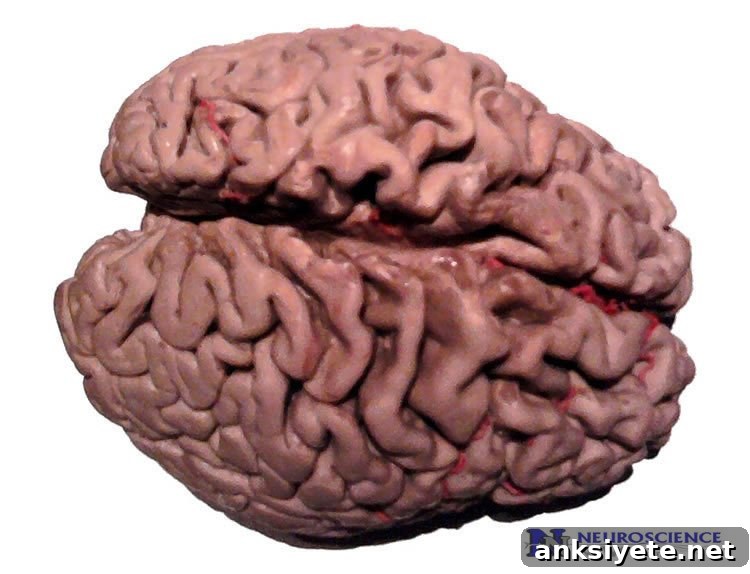
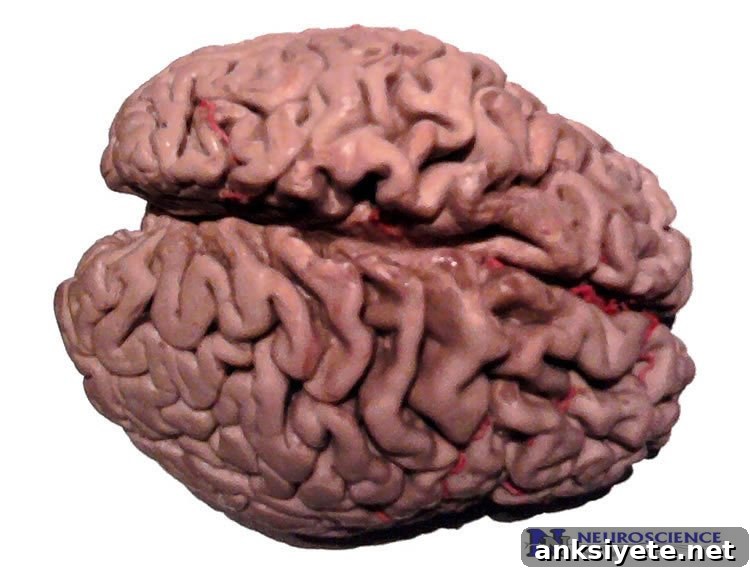
Alzheimer’s disease has long been associated with two hallmark features in the brain: neurofibrillary tangles, which are abnormal clumps of the protein tau inside nerve cells, and neuritic plaques, composed of beta-amyloid deposits outside nerve cells often accompanied by nearby dying neurons. Philip C. Wong, Ph.D., professor of pathology at the Johns Hopkins University School of Medicine, explains that beta-amyloid builds up outside cells while tau aggregates inside, and both processes interfere with the neural circuits that govern memory and cognition.
Until now, the relationship and timing between beta-amyloid deposition and tau aggregation have been uncertain. Tong Li, Ph.D., lead and corresponding author of the study and an assistant professor of pathology at Johns Hopkins, notes that prior research in familial early-onset Alzheimer’s suggested beta-amyloid accumulation might directly trigger tau aggregation and subsequent neurodegeneration. The new experiments by Li, Wong and colleagues show a more nuanced sequence: beta-amyloid deposition alone appears insufficient to convert tau from its normal form to the pathological, aggregation-prone form. Instead, amyloid plaques may initiate signaling events that, together with tau pathology, permit tau to convert and aggregate, producing neuronal loss and behavioral symptoms.
“Our findings suggest that amyloid plaque accumulation can harm the brain but is not by itself enough to drive nerve cell loss or observable cognitive decline,” Wong says. “A second insult — the pathological conversion of tau — seems to be required for the full development of dementia.”
In humans, beta-amyloid plaques can appear many years before tau tangles and clinical symptoms, often with a lag time of a decade or more. That long interval is difficult to model in standard laboratory animals because mice live only two to three years, and conventional mouse models that develop amyloid plaques do not always allow sufficient time to observe subsequent tau changes.
To overcome this limitation, the Johns Hopkins team engineered a mouse that expresses a fragment of tau designed to promote the aggregation of normal tau protein. They then crossed this line with mice predisposed to accumulate beta-amyloid. The resulting animals develop features and a disease course that more closely resemble the human progression of Alzheimer’s, allowing the researchers to study interactions between plaques and tangles within the shorter lifespan of a mouse.
Analysis of brain tissue from these animals showed that neither amyloid plaques alone nor the tau repeat domain fragment by itself was sufficient to trigger widespread pathological conversion of full-length tau. Instead, the presence of beta-amyloid plaques was necessary for the tau fragments to “seed” and drive plaque-dependent pathological conversion of tau, leading to neurodegeneration. This supports a model in which amyloid deposition creates a permissive environment that, together with tau seeds, leads to the spread of tau pathology and clinical decline.
The findings also carry therapeutic implications. Wong suggests that some clinical trials aimed at targeting tau pathology may have failed because interventions were applied after tau conversion was already established. Intervening earlier — before tau adopts its pathological form — or combining treatments that prevent amyloid deposition with therapies that block tau conversion could be more effective in slowing or preventing cognitive decline.
The researchers propose that combination therapies aimed at both beta-amyloid plaques and the pathological conversion of tau may offer the best chance of benefit, and that the new mouse model could be a useful platform for preclinical testing of such strategies.
Approximately 5.4 million Americans were living with Alzheimer’s disease according to 2016 estimates from the Alzheimer’s Association. There is no cure; available medications may temporarily stabilize cognition in some people or help manage related symptoms such as depression, anxiety or hallucinations.
Co-authors on the study include Kerstin E. Braunstein, Juhong Zhang, Ashley Lau, Leslie Sibener and Christopher Deeble from Johns Hopkins.
Funding: This work was supported by the Ellison Medical Foundation, the Brain Science Institute at Johns Hopkins, the Johns Hopkins University Neuropathology Pelda Fund, and the Johns Hopkins Alzheimer’s Disease Research Center.
Source: Alsy Acevedo — Johns Hopkins University
Image Source: This NeuroscienceNews.com image is credited as public domain.
Original Research: “The neuritic plaque facilitates pathological conversion of tau in an Alzheimer’s disease mouse model.” Published online July 4, 2016 in Nature Communications. DOI: 10.1038/ncomms12082
Johns Hopkins University. “A New Model for How Alzheimer’s Causes Dementia.” NeuroscienceNews. Published July 5, 2016.
Abstract
The neuritic plaque facilitates pathological conversion of tau in an Alzheimer’s disease mouse model
Cells release membranous extracellular vesicles (EVs), including exosomes, as a form of intercellular communication. Eph receptor tyrosine kinases and their ephrin ligands influence neuronal development, plasticity and disease. Previously, ephrin-Eph signaling was thought to require direct cell contact. The study reports that different cell types release EVs containing Ephs and ephrins in an ESCRT-dependent manner, regulated by neuronal activity. Purified EVs enriched in EphB2 can induce ephrinB1 reverse signaling and cause neuronal axon repulsion. These observations reveal a novel, contact-independent mechanism for ephrin-Eph signaling and suggest roles for EphB2+ EVs in neural development and synapse function.
Study: “The neuritic plaque facilitates pathological conversion of tau in an Alzheimer’s disease mouse model.” Authors: Tong Li, Kerstin E. Braunstein, Juhong Zhang, Ashley Lau, Leslie Sibener, Christopher Deeble and Philip C. Wong. Nature Communications. Published online July 4, 2016. DOI: 10.1038/ncomms12082