
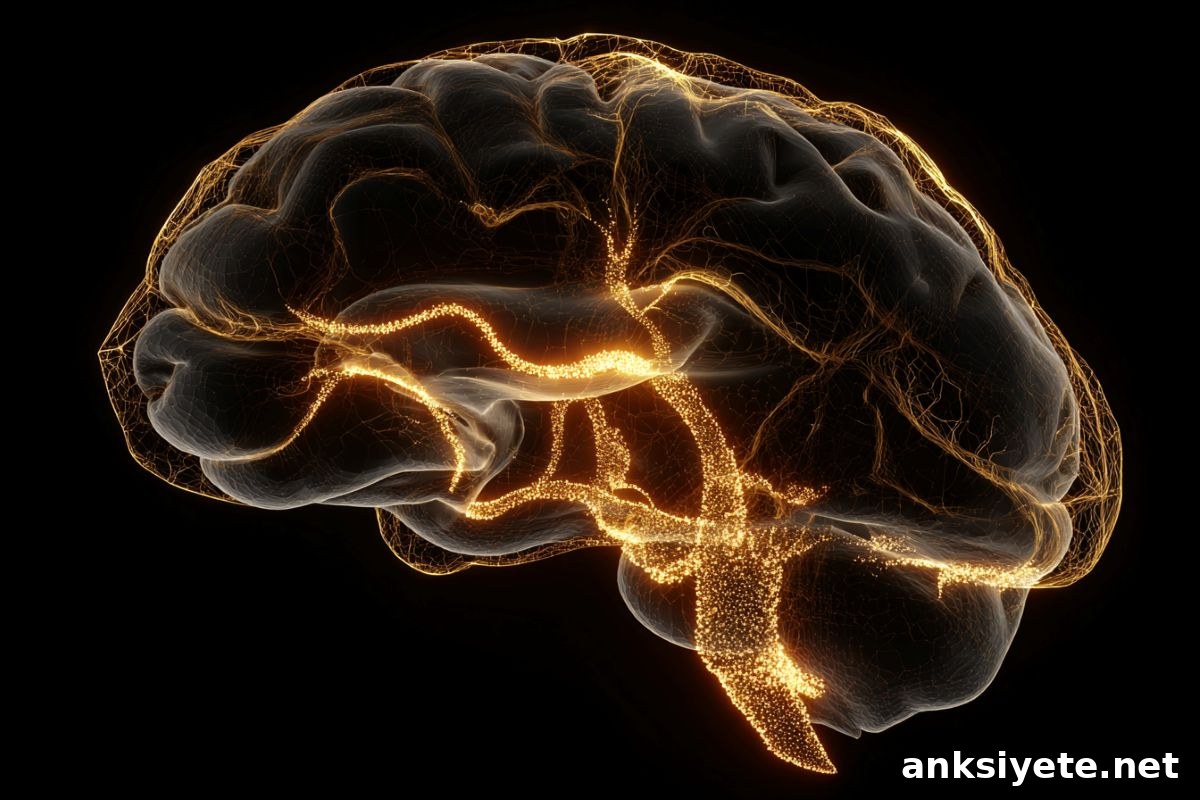
Summary: A major challenge in schizophrenia is the loss of cognitive flexibility—the capacity to revise beliefs when new evidence appears. New research from MIT pinpoints a mutation in the grin2a gene that disrupts a thalamocortical circuit responsible for this “reality check,” causing the brain to over-rely on outdated beliefs and ignore incoming sensory information.
The study shows that the grin2a mutation weakens activity in the mediodorsal thalamus and its connections with prefrontal cortex, undermining the neural computations that track changing choice values. Restoring activity in this circuit with optogenetics reversed the impaired decision-making in mice, identifying a concrete circuit-level target for treating cognitive symptoms that contribute to detachment from reality.
Key Facts
- Prior-belief bias: In healthy brains, sensory evidence updates prior beliefs so perception and decisions stay aligned with reality. In schizophrenia, patients can over-weight prior beliefs and fail to incorporate new input, producing rigid or delusional interpretations.
- grin2a and the NMDA receptor: grin2a encodes a subunit of the NMDA receptor, a glutamate-sensitive receptor that is essential for synaptic signaling and plasticity. Mutations in grin2a have been linked to increased schizophrenia risk.
- Behavioral testing: Using a lever-press task that pits a high-reward option against a low-reward option, researchers showed that mice carrying the grin2a mutation were slower to change strategies as the effort–reward balance shifted, revealing impaired adaptive decision-making.
- Mediodorsal thalamus as a hub: The mutation primarily reduced function in the mediodorsal (MD) thalamus, a region that interfaces with prefrontal cortex to represent task values and regulate executive control.
- Optogenetic rescue: Artificially boosting activity in MD neurons restored normal, flexible decision behavior in mutant mice, demonstrating that the circuit is underactive rather than irreversibly damaged.
Source: MIT
Difficulty updating beliefs is a core cognitive symptom
One common cognitive symptom in schizophrenia is a reduced ability to use new information to revise beliefs. Over time this deficit can contribute to poor choices and a growing disconnect between perception and reality. MIT neuroscientists developed a genetic mouse model to explore how a specific risk mutation affects the neural circuits that support belief updating and flexible decisions.
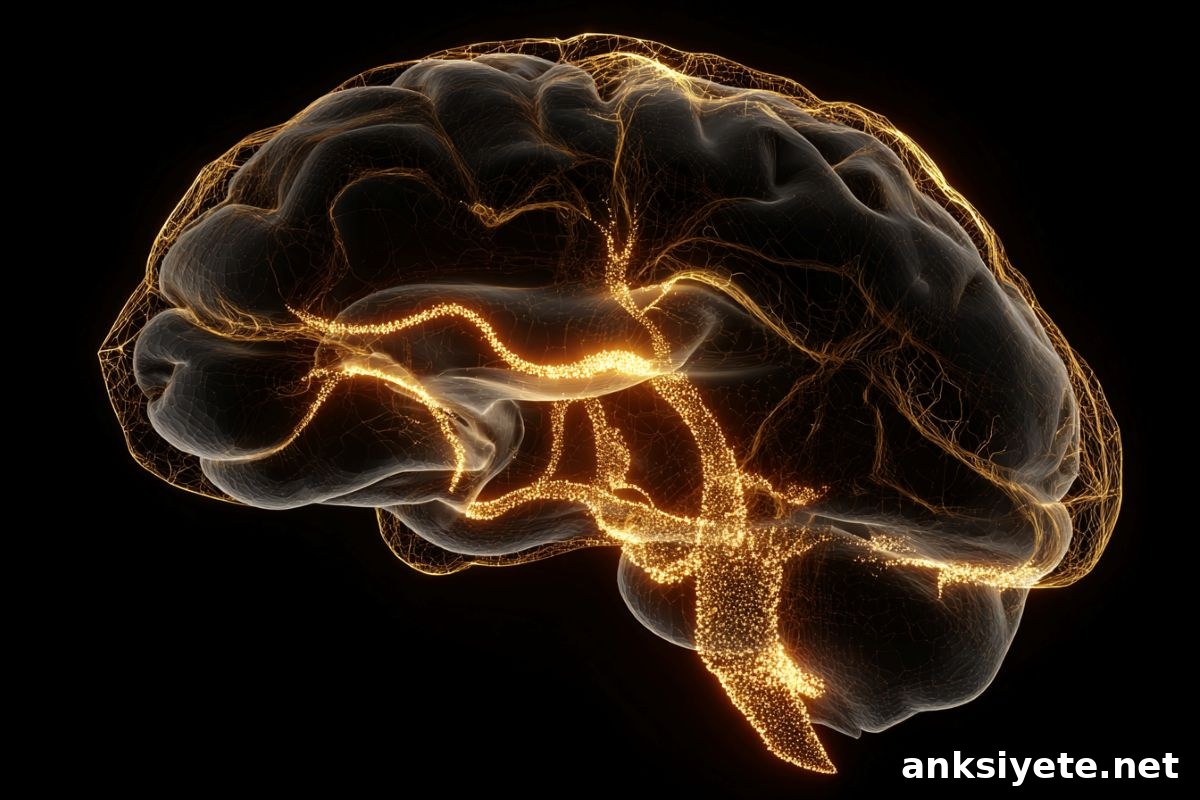
The grin2a mutation was first highlighted in large genetic screens of people with schizophrenia. To probe its effects, the research team created mice carrying a schizophrenia-associated grin2a point mutation and assessed their behavior and brain function during a task that required continuous reassessment of action values.
“If this circuit doesn’t function properly, you can’t quickly incorporate new information,” says Guoping Feng, the James W. and Patricia T. Poitras Professor in Brain and Cognitive Sciences at MIT and a senior author on the study. “Our results indicate this thalamocortical circuit is one mechanism contributing to the cognitive impairments observed in schizophrenia.”
The study, led by Feng and Michael Halassa (Tufts University), appears in Nature Neuroscience. Lead authors include Tingting Zhou and Yi-Yun Ho.
Adapting to new information
Schizophrenia has a substantial genetic component: population risk is about 1%, rising markedly in relatives. Large-scale genomic studies have identified many associated variants, but interpreting how these variants disrupt brain circuits has been challenging. Whole-exome sequencing—focusing on protein-coding regions—has revealed a manageable set of genes, including grin2a, whose mutations strongly increase risk.
To test belief-updating, researchers trained mice on a lever-press task: one lever delivered a small reward after multiple presses (low reward), while the other initially dispensed a larger reward with fewer presses (high reward). Over time, the required presses for the high-reward lever were gradually increased, forcing animals to reassess which option offered better value.
Normal mice switched strategies when the effort–reward balance equalized, typically settling on the lower-effort option once values matched. Mice with the grin2a mutation, however, showed prolonged indecision and delayed switching, indicating slower or noisier belief updating. In other words, mutant animals were less likely to incorporate the changing sensory and reward information that should prompt a strategy change.
An impaired circuit
Functional ultrasound imaging and electrophysiological recordings revealed that the mediodorsal thalamus was especially affected by the grin2a mutation. In healthy mice, MD neurons encode dynamic task values and correlate with cognitive states—exploratory versus committed choices. In mutant mice, MD activity was reduced and more variable, producing unstable representations of value.
Crucially, optogenetic experiments demonstrated causality: inhibiting MD neurons in healthy mice produced the same decision deficits seen in grin2a mutants, while activating MD neurons in mutant mice rescued their performance. This shows MD hypofunction directly impairs belief-updating and adaptive choice behavior.
Although only a small fraction of patients carry grin2a mutations, the MD thalamus and its thalamocortical connections may represent a shared vulnerability where diverse genetic or environmental insults converge. Targeting this circuit—pharmacologically or with noninvasive stimulation—could therefore address cognitive rigidity across different patient subgroups.
Funding:
This research was supported by the National Institutes of Mental Health, the Poitras Center for Psychiatric Disorders Research at MIT, the Yang Tan Collective at MIT, the K. Lisa Yang and Hock E. Tan Center for Molecular Therapeutics at MIT, the Stelling Family Research Fund at MIT, the Stanley Center for Psychiatric Research, and the Brain and Behavior Research Foundation.
Key Questions Answered:
A: Think of the brain as a navigation system that continually updates its position when new cues appear. A grin2a mutation can make that system favor older information rather than new sensory evidence. As a result, perceptions and decisions remain anchored to outdated beliefs, and over time the internal map diverges from the external world—creating the basis for delusions.
A: No. The grin2a mutation is rare. But the mediodorsal thalamus and its circuitry may be a common node where many different genetic or environmental factors converge, making it a promising target for broader therapeutic strategies.
A: Optogenetics is not currently feasible in humans, but the success of circuit “jump-starting” in mice shows the dysfunction is reversible. This supports development of drugs or noninvasive stimulation methods aimed at restoring activity in the same circuit to help patients regain flexible, reality-aligned cognition.
Editorial Notes:
- This article was edited by a Neuroscience News editor.
- The original journal paper was reviewed in full by editorial staff.
- Additional context and explanation were added to aid reader understanding.
About this genetics and schizophrenia research news
Author: Sarah McDonnell
Source: MIT
Contact: Sarah McDonnell – MIT
Image: Image credit: Neuroscience News
Original Research: Closed access. Title: Reduced mediodorsal thalamus activity underlies aberrant belief dynamics in a genetic mouse model of schizophrenia. DOI: 10.1038/s41593-026-02237-9
Abstract
Reduced mediodorsal thalamus activity underlies aberrant belief dynamics in a genetic mouse model of schizophrenia
Belief updating is believed to be impaired in schizophrenia and can contribute to delusion formation. Identifying the neural substrates has been challenging due to limited animal models and behavioral assays. The authors generated mice bearing a schizophrenia-associated Grin2a point mutation and developed a computationally tractable foraging task to measure belief-driven decision strategies. Mutant mice performed less optimally than wild-type littermates because of unstable cognitive states and noisy representations of dynamic task values.
The mediodorsal (MD) thalamus was identified as hypofunctional in mutant mice; in wild-type mice MD neurons encoded dynamic task values and cognitive states. Optogenetic inhibition of MD neurons in wild-type mice reproduced the mutant phenotype, while enhancing MD activity rescued task deficits in mutant mice. Together, these results nominate the MD thalamus as a key node in schizophrenia-relevant cognitive dysfunction and a potential target for future therapeutics.