
Summary: A recent review finds that demographic shifts and by-products of industrialization are driving a growing global burden of Parkinson’s disease.
Source: IOS Press.
For most of human history, Parkinson’s disease (PD) was an uncommon condition. Today, however, demographic changes and environmental exposures associated with industrialization are creating what experts describe as a potential Parkinson’s pandemic. Authors of a supplement to the Journal of Parkinson’s Disease call for the Parkinson’s community to form a “PACT” — to prevent, advocate, care, and treat — in order to slow the disease’s rise and improve outcomes for people affected.
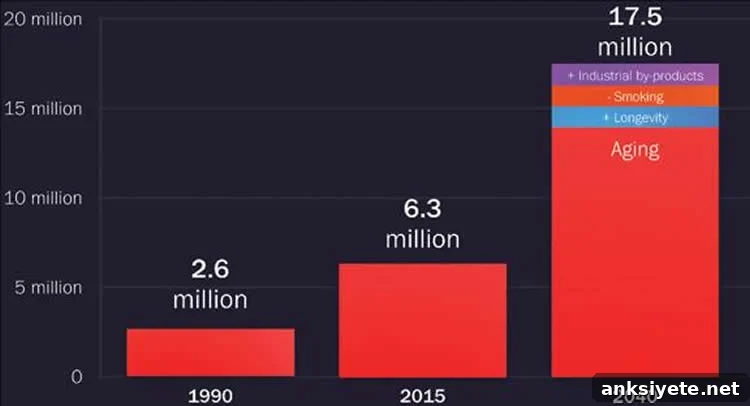
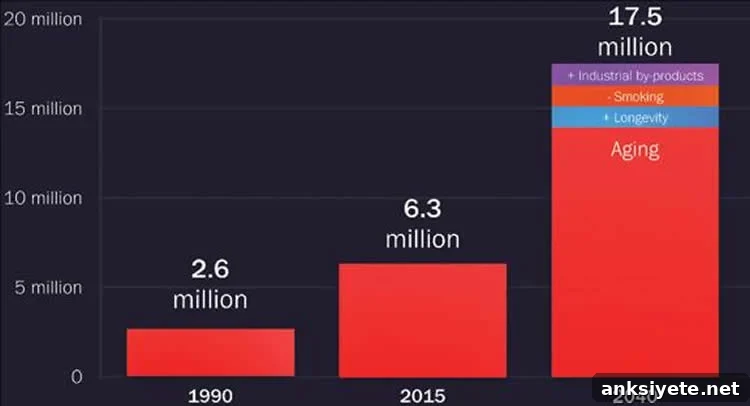
Neurological disorders are now the leading cause of disability worldwide, and Parkinson’s disease is the fastest growing neurological disorder. PD is a progressive illness that primarily affects movement, muscle control, and balance. Historical records show that in 1855, about 22 people out of 15 million in England and Wales died of Parkinson’s. By 2014, deaths attributed to PD in the UK rose to roughly 5,000–10,000 among a population of 65 million. Between 1990 and 2015 the global number of people living with PD doubled to more than six million. With aging as the principal driver, this figure is projected to double again to over 12 million by 2040. When longer life expectancy, falling smoking rates, and greater industrial exposure are also taken into account, the burden could exceed 17 million.
“By 2040, we can truly talk about a pandemic that will result in increased human suffering, as well as rocketing societal and medical costs,” warns Patrik Brundin, MD, PhD, Editor-in-Chief of the Journal of Parkinson’s Disease. The authors emphasize the need to alert the community and to shift research priorities and care planning to reduce the future impact.
Lead author Ray Dorsey, MD, points out the many layers of this challenge: “The tide of PD is rising and spreading. PD exacts an enormous human toll on those with the disease and those around them. The strain of caregiving has adverse health consequences of its own. The economic costs of PD are also substantial, poised to grow, and at least in the US, overwhelmingly directed at institutional care, which few desire.”
Aging is the major risk factor for Parkinson’s disease, and the global population is aging rapidly: both the number and proportion of people over age 65 are increasing. This demographic shift, combined with increasing longevity, means more individuals will live long enough to develop advanced stages of PD—stages that are harder to treat and may be associated with limited access to optimal care.
Interestingly, multiple studies have observed a lower risk of PD among smokers, with risk reductions on the order of 40% reported in some analyses. Whether this association is causal remains uncertain. If it is causal, global declines in smoking rates could contribute to higher PD incidence over time.
Beyond demographics, environmental risk factors linked to industrialization may also be increasing PD risk. Specific pesticides, solvents, and heavy metals have been associated with Parkinson’s, and these exposures are, importantly, preventable. The authors highlight that identifying and reducing harmful environmental exposures are actionable steps that could lower future disease burden.
Drawing lessons from public health successes against polio, HIV, and certain cancers, the authors call for organized, sustained activism. They propose forming a Parkinson’s “PACT” to coordinate prevention efforts, advocate for policy and resources, expand equitable models of care, and accelerate development of more effective treatments. Remarkably, the most effective symptomatic therapy for PD, levodopa, is now fifty years old, underscoring the need for new therapies that slow or stop disease progression.
Co-author Bastiaan R. Bloem, MD, PhD, adds, “We hope that this article will raise awareness of the challenge and form the basis for a community-led response to address one of the great health challenges of our time.” The authors conclude with a clear message: the Parkinson’s pandemic is not inevitable—many elements of its rise can be prevented or mitigated through coordinated action.
Source: Diana Murray – IOS Press
Publisher: Organized by NeuroscienceNews.com.
Image Source: Image credited to Department of Neurology and Center for Health and Technology, University of Rochester Medical Center, Rochester, NY, USA.
Original Research: Open access research: “The Emerging Evidence of the Parkinson Pandemic” by Dorsey, E. Ray; Sherer, Todd; Okun, Michael S.; and Bloem, Bastiaan R. Published in Journal of Parkinson’s Disease, January 25, 2019.
doi: 10.3233/JPD-181474
MLA: IOS Press. “Evidence of Impending Parkinson’s Disease Pandemic Identified.” NeuroscienceNews. 29 January 2019.
APA: IOS Press (2019, January 29). Evidence of Impending Parkinson’s Disease Pandemic Identified. NeuroscienceNews. Retrieved January 29, 2019.
Chicago: IOS Press. “Evidence of Impending Parkinson’s Disease Pandemic Identified.” NeuroscienceNews. Accessed January 29, 2019.
Abstract
The Emerging Evidence of the Parkinson Pandemic
Neurological disorders are now the leading source of disability worldwide, and Parkinson’s disease is the fastest-growing neurological disorder. From 1990 to 2015, the number of people with Parkinson’s disease doubled to more than six million. Driven primarily by aging, that number is projected to double again to over 12 million by 2040. Additional factors—rising longevity, falling smoking rates, and greater industrialization—could raise the burden to more than 17 million. For most of human history Parkinson’s was rare; demography and industrial by-products have now combined to create a potential pandemic that will demand heightened activism, careful planning, and new approaches to prevention, care, and treatment.