

 Most therapeutic approaches benefit when clients complete structured homework or take-home exercises between sessions. These activities help translate insights from sessions into everyday change, reinforce new skills, and accelerate progress toward treatment goals.
Research has repeatedly shown that homework is a reliable mechanism for producing clinical improvement across many conditions (for example, in depression and substance-use treatments). Because homework often drives change, it’s important to design assignments that are straightforward, engaging, and easy for clients to complete.
Fortunately, modern digital tools make it simple to deliver well-designed homework, track progress, and support clients between sessions. Below we describe the evidence supporting homework in therapy, explain how online exercises can enhance care, offer concrete examples of digital activities, and share practical tips for sending and creating online homework.
This Article Contains:
- Importance of Exercises and Homework in Therapy
- How Online Exercises Can Improve Care
- Three Examples of Online Therapy Exercises
- How to Send Online Exercises the Right Way
- Five Ways to Craft Online Exercises
- Take-Home Message
- References
Importance of Exercises and Homework in Therapy
Homework in therapy—when thoughtfully assigned and completed—consistently improves treatment outcomes. Meta-analyses and individual studies have found links between homework compliance and better results across mood disorders, substance-related conditions, and other clinical problems. Homework gives clients an opportunity to practice skills in real-world situations, to experiment with new behaviors, and to reflect on changes that occur outside the therapy room.
Homework is especially valuable in time-limited models of care, where maximizing impact between sessions is essential. It also supports psychoeducation when face-to-face contact is limited, helping clients internalize information and apply therapeutic strategies consistently.
How Online Exercises Can Improve Care
 Delivering homework digitally leverages devices clients already use daily and removes several practical barriers associated with paper worksheets. Clinicians who integrate online exercises into treatment report benefits such as:
- Greater convenience for clients who can access materials anytime on their phone, tablet, or computer.
- Faster distribution—therapists can assign, adapt, and resend activities with minimal effort.
- Built-in reminders and follow-ups that encourage completion and support clients with memory or motivation difficulties.
- Progress tracking and reporting features that let therapists monitor engagement and outcomes over time.
- Secure delivery options that meet privacy and data protection needs when using compliant platforms.
Digital delivery also expands the types of homework you can assign: multimedia meditations, interactive assessments, scheduled lessons, and short micro-tasks that support learning and habit formation.
3 Examples of Online Therapy Exercises

1. Self-Acceptance Meditation
Many clients seek therapy because of difficulties with self-criticism or low self-worth. Guided meditations and compassion-focused exercises can help cultivate kinder self-relating. A self-acceptance meditation typically invites clients to notice conditions they use to validate themselves—such as achievements or appearance—and then practices shifting toward unconditional acceptance. Visualizing a younger self and offering warm, accepting language are common techniques that help clients internalize a more compassionate stance.
2. Mindful Goal Focus
Goal setting is central to many therapies, but clients often struggle to find the right balance between avoidance and overdrive. A mindful goal-focus exercise helps clients identify whether they lean toward insufficient engagement (avoidance, procrastination) or excessive striving (over-control, perfectionism). The activity guides clients to set realistic, values-aligned goals and to adopt practical strategies for maintaining balanced attention and enjoyment while pursuing goals.
3. Outcome Rating Scale
Simple, regular outcome measures are valuable for tracking client progress and shaping session priorities. An Outcome Rating Scale asks clients to rate their wellbeing across domains such as overall functioning, personal wellbeing, interpersonal relationships, and social functioning (work or school). Short pre-session measures let therapists quickly identify areas of concern and monitor change over time. Digital versions can be scheduled automatically before appointments and aggregated into progress reports.

Download 3 Free Positive Psychology Exercises (PDF)
Use these science-based exercises to support wellbeing and strengthen therapeutic skill-building between sessions. Save the PDF to share with clients or adapt for your practice.
How to Send Out Online Exercises the Right Way
Using a secure online platform to assign homework streamlines distribution and record-keeping. Clients can complete activities on their own schedule while therapists receive data on completion and responses. When introducing a new digital workflow, a simple onboarding process reduces frustration and improves engagement.
Three practical onboarding steps:
- Break tasks into small steps. Start with one straightforward activity so clients can gain confidence before receiving multiple assignments.
- Highlight the key features clients will use most, such as a “To Do” list or reminders, so they know where to find assignments and submit responses.
- Create a short, clear guide—an email, a one-page PDF, or a brief screencast (2–3 minutes)—that demonstrates how to access and complete activities on different devices.
These steps reduce technical barriers and free clients to focus on therapeutic work rather than the mechanics of the platform.
5 Ways to Craft Online Exercises
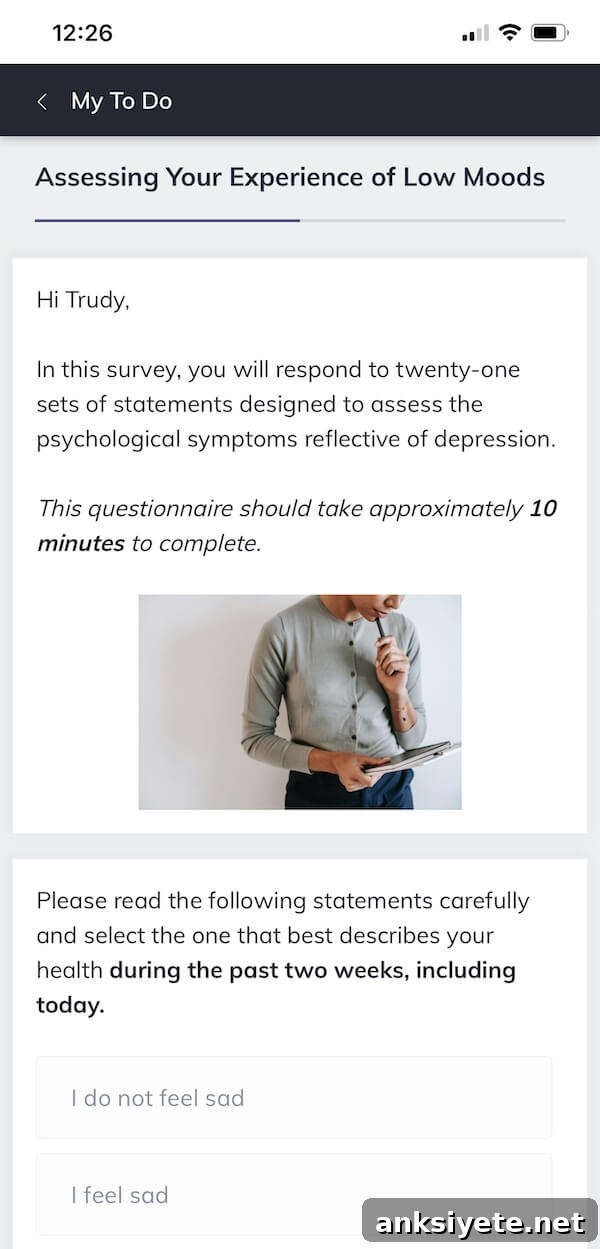
Digital activity builders let clinicians design engaging, flexible homework. Here are five approaches that work well:
1. Standardized Assessments
Recreate validated screening tools and symptom measures in digital form so clients can complete them remotely. Digital scoring and automated summaries save time and support ongoing monitoring.
2. Short Reflections and Check-Ins
Daily or weekly micro-reflections capture present emotion, needs, coping strategies, and progress toward goals. Use scheduled prompts and brief rating scales to make these tasks quick and habit-forming.
3. Guided Meditations and Visualizations
Embed audio or video for relaxation practices, self-compassion meditations, or imagery exercises. Multimedia resources increase accessibility and make repeated practice more inviting.
4. Psychoeducation and Lessons
Turn teaching points into short, multimedia lessons that clients can complete in stages. Sequence content with follow-up activities that encourage real-world application of the material.
5. Metaphors and Bite-Sized Teachings
Metaphors are memorable ways to explain difficult concepts—use single-focus activities that introduce a metaphor and invite clients to apply it to their own situation. These are easy to digest and promote insight.
Take-Home Message
Integrating digital homework into therapy makes it easier for clients to practice skills, apply lessons, and track progress between sessions. Thoughtful design and clear onboarding reduce barriers and improve engagement. By combining concise assignments, multimedia resources, and regular outcome measurement, clinicians can amplify the impact of each session and support lasting change.
If these ideas sparked new approaches for your practice, consider adapting one digital assignment this week and observe how clients respond. Small, consistent practice often produces the most meaningful gains.
References
- Addis, M. E., & Jacobson, N. S. (2000). A closer look at the treatment rationale and homework compliance in cognitive-behavioral therapy for depression. Cognitive Therapy and Research, 24(3), 313–326.
- Brach, T. (2005). Radical self-acceptance: A Buddhist guide to freeing yourself from shame. Sounds True.
- Carroll, K. M., Ball, S. A., Martino, S., Nich, C., Babuscio, T. A., Nuro, K. F., … Rounsaville, B. J. (2008). Computer-assisted delivery of cognitive-behavioral therapy for addiction: A randomized trial of CBT4CBT. American Journal of Psychiatry, 165(7), 881–888.
- Carroll, K. M., Nich, C., & Ball, S. A. (2005). Practice makes progress? Homework assignments and outcome in treatment of cocaine dependence. Journal of Consulting and Clinical Psychology, 73(4), 749–755.
- Coon, D. W., & Thompson, L. W. (2003). The relationship between homework compliance and treatment outcomes among older adult outpatients with mild-to-moderate depression. The American Journal of Geriatric Psychiatry, 11(1), 53–61.
- David, D., Lynn, S. J., & Das, L. S. (2013). Self-acceptance in Buddhism and psychotherapy. In M. E. Bernard (Ed.), The strength of self-acceptance (pp. 19–38). Springer.
- Kazantzis, N., & L’Abate, L. (2005). Theoretical foundations. In N. Kazantzis et al. (Eds.), Using homework assignments in cognitive behavior therapy (pp. 9–34). Routledge.
- Mausbach, B. T., Moore, R., Roesch, S., Cardenas, V., & Patterson, T. L. (2010). The relationship between homework compliance and therapy outcomes: An updated meta-analysis. Cognitive Therapy and Research, 34(5), 429–438.