
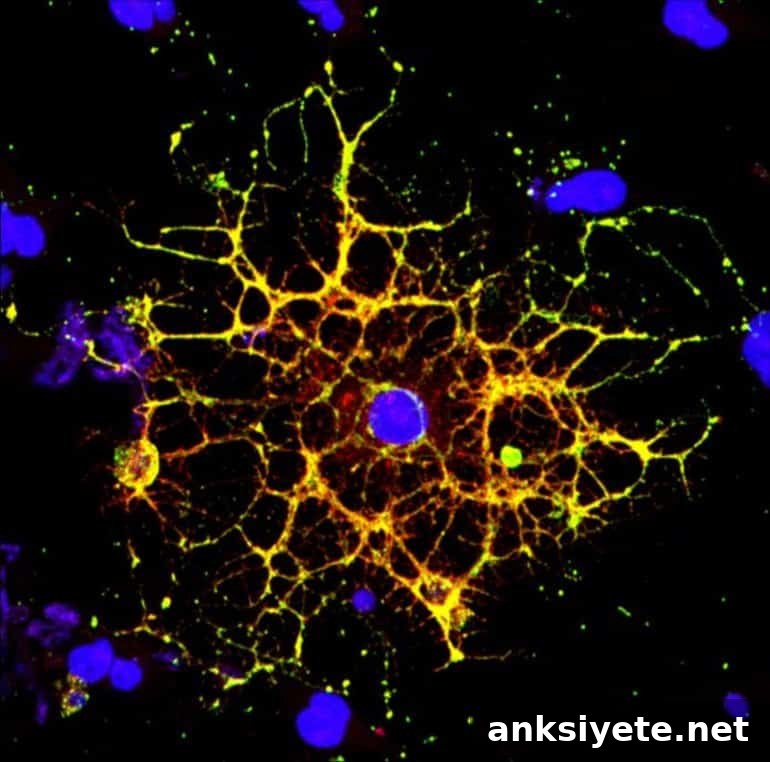
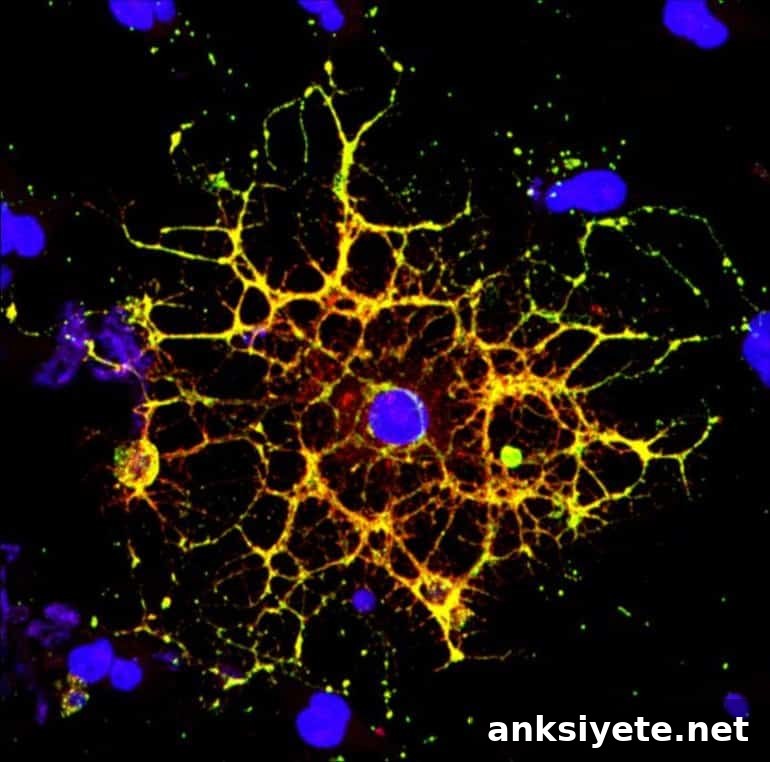
Summary: HIV infection blocks the maturation of oligodendrocytes, the myelin-producing cells in the brain, which contributes to loss of white matter.
Source: University of Pennsylvania
People living with HIV commonly show reductions in brain white matter. Unlike gray matter, made up of neuronal cell bodies, white matter consists of myelin, a fatty insulating layer that surrounds axons and enables fast, reliable signal transmission. Loss of myelin and white matter is linked to declines in motor skills and cognition.
Previous research from teams at the University of Pennsylvania and the Children’s Hospital of Philadelphia (CHOP) showed that antiretroviral therapy (ART) can itself affect white matter. What remained unclear was how HIV infection independently contributes to myelin loss.
In a new study combining human and rodent cell models, investigators identified a specific mechanism by which HIV interferes with white matter production. They found that factors released by HIV-infected immune cells prevent oligodendrocyte precursor cells from maturing into myelin-producing oligodendrocytes. When the researchers blocked that pathway pharmacologically, oligodendrocyte maturation and myelin production recovered.
The findings appear in the journal Glia.
“Even when antiretrovirals control viral replication, HIV can persist in the body. We wanted to understand how the virus itself impacts white matter,” says Kelly Jordan-Sciutto, professor in Penn’s School of Dental Medicine and co-senior author of the study. “Defining these mechanisms is a necessary step toward protecting people with HIV from related brain changes.”
“Neurons often get the spotlight, but white matter is critical across development and adulthood,” adds Judith Grinspan, a research scientist at CHOP and the paper’s other co-senior author. “Myelination matters in infancy, adolescence, and likely during adult learning. The more we know about these processes, the better we can prevent white matter loss and its consequences.”
Jordan-Sciutto and Grinspan have collaborated for years to investigate how ART and HIV influence brain cells, with a particular focus on oligodendrocytes. Their earlier work showed that several widely used antiretrovirals impair oligodendrocyte function and reduce myelin formation. The current study aimed to separate the direct effects of HIV-related inflammation from the effects of the drugs.
Led by Lindsay Roth, a recent doctoral graduate from Penn’s Biomedical Graduate Studies program, the team began by studying human macrophages, a primary reservoir for HIV infection. Since HIV does not infect neurons or oligodendrocytes directly, researchers reasoned that infected immune cells could secrete harmful substances that affect nearby brain cells.
To test this, the investigators collected culture fluid from HIV-infected human macrophages and applied it to rat oligodendrocyte precursor cells (OPCs) undergoing differentiation. The infected-macrophage supernatant did not kill OPCs, but it did prevent them from maturing into myelin-producing oligodendrocytes, and myelin production was reduced as a result.
“Infected immune cells release molecules meant to combat pathogens, but those same factors can damage or alter the behavior of neighboring brain cells,” Grinspan explains. “Our next goal was to identify which secreted factors were responsible for blocking oligodendrocyte maturation.”
The researchers focused on glutamate, a key neurotransmitter that becomes neurotoxic at high concentrations. When they treated HIV-infected macrophages with a compound that reduces glutamate release before transferring the growth medium to OPC cultures, the precursor cells were able to mature normally. That result indicates that excess glutamate from infected macrophages plays a central role in stalling OPC differentiation.
The team also explored the integrated stress response (ISR), a cellular program that responds to diverse stress signals and alters gene expression to promote survival or, under severe stress, trigger cell death. Jordan-Sciutto’s earlier studies had found ISR activation in other brain cell types from people with HIV-associated cognitive impairment, so the group tested whether ISR was involved in OPC dysfunction.
They found clear evidence of ISR activation in OPC cultures exposed to media from HIV-infected macrophages. Further experiments linked glutamate signaling to the ISR: glutamate released from infected macrophages activated the PERK arm of the ISR in OPCs, and blocking glutamate prevented ISR induction. Inhibiting PERK specifically protected OPCs from the maturation block mediated by HIV-infected macrophage supernatants.
“This work connects glutamate signaling and ISR activation as a mechanistic pathway by which HIV-associated neuroinflammation impairs oligodendrocyte maturation,” Jordan-Sciutto says. “Blocking either glutamate signaling or PERK-mediated ISR can rescue OPC differentiation in our models.”
To translate these cell-culture findings toward therapies, the team plans to test interventions in a well-established rat model of HIV-related neuroinflammation. “HIV is inherently a human disease, so animal models have limits, but this model could help determine whether the mechanisms we observe in cells also operate in vivo,” Grinspan says. They aim to compare white matter changes in animals with imaging data from patients, including a cohort of adolescent patients at CHOP, a population where HIV incidence is rising.
Ultimately, the researchers want to separate the effects of the virus from the effects of antiretroviral drugs to better evaluate the risks and benefits of treatment strategies, especially for children and adolescents.
“When we start children or adolescents on ART, we must weigh both benefits and potential impacts on the developing brain,” Jordan-Sciutto notes. “Antiretrovirals can limit viral reservoirs in the central nervous system, but some drugs also affect white matter. Globally, many people with HIV lack reliable access to ART, so understanding virus-driven damage and drug effects is essential for guiding care everywhere.”
Kelly Jordan-Sciutto is vice chair and professor in the University of Pennsylvania School of Dental Medicine’s Department of Basic & Translational Sciences and director of Biomedical Graduate Studies. Judith Grinspan is a research scientist at the Children’s Hospital of Philadelphia and research professor of neurology at the Perelman School of Medicine at the University of Pennsylvania. Lindsay Roth, a recent doctoral graduate from Penn’s Biomedical Graduate Group, is first author on the paper. Coauthor Çagla Akay-Espinoza is affiliated with Penn’s School of Dental Medicine.
Funding: This research was supported by the National Institutes of Health (grants MH098742, MH118121, and MH109382) and by the Cellular Neuroscience Core of the Institutional Intellectual and Developmental Disabilities Research Core at the Children’s Hospital of Philadelphia (grants HD26979 and GM008076).
About this HIV and neurology research news
Source: University of Pennsylvania
Contact: Katherine Unger Baillie – University of Pennsylvania
Image: The image is credited to Raj Putatunda
Original Research: Closed access.
“HIV-induced neuroinflammation inhibits oligodendrocyte maturation via glutamate-dependent activation of the PERK arm of the integrated stress response” by Kelly Jordan-Sciutto et al. Glia
Abstract
HIV-induced neuroinflammation inhibits oligodendrocyte maturation via glutamate-dependent activation of the PERK arm of the integrated stress response
Despite combined antiretroviral therapy (cART), HIV-associated neurocognitive disorder (HAND) affects 30–50% of people with HIV. Persistent white matter abnormalities—such as thinning of the corpus callosum and disrupted white matter microstructure—are observed in patients with HAND even when viral replication is controlled by cART. These observations raise the possibility that HIV-driven inflammation in the context of suboptimal cART disrupts oligodendrocyte maturation, function, or survival, contributing to continued HAND in the cART era.
To investigate how HIV infection affects oligodendrocyte development, the authors treated primary rat oligodendrocyte precursor cells (OPCs) with conditioned media from primary human monocyte-derived macrophages infected with HIV (HIV/MDMs). Immunostaining for lineage-specific markers showed that HIV/MDMs significantly inhibited OPC maturation into mature oligodendrocytes.
Building on previous work, the study evaluated signaling pathways including ionotropic glutamate receptors and the integrated stress response (ISR). The data indicate that AMPA/kainate receptors mediate the inhibition of oligodendrocyte maturation induced by HIV/MDMs. Treating OPCs with glutamate or AMPA/kainate agonists reproduced the maturation defect, while blocking the PERK arm of the ISR protected OPCs from inhibition. Glutamate, AMPA, and kainate activated the ISR in OPCs, and preventing AMPA/kainate receptor activation blocked ISR induction and rescued oligodendrocyte maturation.
Together, these results identify glutamate-driven ISR activation as a potential therapeutic target to mitigate white matter pathology in HAND and underscore the need for further studies on how these mechanisms contribute to cognitive impairment in people living with HIV.