
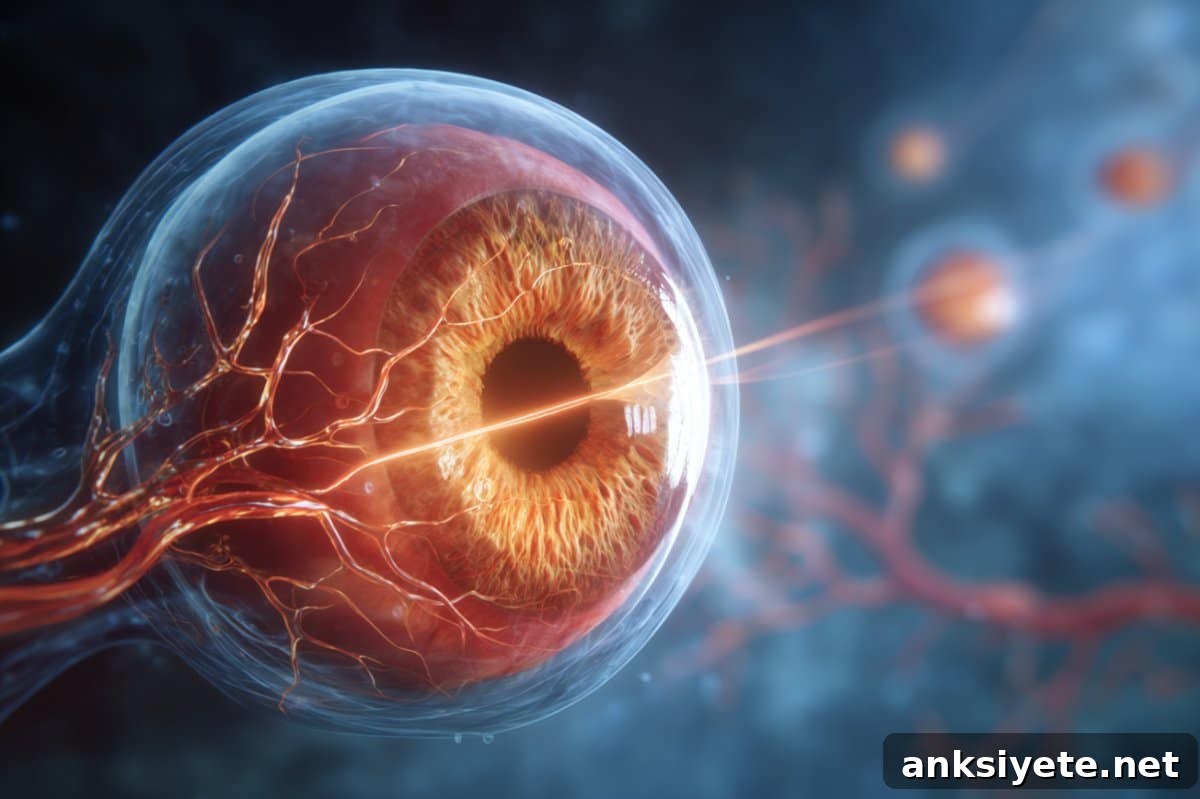
Summary: Routine eye exams may one day help detect Alzheimer’s disease and related dementias years before cognitive symptoms appear. A new study in mice carrying a common genetic variant shows distinct, early changes in retinal blood vessels that mirror cerebrovascular alterations linked to dementia risk, highlighting the retina’s promise as a noninvasive biomarker for brain health.
Because the retina is a direct extension of the central nervous system and shares tissue characteristics with the brain, monitoring its vascular and cellular changes offers an accessible way to assess neurological risk. These findings support further work to integrate retinal imaging into early-detection strategies for Alzheimer’s and related disorders.
Key Facts
- Retina as a brain window: The retina shares tissue and cell types with the brain, making it an informative site for tracking neurological health.
- Genetic risk factor: Mice carrying the MTHFR 677C>T mutation exhibited early retinal vessel abnormalities associated with increased dementia risk.
- Clinical potential: Retinal vascular signs visible during routine eye exams could potentially flag Alzheimer’s risk decades before symptoms emerge.
Source: Jackson Laboratory
Overview: New research indicates that ophthalmic screening could reveal early vascular changes linked to Alzheimer’s disease long before cognitive symptoms occur. The study, published in Alzheimer’s & Dementia, compares retinal vascular structure and molecular signatures in mice that carry a genetic variant associated with higher dementia risk.
Researchers at The Jackson Laboratory (JAX) examined mice with the MTHFR 677C>T variant—present in a sizable portion of the human population—and observed retinal abnormalities as early as six months of age. The retinal vessels appeared twisted, exhibited arterial narrowing and swelling, and showed reduced branching. These features mirror previously reported cerebrovascular changes in the same mouse model and are consistent with patterns known to impair blood flow and increase the risk of cognitive decline.
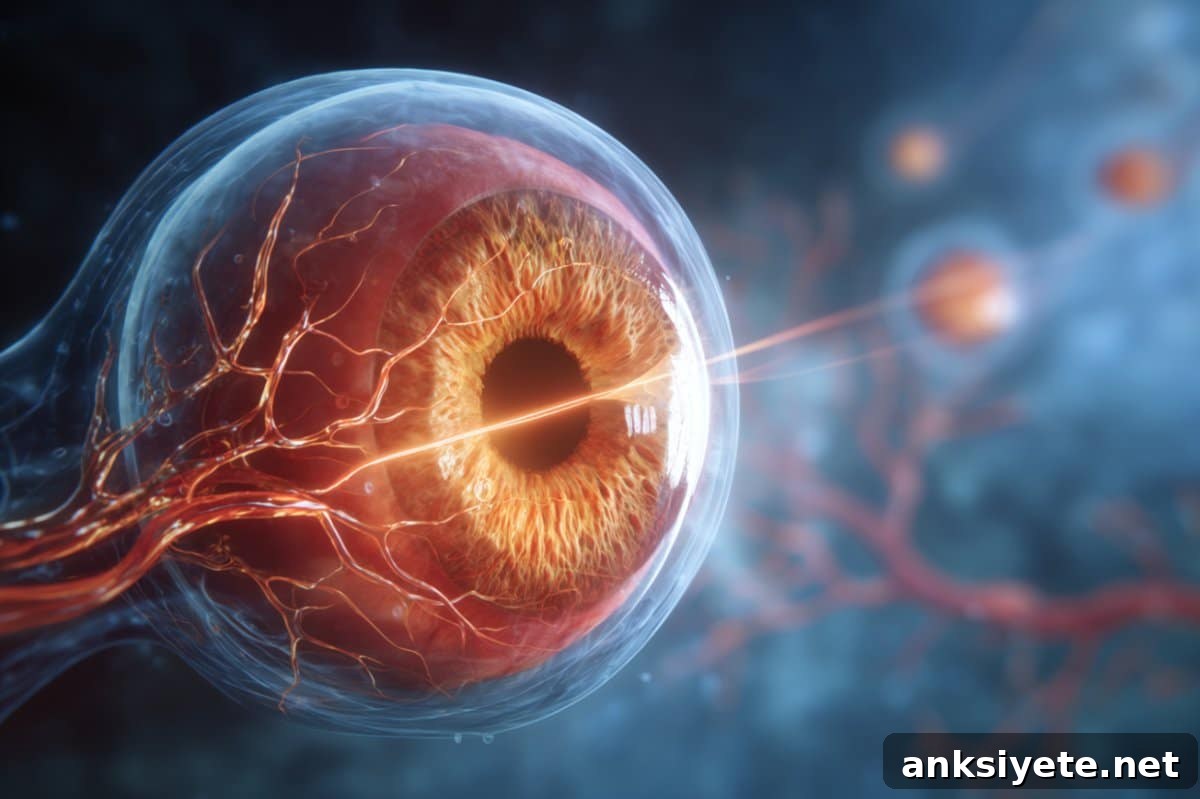
The retina’s accessibility—visible through the pupil with noninvasive imaging—makes it an appealing candidate for early screening. “If an eye doctor can detect unusual vascular patterns in the retina, those findings might reflect similar changes in the brain and serve as an early diagnostic clue,” said Alaina Reagan, a neuroscientist at JAX who led this study. Reagan worked with Gareth Howell, who led earlier research linking retinal cell abnormalities to dementia risk.
The research team used a combination of in vivo retinal imaging, immunohistochemistry, electroretinography, RNAscope, and proteomics to assess vessel morphology, neural function, gene expression, and protein changes. Their results show that Mthfr is broadly expressed in retinal tissue and co-localizes with vascular cell markers, and that the mutation drives age- and sex-dependent vascular deficits in the eye that parallel brain findings.
Proteomic analysis revealed shared molecular signatures in both brain and retina, including alterations in pathways for cellular energy production, protein clearance, and vascular support. These concerted changes suggest that retinal and brain tissues respond similarly to MTHFR-related stressors and that vascular health may play a central role in neurodegeneration.
The study also identified sex and age effects: female mice developed more pronounced retinal vascular deterioration by 12 months, with reduced vessel density and branching. This observation aligns with broader epidemiological patterns showing higher dementia incidence among women and underlines the importance of considering sex-specific trajectories in research and screening strategies.
To begin translating these findings toward clinical practice, the JAX team is collaborating with clinicians and dementia specialists at Northern Light Acadia Hospital in Bangor, Maine. Their goal is to determine whether the retinal vascular signatures observed in mice can be detected in humans carrying the MTHFR variant and whether routine eye exams could be adapted to flag elevated dementia risk for follow-up testing.
Reagan notes that many adults over 50 already attend regular eye appointments for vision checks. Introducing retinal vascular screening into those visits could offer a timely opportunity to identify individuals at higher risk and potentially begin interventions years before cognitive decline becomes evident to patients and families.
Other authors on the study include Michael MacLean, Travis L. Cossette, and Gareth R. Howell from The Jackson Laboratory.
About this visual neuroscience and Alzheimer’s disease research news
Author: Roberto Molar
Source: Jackson Laboratory
Contact: Roberto Molar – Jackson Laboratory
Image credit: Neuroscience News
Original Research: Open access. “Retinal vascular dysfunction in the Mthfr677C>T mouse model of cerebrovascular disease” by Alaina Reagan et al., published in Alzheimer’s & Dementia.
Abstract
Retinal vascular dysfunction in the Mthfr677C>T mouse model of cerebrovascular disease
INTRODUCTION
Research on retinal biomarkers for Alzheimer’s disease and related dementias has increased substantially. This study evaluates retinal vascular health in mice carrying the AD/ADRD risk variant Mthfr677C>T to determine whether retinal changes reflect cerebrovascular alterations.
METHODS
Retinal vascular morphology and function were assessed by in vivo imaging, immunohistochemistry, and pattern electroretinography. RNAscope and proteomics were used to map Mthfr gene expression and identify differential protein expression in mice carrying the Mthfr677C>T variant.
RESULTS
Mice exhibited age- and sex-dependent retinal vascular deficits that resemble previously reported brain abnormalities. Mthfr expression was widespread and co-localized with vascular cell markers, and proteomics revealed overlapping molecular signatures across brain and retina.
DISCUSSION
The data indicate that Mthfr-driven vascular phenotypes occur similarly in brain and retina. Assessing age- and genetics-related changes in the retinal vasculature may provide a minimally invasive approach to predict cerebrovascular damage associated with Alzheimer’s disease risk.