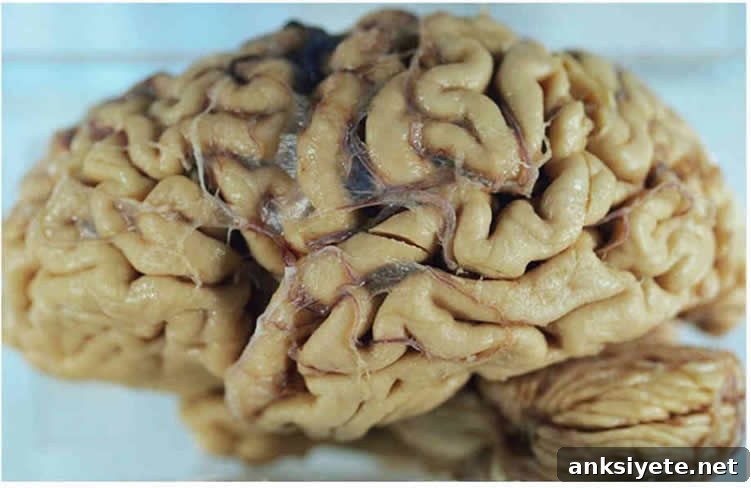
Summary: A study published in Frontiers in Aging Neuroscience presents evidence that bacterial DNA and associated inflammation may be linked to Alzheimer’s disease. The researchers report a markedly higher ratio of Actinobacteria to Proteobacteria in Alzheimer’s post-mortem brains compared with brains from cognitively healthy donors.
Source: Frontiers.
Altered bacterial profiles detected in Alzheimer’s disease brains compared with healthy brain tissue
Researchers in the UK applied DNA sequencing to post-mortem human brain samples to investigate whether bacterial populations differ between Alzheimer’s disease (AD) and healthy ageing brains. Their analysis suggests both altered proportions of specific bacterial groups and an overall increase in bacterial DNA signals in Alzheimer’s brains, findings that could support the hypothesis that infection and neuroinflammation contribute to disease processes.
Alzheimer’s disease is a progressive neurodegenerative disorder characterized by cognitive decline, accumulation of amyloid-beta peptides, formation of neurofibrillary tangles composed of tau protein, neuronal loss, and prominent neuroinflammation. Scientists increasingly consider inflammation not just a consequence but also a potential contributor to neurodegeneration.
“Alzheimer’s brains frequently show markers of neuroinflammation, and growing evidence suggests that inflammatory mechanisms may drive neuronal degeneration,” explains David Emery of the University of Bristol, one of the study’s authors. The new work explores whether microbial presence in the brain could be a trigger or amplifier of that inflammation.
Blood-brain barrier integrity normally restricts entry of microbes into the central nervous system. However, certain genetic risk factors for Alzheimer’s disease may impair these specialized vessels, potentially allowing microbes or microbial components from the bloodstream to access and colonize brain tissue. Such incursion could provoke a sustained inflammatory response.
The investigators used an unbiased approach to profile bacterial DNA across the community of microbes present in brain tissue, rather than focusing on a single species. Shelley Allen, a co-author, describes the goal: “Previous studies often targeted specific bacterial candidates. We wanted an agnostic, comprehensive overview of bacterial populations in Alzheimer’s brain tissue and a direct comparison with cognitively normal aged brain tissue.”
The study examined a small cohort of donated brains obtained from a brain bank: eight cases with Alzheimer’s disease and six age-matched cognitively unimpaired controls. The team used 16S rRNA gene-based next generation sequencing (NGS), a method capable of sequencing millions of DNA fragments simultaneously to reveal the composition of complex bacterial communities.
Key findings include a pronounced shift in bacterial composition in Alzheimer’s brain tissue. The authors report at least a tenfold higher overall ratio of Actinobacteria (predominantly Propionibacterium acnes-related sequences) to Proteobacteria in Alzheimer’s samples compared with healthy controls. In addition, Alzheimer’s samples yielded an apparent average sevenfold increase in bacterial sequence reads relative to the healthy brains, while control brains showed only low levels of bacterial signal consistent with background or normal bloodstream-associated bacteria in tissue.
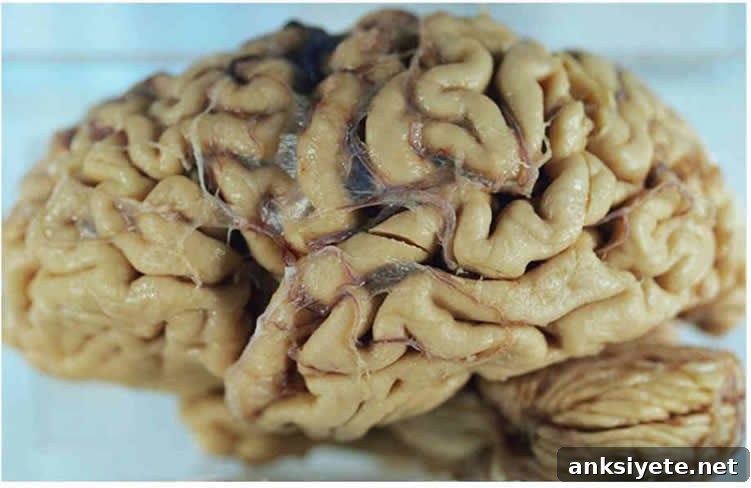
The authors stress important caveats. NGS provides powerful, unbiased detection of bacterial DNA sequences but does not directly equate to live bacterial counts or demonstrate active infection. Contamination and technical artifacts are potential concerns in any microbiome study of low-biomass tissues such as the brain, and additional methods are required to confirm microbial presence, localization, and viability.
“We observed a clear signal indicating differences in bacterial DNA between Alzheimer’s and control brains, but this method alone cannot determine whether bacteria are causative agents, contributors, or incidental findings,” notes Shelley Allen. The team calls for quantitative and complementary approaches — for example, in situ detection, culture-based methods, or targeted quantitative PCR — across larger numbers of samples to validate and extend these results.
Future investigations should test whether bacterial translocation into the central nervous system is associated with specific genetic risk factors, whether particular microbes can trigger or exacerbate neuroinflammation and neurodegeneration, and whether similar patterns appear in other neurodegenerative disorders that involve inflammatory processes.
Funding: The study received support from Bristol Research into Alzheimer’s and Care of the Elderly and the Sigmund Gestetner Trust.
Source: Melissa Cochrane – Frontiers.
Image Source: Illustrative image credited to NeuroscienceNews.com and provided for informational purposes.
Original Research: “16S rRNA Next Generation Sequencing Analysis Shows Bacteria in Alzheimer’s Post-Mortem Brain” by David C. Emery, Deborah K. Shoemark, Tom E. Batstone, Christy M. Waterfall, Jane A. Coghill, Tanya L. Cerajewska, Maria Davies, Nicola X. West and Shelley J. Allen. Frontiers in Aging Neuroscience. Published online June 20, 2017. DOI: 10.3389/fnagi.2017.00195.
Abstract (summary)
The study used 16S rRNA gene-targeted next generation sequencing to profile bacterial DNA from frozen and formalin-fixed brain tissue of a small cohort of Alzheimer’s and cognitively normal cases. Results indicate altered bacterial community composition and an apparent increase in bacterial sequence signal in Alzheimer’s brain tissue compared with normal brains. These observations add to the emerging discussion about possible microbial contributions to neuroinflammation and neurodegeneration, while underlining the need for further quantitative and mechanistic research.