
Summary: Using a highly adaptable CRISPR-based prime editing approach, researchers successfully restored sight in mice with retinitis pigmentosa.
Source: Rockefeller University Press
Researchers in China have restored vision in mice affected by retinitis pigmentosa, a leading cause of inherited blindness in humans.
The work, scheduled for publication on March 17 in the Journal of Experimental Medicine, demonstrates a new, flexible form of CRISPR genome editing with the potential to correct many different disease-causing mutations across the genome.
Previous genome-editing efforts have successfully reversed blindness in mouse models where the defect resides in the retinal pigment epithelium (RPE), a supportive non-neuronal layer that maintains the light-sensing rod and cone photoreceptors. However, most inherited retinal degenerations—including retinitis pigmentosa—arise from mutations within the photoreceptors themselves, posing a greater challenge for in vivo editing.
“Being able to edit the genomes of neural retinal cells, particularly stressed or dying photoreceptors, would more convincingly demonstrate the clinical potential of these genome-editing tools for disorders such as retinitis pigmentosa,” says Kai Yao, professor at Wuhan University of Science and Technology.
Retinitis pigmentosa (RP) is genetically heterogeneous—mutations in more than 100 different genes can cause it—and affects roughly one in every 4,000 people. The disease typically begins with degeneration of rod photoreceptors, which detect low light, and later involves cones, which are essential for color and central vision. Over time this progressive loss leads to severe and often irreversible visual impairment.
To test whether photoreceptor-targeted editing could halt or reverse degeneration, Yao and colleagues focused on a mouse model carrying a mutation in the Pde6b gene, which encodes the PDE6β enzyme essential for phototransduction. The team developed an unconstrained prime editing system, PESpRY, which combines the versatility of prime editors with a SpCas9 variant (SpRY) that relaxes PAM requirements. This expanded targeting capability allows correction of many mutation types irrespective of their genomic context.
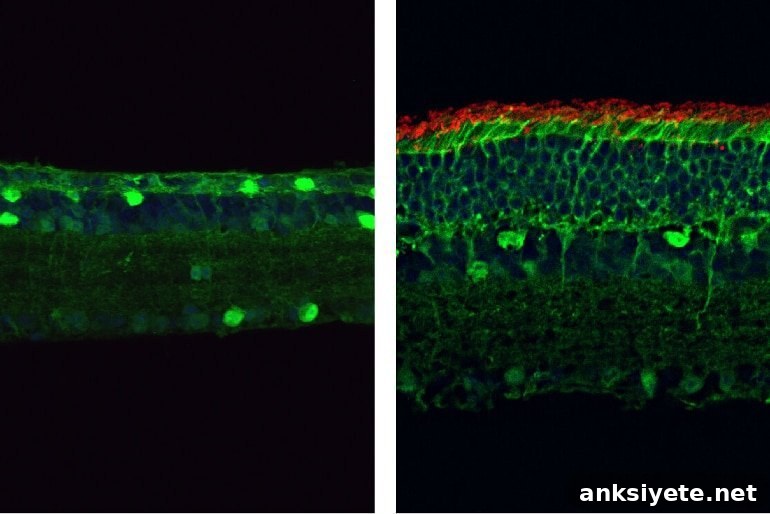
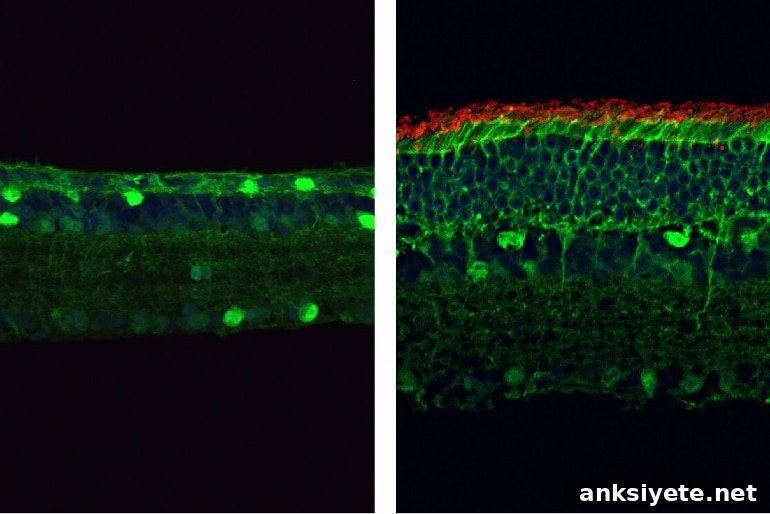
When programmed to target the mutant Pde6b allele, PESpRY efficiently corrected the genetic defect in retinal cells in vivo, restoring PDE6β activity. This molecular repair prevented ongoing loss of rod and cone photoreceptors, preserved retinal structure, and reinstated normal electrophysiological responses to light.
Importantly, the investigators validated functional vision through multiple behavioral and physiological assessments. Treated mice showed markedly improved electroretinogram (ERG) responses. In visually guided tasks, such as a water-maze designed to rely on sight, gene-edited animals navigated almost as well as healthy controls. They also displayed typical head-tracking movements and enhanced optomotor responses when presented with visual stimuli, indicating meaningful recovery of visual function.
The researchers used a dual adeno-associated virus (AAV) delivery system to introduce the PESpRY components into degenerating retinas, demonstrating that this approach can work through a non-NGG PAM site (GTG) and still achieve effective editing and phenotypic rescue.
Yao emphasizes that while these results are encouraging, significant work remains to assess long-term safety, off-target effects, and translational feasibility in humans. “Our study, however, offers strong in vivo evidence that an unconstrained prime-editing strategy can prevent vision loss caused by RP-associated mutations and holds promise for diverse therapeutic applications,” he says.
About this gene editing and visual neuroscience research news
Author: Press Office
Source: Rockefeller University Press
Contact: Press Office – Rockefeller University Press
Image: The image is credited to Qin et al / JEM
Original Research: Open access.
“Vision rescue via unconstrained in vivo prime editing in degenerating neural retinas” by Huan Qin et al., Journal of Experimental Medicine
Abstract
Vision rescue via unconstrained in vivo prime editing in degenerating neural retinas
Retinitis pigmentosa (RP) is an inherited retinal dystrophy characterized by progressive and irreversible loss of photoreceptors. In this study, we developed PESpRY, a genome-editing platform that pairs the broad editing capabilities of prime editors with a SpCas9 variant (SpRY) that has an unconstrained PAM requirement. Using a dual AAV delivery system, we transduced the retinas of a Pde6b-associated RP mouse model and performed in vivo prime editing at a non-NGG PAM (GTG).
Correction of the pathogenic mutation halted progressive cell loss, restored PDE6β production, and led to substantial preservation of photoreceptors. Treated animals showed significant electrophysiological recovery on ERG and improved performance in passive and active avoidance tests. They also exhibited stronger optomotor reflexes and reliably completed visually guided water-maze tasks. Collectively, these findings provide convincing evidence that unconstrained in vivo prime editing can prevent vision loss caused by RP-associated mutations and may offer a broadly applicable strategy for treating inherited retinal diseases.