
Summary: A national poll from the University of Michigan’s C.S. Mott Children’s Hospital finds that parental stress commonly clouds the holiday season for families. About one in five parents say their children hold unrealistic expectations about the holidays, and one in four parents admit they put unrealistic pressure on themselves to create a “perfect” holiday. Mothers report higher levels of holiday-related stress than fathers.
Source: University of Michigan
The holidays are often pictured as a time of warmth, family traditions, and joyful surprises—but for many parents, the effort required to create that ideal can produce stress that diminishes the season’s magic for everyone.
A recent national poll by the C.S. Mott Children’s Hospital National Poll on Children’s Health at University of Michigan Health asked more than 2,000 parents of children ages 1–18 about their holiday experiences and stressors. The findings highlight how parental expectations and holiday responsibilities can affect family well-being.
Key findings include: one in five parents believe their child has unrealistic expectations about the holidays; one in four parents report they place overly idealistic expectations on themselves; and one in five parents say their stress has a negative impact on their child’s enjoyment of the season.
“People are surrounded by images depicting the holidays as a time of peace, love and joy. Many parents want to give their children those perfect magical memories to treasure for years to come,” said Mott Poll co-director Sarah Clark, M.P.H. “But all the behind-the-scenes work to make that vision happen can have the opposite effect. Excessive parental stress can add tension and reduce the joy children associate with the season.”
Although most parents say the holidays are generally a happy time for their family, one in six rate their own stress level as high during the season. The poll also found that nearly twice as many mothers report high stress as compared with fathers.
Common triggers of holiday stress reported by parents include long to-do lists, extra shopping, keeping family members healthy, household finances, and coordinating social gatherings. Negotiating plans across different branches of a family and expenses for gifts and travel also contribute to anxiety. In some regions, concerns about COVID and family health add another layer of worry.
Primary holiday stressors
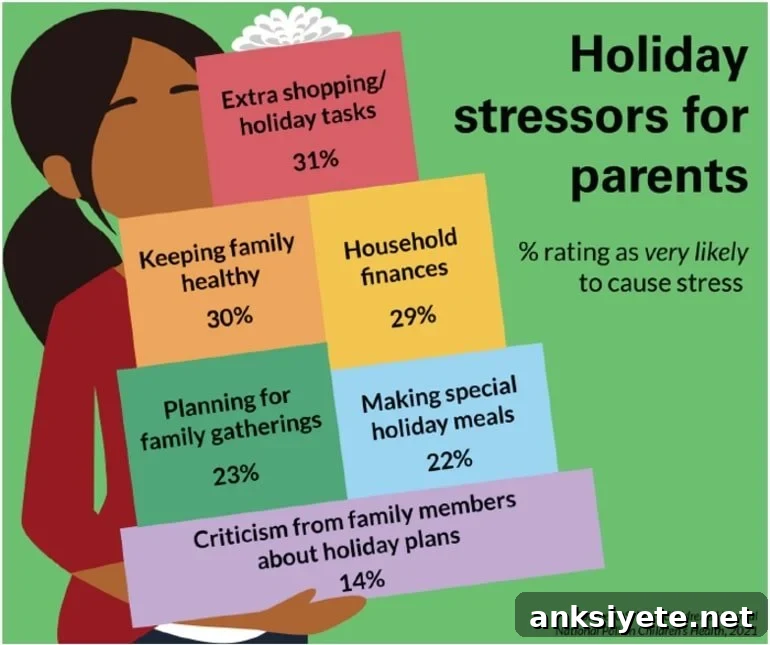
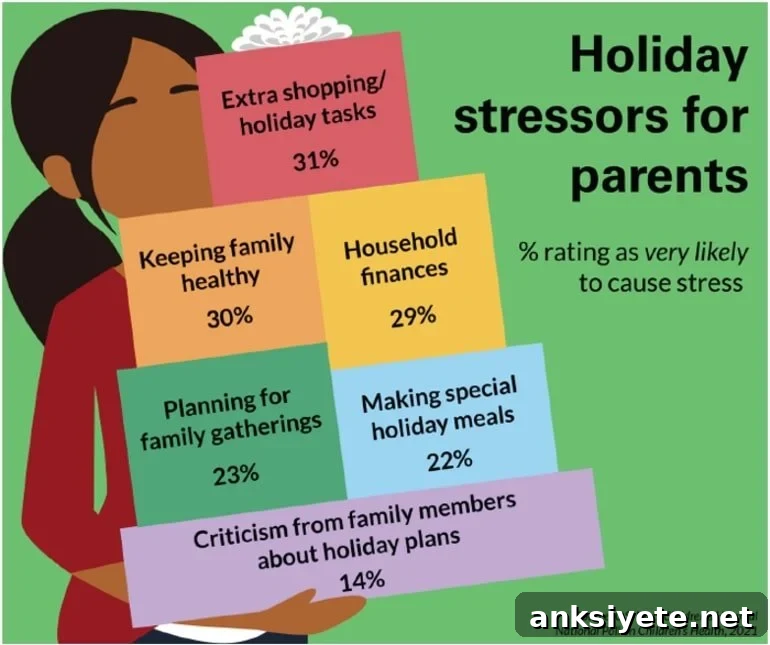
Nearly a third of parents say extra shopping and holiday tasks, health concerns, and financial pressures are major sources of stress. Other frequent stressors are family gatherings (23%), preparing special holiday meals (22%), and criticism from relatives about holiday plans (14%). Across these areas, more mothers than fathers rate each as very likely to cause stress.
Clark recommends that families discuss holiday priorities together. Identifying a few meaningful traditions—whether it’s watching a favorite holiday movie, visiting light displays, or baking cookies—lets families preserve what matters most while trimming activities that are less important.
“Talk about what people actually enjoy,” Clark advised. “Parents sometimes assume children want elaborate traditions, when their favorite memories may be much simpler. Once you know what matters, you can scale back other tasks and redefine what a ‘perfect’ holiday looks like for your family.”
Recharge and model healthy coping
Parents describe a variety of strategies they use to relieve holiday stress. The most commonly reported methods are taking time alone (71%), listening to music (55%), exercising (46%), attending prayer or religious services (28%), getting help from family members (23%), and using work as a respite (15%). Mothers are more likely to report relief from family help, while fathers are more likely to turn to work as a stress outlet.
Clark emphasizes the role parents play as models for children: “The holiday season provides an opportunity to demonstrate good mental health habits. Saying things like, ‘I’m feeling overwhelmed—let’s take a short break’ teaches children how to recognize stress and respond to it.” Simple routines, short breaks, and clear communication can help children learn healthy coping skills.
Disrupted routines and kids at home
The holiday break itself can add stress. Among parents of school-age children, 23% of mothers and 14% of fathers say having kids at home more during the break increases their stress. School often enforces daily routines—wake-up times, meal schedules, bedtimes—which can be disrupted over the holidays.
Many parents relax some rules during break: 20% say they ease screen-time limits, 19% relax bedtime rules, 14% allow more friends over, and 13% permit more junk food or sleepovers. While it’s natural to want children to enjoy a break from structure, Clark recommends maintaining enough routine to prevent sleep loss, poor diet, and irritability that can undermine family enjoyment.
Finding a balance between special holiday freedoms and consistent habits helps everyone feel better and makes family time more enjoyable.
About this stress research news
Author: Beata Mostafavi
Source: University of Michigan
Contact: Beata Mostafavi – University of Michigan
Image: The image is credited to C.S. Mott Children’s Hospital National Poll on Children’s Health at University of Michigan Health.