
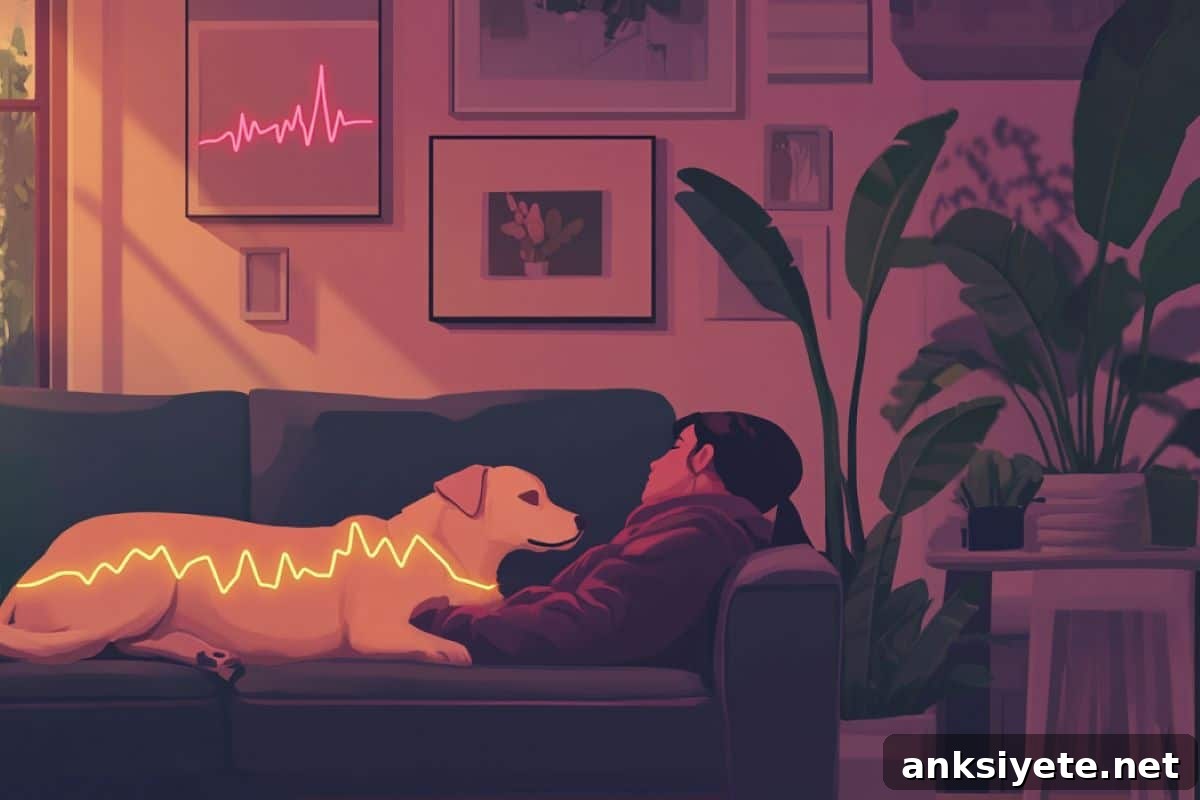
Summary: A new study finds that dogs and their owners display synchronized heart rate variability (HRV), reflecting shared emotional states—especially during calm, restful interactions.
Researchers discovered that heart rate and physical activity levels adapt between dogs and owners, but emotional synchrony—measured via HRV—was strongest when both were relaxed. Larger dogs tended to have higher HRV, and owners who score higher in negative affectivity often formed stronger emotional bonds with their dogs.
Overall, the study suggests dogs and their owners mirror one another’s physiological and emotional states in a manner similar to human parent–child attachment.
Key Facts:
- Dogs’ and owners’ heart rate variability aligns during relaxed, free-form interactions, indicating shared emotional states.
- Physical activity and HRV show different patterns of adaptation; activity synchrony was strongest during structured tasks, HRV synchrony during rest.
- Owner traits, such as higher negative affectivity, were associated with stronger HRV links and emotional connection to the dog.
Source: University of Jyväskylä
Emotional synchronization plays a key role in social bonding. Just as coordinated emotional responses strengthen parent–child attachment, attachment between a dog and its owner appears to involve shared physiological patterns—but the underlying mechanisms have been less clear.
A study from the University of Jyväskylä, conducted at the Department of Psychology and the Jyväskylä Center for Interdisciplinary Brain Research, measured how dogs’ and owners’ heart rate variability (HRV) and activity levels changed during interaction. HRV reflects autonomic nervous system state: higher HRV indicates relaxation and recovery, while lower HRV signals arousal or stress, such as during exams or intense exercise.
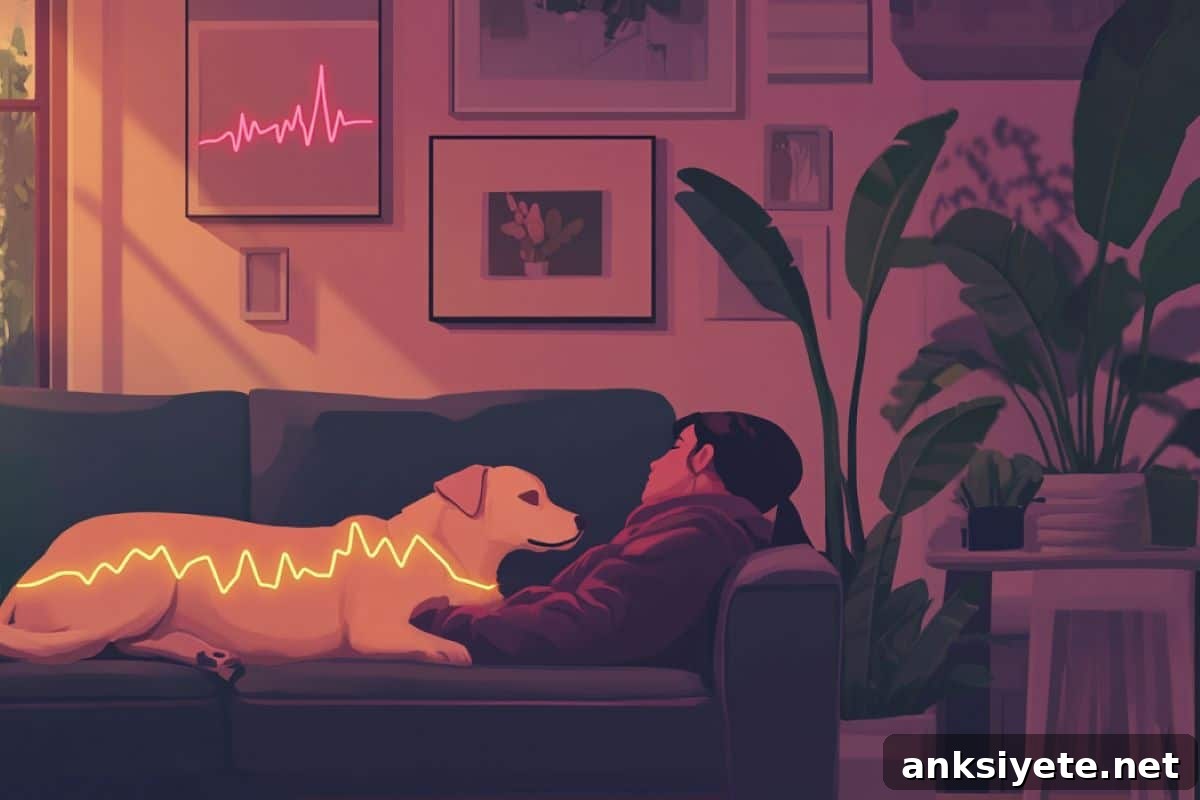
Published in Scientific Reports, the study found that owners with high HRV tended to have dogs with high HRV at the same times, and vice versa. Physical activity levels also adjusted between dogs and owners, but the timing and context of these adaptations differed.
Different connections for activity and heart rate variability
Researchers monitored pairs of dogs and owners during several interaction tasks and resting baselines. While overall heart rate and activity showed correlation across the entire session, task-specific patterns emerged: HRV of dogs and owners correlated chiefly during free, unstructured resting periods, whereas activity levels were more closely matched during specific interaction tasks, such as stroking or playing.
In practical terms, when an owner was calm and relaxed during a free-form resting period, the dog’s physiology showed similar relaxation—suggesting emotional co-modulation. During directed activities, both parties naturally mirrored each other’s movements, explaining the activity-level synchrony.
Although physical activity can influence heart rate, the study’s findings indicate that HRV synchrony is not merely a byproduct of shared movement. Instead, HRV appears to reflect an alignment of emotional states independent of activity alone.
“The interconnection in heart rate variability between dog and owner during resting periods likely reflects a situation without external tasks, allowing each to respond more naturally to the other’s internal state,” explains doctoral researcher Aija Koskela.
The study also examined background factors influencing HRV interconnection. Larger dogs showed higher overall HRV. Additionally, a dog’s HRV was partly predicted by the owner’s negative affectivity—a temperament trait describing a tendency to experience concern or negative emotions. Owners with higher negative affectivity appeared to form stronger emotional bonds with their dogs, which may increase the dog’s sense of safety and result in higher HRV.
The dog also influences the owner
A notable and somewhat unexpected result was that the dog’s overall HRV was the best predictor of the owner’s HRV, even after accounting for known human HRV influencers such as activity level and body mass index. This finding underlines the reciprocal nature of the bond: not only do owners shape their dogs’ emotional state, but dogs also have a measurable influence on their owners’ physiological responses.
“We simultaneously recorded both the dog’s and the owner’s heart rate and activity, while many previous studies focused on only one side of the dyad,” says Academy Research Fellow Miiamaaria Kujala. “This more complex setup gives a clearer picture of interactive dynamics.”
The results indicate that during interaction, the nervous systems and emotional states of dogs and their owners partially adapt to one another. The same processes that underpin human attachment—behavioral and physiological synchrony—appear to support the dog–owner relationship as well.
This research enhances our understanding of interspecies interaction and the physiological basis of the emotional connection between dogs and people.
The study included 30 volunteer owners and their dogs. Participants were primarily cooperative breeds—such as sheepdogs and retrievers—selected historically for close work with humans. These breeds may be particularly sensitive to owners’ behaviors and personalities, consistent with earlier research. Future work will aim to clarify the causal mechanisms behind these co-modulation effects.
About this neuroscience and animal psychology research news
Author: Aija Koskela
Source: University of Jyväskylä
Contact: Aija Koskela – University of Jyväskylä
Image: The image is credited to Neuroscience News
Original Research: Open access. “Behavioral and emotional co-modulation during dog–owner interaction measured by heart rate variability and activity” by Aija Koskela et al., Scientific Reports
Abstract
Behavioral and emotional co-modulation during dog–owner interaction measured by heart rate variability and activity
Behavioral and physiological synchrony support emotional closeness in attachment relationships. This pseudorandomized cross-over study investigated co-modulation—the emotional and physiological link—between dogs and owners. We measured HRV and physical activity in cooperative-breed dogs (n = 29) and their owners during resting baselines and positive interaction tasks (stroking, training, sniffing, playing), and collected survey data on owner temperament and the dog–owner relationship.
While overall HRV and activity correlated between dogs and owners across tasks, task-level analysis showed HRV correlations during free behavior (pre- and post-baseline) and activity correlations during structured interactions (stroking and playing). Dog overall HRV was the only significant predictor of owner overall HRV. In contrast, dog HRV was predicted by dog height, ownership duration, owner negative affectivity, and measures of the dog–owner interaction. Thus, dog, owner, and relationship characteristics modulated HRV responses in the dyads.
The findings demonstrate co-modulation of physiology and behavior in cooperative-breed dogs and their owners, revealing a physiological and emotional connection comparable to attachment relationships observed between humans.