
Summary: Quercetin, a plant flavonoid abundant in pickled capers, directly modulates KCNQ family potassium ion channels. These channels play key roles in brain and heart physiology, and their dysfunction is linked to disorders such as epilepsy, diabetes-related complications, and cardiac arrhythmias.
Source: UC Irvine
Correction: Quercetin was previously mischaracterized as a protein; it is a flavonoid. Thanks to Dr. Lilian Hsu for the correction.
A naturally occurring compound found in capers can activate ion channels necessary for healthy brain and heart function, and the discovery points to new directions for therapeutic development targeting epilepsy and abnormal heart rhythms.
Researchers at the University of California, Irvine School of Medicine report that quercetin—a widely consumed dietary flavonoid abundant in capers—can directly regulate KCNQ voltage-gated potassium channels. These KCNQ channels are essential for controlling electrical activity in cells and are implicated in diverse physiological processes, including heartbeat regulation, neuronal excitability, muscle contraction, and the function of the thyroid, pancreas, and gastrointestinal tract.
The study, published in Communications Biology, was led by the laboratory of Geoffrey Abbott, PhD, professor in the Department of Physiology and Biophysics at UC Irvine School of Medicine. Kaitlyn Redford, a graduate student in the Abbott Lab, is first author of the paper titled, “The ubiquitous flavonoid quercetin is an atypical KCNQ potassium channel activator.”
Using extracts and electrophysiological assays, the Abbott Lab demonstrated that quercetin modulates members of the KCNQ gene family. Dysfunction of these potassium channels is associated with several common human diseases, including certain forms of epilepsy, cardiac arrhythmias, and metabolic conditions. The new findings provide a clearer molecular explanation for how quercetin-rich foods might influence cellular electrical signaling and suggest opportunities to design quercetin-inspired compounds as potential therapeutics.
The researchers discovered that quercetin interacts with KCNQ channels by altering how the channels sense and respond to changes in membrane voltage. Specifically, quercetin binds to regions of the channel involved in voltage sensing and pore function, effectively promoting channel opening under conditions when the channel would otherwise remain closed. This mechanism differs from many classical KCNQ modulators and reveals an atypical mode of channel activation.
“Understanding the precise way quercetin controls KCNQ channels opens the door to medicinal chemistry efforts to optimize quercetin-like molecules for therapeutic use,” said Abbott. Compounds that enhance KCNQ channel activity have already shown efficacy in treating some forms of epilepsy and show promise for preventing certain cardiac arrhythmias, so quercetin-inspired chemistry could expand treatment options.
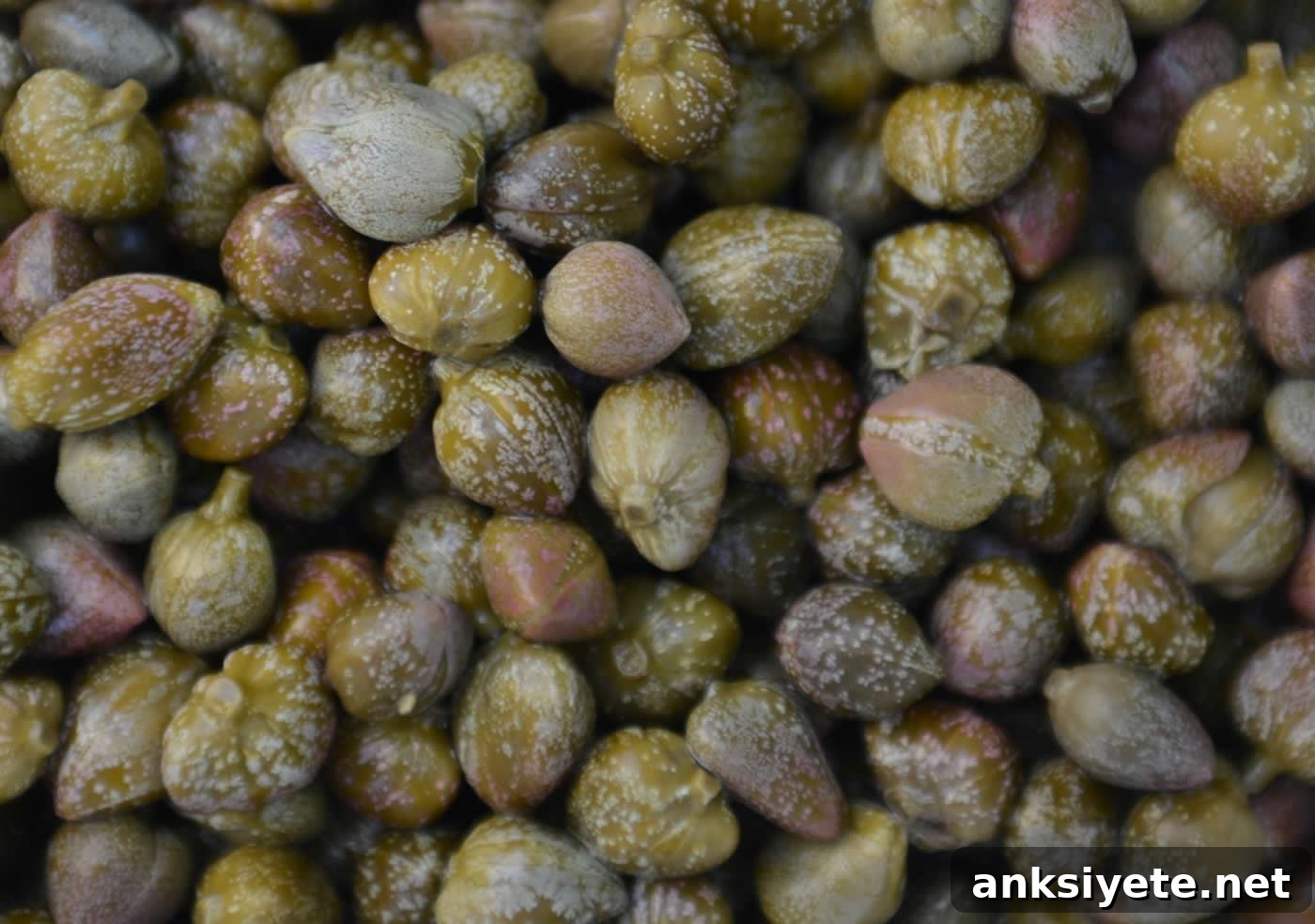
The team initially screened a range of plant extracts for activity on KCNQ channels and found that a one percent extract of pickled capers activated channels important for normal brain and cardiac electrical activity. Further analysis identified quercetin as the dominant active compound in caper extract responsible for these effects. Notably, capers are among the richest natural dietary sources of quercetin.
Capers have a long history of human use as both food and traditional medicine, with archaeological evidence of consumption spanning thousands of years. Historically, capers and quercetin-containing plants have been associated with anti-inflammatory, anti-diabetic, and gastrointestinal benefits, and the present study provides a molecular framework that could explain some of these observations through modulation of KCNQ potassium channels.
Funding: This research was supported by the National Institutes of Health, including the National Institute of General Medical Sciences and the National Institute of Neurological Disorders and Stroke.
About this neurology research article
Source:
UC Irvine
Media Contacts:
Anne Warde – UC Irvine
Image Source:
Image credited to Bo Abbott.
Original Research: Open access
“The ubiquitous flavonoid quercetin is an atypical KCNQ potassium channel activator” by Kaitlyn E. Redford & Geoffrey W. Abbott. Communications Biology
Abstract
The ubiquitous flavonoid quercetin is an atypical KCNQ potassium channel activator
Many commonly consumed plants have a long tradition of use in folk medicine, though their molecular targets are often unclear. Recent work has identified the KCNQ family of voltage-gated potassium (Kv) channels as therapeutically relevant targets for several plant-derived compounds. Capers—the immature flower buds of Capparis spinosa—have been eaten and used medicinally for millennia and are one of the richest known natural sources of quercetin, the most widely consumed dietary flavonoid. In this study, caper extract hyperpolarized cells expressing KCNQ1 or KCNQ2/3 channels. Quercetin enhanced currents carried by KCNQ1/KCNE1, KCNQ2/3, and KCNQ4 channels, but not KCNQ5. Remarkably, quercetin promoted both activation and inactivation of KCNQ1 through a distinctive mechanism involving interactions at the top of the voltage sensor and within the pore. These results reveal a novel molecular basis for potential therapeutic effects of quercetin-rich foods and highlight a new chemical space for atypical modulation of KCNQ potassium channels.