
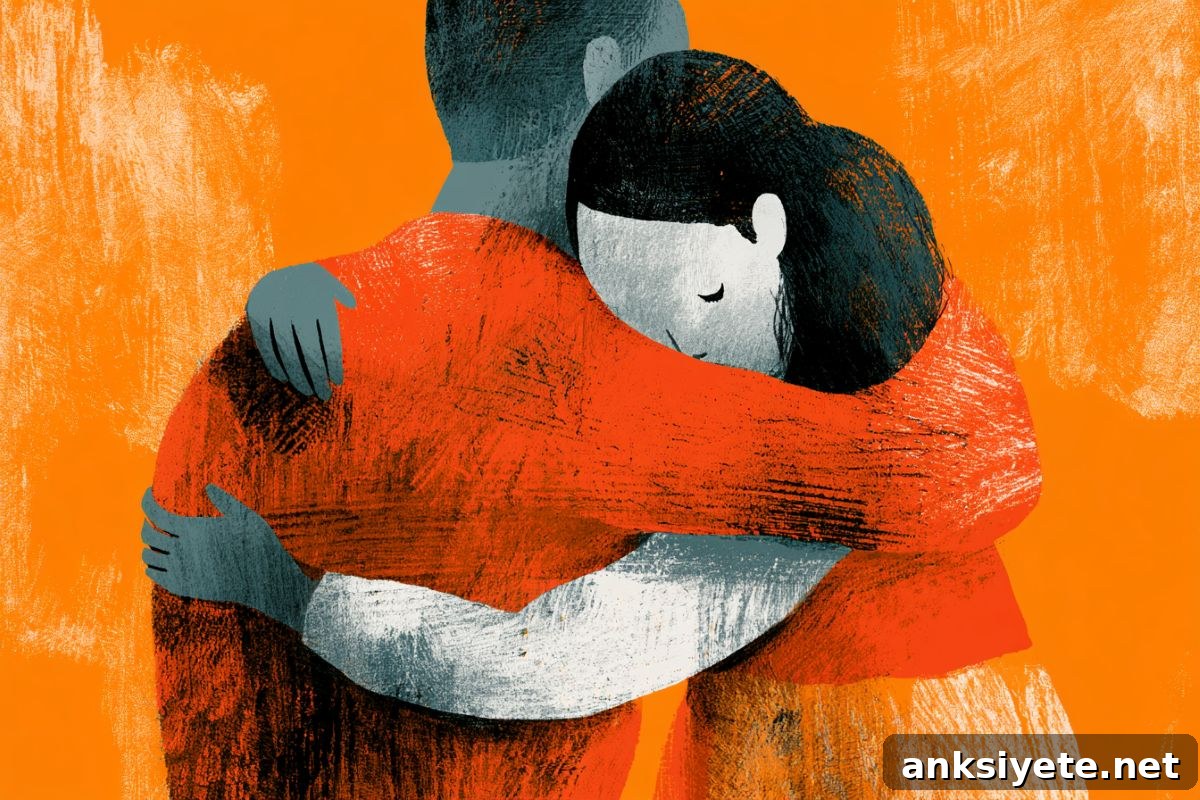
Summary: When someone close to us is visibly upset, we often assume that the natural response is to comfort them and try to remove their distress. A major international study challenges that assumption, showing that the impulse to make others “feel better” is shaped strongly by cultural values rather than being a universal human instinct.
This large cross-cultural investigation combined survey data from more than 6,900 participants across 17 countries with real-time observations of romantic couples in Germany and South Korea. The results show that while people everywhere share a common drive to manage their own emotions toward greater well-being, motivations for regulating other people’s emotions differ sharply across cultural contexts.
In individualistic societies, reducing another person’s negative feelings is widely regarded as the right way to support them. In collectivistic societies, negative emotions are more likely to be treated as meaningful signals—tools for self-reflection, strengthening social bonds, or honoring social and moral obligations.
Key Facts
- Interpersonal versus Intrapersonal: Cultural background has a much stronger impact on how people try to change others’ emotions (interpersonal regulation) than on how they manage their own feelings (intrapersonal regulation).
- The Individualistic Comfort Model: In countries with high individualism—such as the United States, Germany, and the United Kingdom—people are more motivated to actively reduce another person’s distress through reassurance, perspective-shifts, and emotional validation.
- The Collectivistic Preservation Model: In collectivistic cultures—like South Korea, Japan, India, and China—people are less inclined to treat unpleasant emotions as immediate problems to be fixed.
- The Value of Discomfort: In collectivistic contexts, negative emotions are often seen as functional: they can prompt personal growth, deepen relationships, foster reflection, or preserve socially important meanings.
- Relationship Effects: The study found contrasting consequences for close relationships: in Germany, efforts to alleviate a partner’s distress were associated with greater perceived closeness; in South Korea, that same goal showed no clear link to relationship intimacy.
- Practical Implications: These findings challenge universal assumptions used in multicultural therapy, global healthcare, diplomacy, and international business, suggesting practitioners ask not only “How can I make you feel better?” but also “What kind of emotional support fits your cultural worldview?”
Source: Hebrew University of Jerusalem
If someone you love is upset, your first instinct may be to comfort them, to reassure them, to make them feel better.
But what if that instinct is not the same across all cultures?
A new international study led by Dr. Maya Tamir and PhD student Shir Ginosar Yaari from the Hebrew University of Jerusalem, published in Proceedings of the National Academy of Sciences (PNAS), challenges a long-standing assumption in psychology: that the desire to help others feel better is universal. The research demonstrates that cultural values shape people’s ideas about what constitutes appropriate support.
Decades of psychological research have focused on how individuals regulate their own emotions. This study shifts attention to interpersonal emotion regulation—how people attempt to influence the feelings of others—and finds that cultural differences are especially pronounced in that domain.
The team collected data from participants across Europe, Asia, Africa, North and South America, and the Middle East. The sample included more than 6,900 respondents from 17 countries, and researchers also tracked daily emotional interactions between romantic partners in Germany and South Korea to observe real-world behavior.
Overall, people from more individualistic societies reported stronger motivation to reduce other people’s distress. Participants from nations that emphasize individual autonomy and personal happiness—such as Germany, the United States, and the United Kingdom—tended to use comforting strategies like expressing care, listening, encouraging acceptance, and helping others reframe difficulties. They were less likely to advocate suppression or prolonged focus on negative feelings.
By contrast, in collectivistic societies—including South Korea, Japan, India, and China—participants were less likely to treat negative emotions as problems that must be immediately eliminated. In these contexts, unpleasant feelings are often understood as instruments for learning, self-improvement, and relational repair, so efforts to instantly erase distress can be seen as intrusive or counterproductive.
One of the most notable outcomes of the research is that culture influenced interpersonal strategies far more than intrapersonal ones. Across countries, people similarly wanted to feel better themselves; differences emerged mainly in how they believed others should be helped.
“Culture doesn’t just shape how we experience emotions,” said Tamir. “It shapes what we think other people should feel and how we ought to support them.”
Understanding these cultural patterns matters in an interconnected world. Miscommunication about care often arises not from a lack of concern but from differing beliefs about what supportive behavior looks like. Whether in multicultural families, workplaces, healthcare settings, or therapeutic contexts, recognizing that emotional support takes different forms across cultures can improve communication and strengthen relationships.
Instead of automatically asking “How can I make you feel better?” the study encourages asking, “What kind of support would be most helpful to you?”
Key Questions Answered:
A: The difference reflects distinct cultural priorities. Individualistic cultures value personal happiness, autonomy, and success, so negative emotions are often viewed as problems to resolve quickly. Collectivistic cultures emphasize social harmony, duty, and interdependence, and therefore may regard sitting with negative emotions as a meaningful process that promotes reflection, growth, and stronger social bonds.
A: Not at all. Differences in approach reflect different expressions of care. In some cultures, helping someone reframe or distract them is seen as kind; in others, allowing a person to fully experience their emotions and validating that experience is considered more respectful and empathetic.
A: The striking result was that culture had little impact on how people try to improve their own emotional states—most people everywhere want to feel better. But culture strongly shaped how people believe others should be supported, indicating that social norms and moral beliefs guide interpersonal emotion regulation far more than intrapersonal emotion management.
Editorial Notes:
- This article was edited by a Neuroscience News editor.
- The journal paper was reviewed in full.
- Additional context was added by staff.
About this social empathy research news
Author: Danae Marx
Source: Hebrew University of Jerusalem
Contact: Danae Marx – Hebrew University of Jerusalem
Image: The image is credited to Neuroscience News
Original Research: The findings will appear in PNAS