
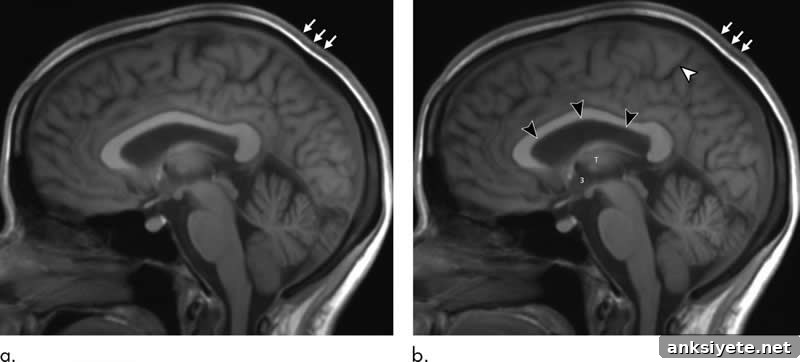
Summary: Long-duration microgravity exposure is associated with increases in combined brain and cerebrospinal fluid volumes and deformation of the pituitary gland in astronauts.
Source: RSNA
Overview
Extended missions on the International Space Station (ISS) are linked to vision changes and structural alterations in the eye. New findings published in Radiology indicate that the effects of long-duration spaceflight extend into the intracranial compartment, producing measurable changes in brain volume, cerebrospinal fluid (CSF) dynamics, and pituitary morphology.
More than half of long-duration crewmembers have reported vision changes after missions, and postflight exams frequently identify optic nerve swelling, retinal hemorrhage and other ocular changes. Researchers suspect that chronic elevation of intracranial pressure (ICP) during microgravity plays a central role. On Earth, gravity establishes a hydrostatic gradient that causes fluid to pool in the lower body; in microgravity that gradient disappears and fluid redistributes toward the head.
“In microgravity, venous blood and other fluids no longer pool in the lower extremities and instead shift headward,” said lead author Larry A. Kramer, M.D., of the University of Texas Health Science Center at Houston. “This headward fluid shift likely contributes to the ocular and intracranial changes we are seeing.”
Study design and methods
The researchers conducted a prospective longitudinal MRI study of 11 astronauts (10 men, 1 woman) who flew long-duration missions to the ISS. Each astronaut underwent baseline MRI before flight and follow-up scans at 1, 30, 90, 180 and 360 days after landing. The investigators measured intracranial volumes, pituitary gland morphology and aqueductal CSF hydrodynamics, including peak-to-peak CSF velocity and aqueductal stroke volume. Statistical analyses used mixed-effects models to assess changes over time.
Key findings
On the first day after return, the group showed significant increases in several measures: total brain volume, white matter volume, lateral ventricle volume and the combined total of brain plus CSF. White matter expansion accounted for the largest portion of the increase in summed brain and CSF volume. Quantitatively, these increases were statistically significant and the combined brain-plus-CSF volume remained elevated at the one-year follow-up, suggesting a persistent alteration.
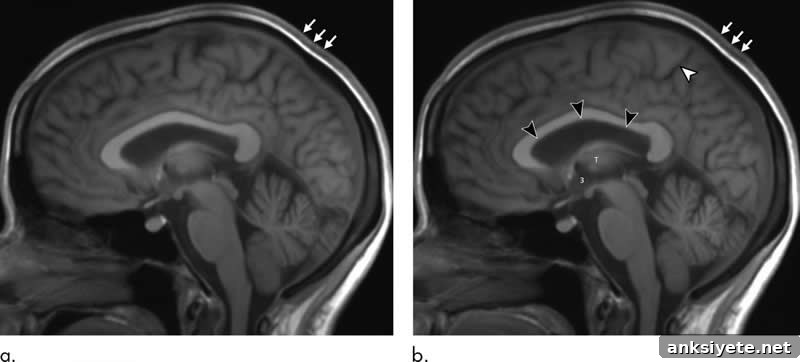
MRI also revealed pituitary gland deformation in most astronauts. Average midline pituitary height decreased postflight and the normally convex superior pituitary dome often showed flattening or concavity—changes consistent with exposure to elevated intracranial pressure. In addition, the study detected an increase in aqueductal CSF flow velocity and aqueductal stroke volume after flight. Although similar CSF flow changes are observed in conditions such as normal pressure hydrocephalus, astronauts in this study have not been reported to develop the characteristic clinical symptoms of that disorder.
Clinical interpretation and context
The observed ventricle enlargement remained within ranges typically seen in healthy adults, and no astronauts in this series reported gait difficulty, bladder dysfunction or cognitive decline that would suggest clinical hydrocephalus. Nonetheless, the combination of increased brain and CSF volumes, greater aqueductal flow, and pituitary deformation suggests that long-duration microgravity can produce sustained intracranial structural and hydrodynamic changes.
Comparable imaging findings have been reported in terrestrial bed-rest studies that simulate the headward fluid shift of microgravity, reinforcing the role of fluid redistribution in driving these changes.
Countermeasures and future directions
Investigators are exploring strategies to mitigate headward fluid shifts and their intracranial effects. Potential countermeasures include artificial gravity—produced by human centrifugation in sitting or prone positions—and lower body negative pressure devices that draw fluid away from the head. Understanding the mechanisms that lead to ventricular enlargement and pituitary deformation in astronauts may also inform treatments for related conditions on Earth, such as normal pressure hydrocephalus.
About this research article
Source: RSNA
Media contacts: Linda Brooks – RSNA
Image source: The image is credited to RSNA.
Original research
Title: “Intracranial Effects of Microgravity: A Prospective Longitudinal MRI Study” by Larry A. Kramer et al., published in Radiology. This prospective study evaluated intracranial volumetric changes, pituitary morphology and aqueductal CSF hydrodynamics before and after long-duration spaceflight and followed recovery up to one year postflight.
Abstract summary
A cohort of 11 astronauts (mean age 45 ± 5 years) demonstrated significant increases at postflight day 1 in brain volume (including white matter), lateral ventricular volume, the combined brain-plus-CSF volume, and aqueductal CSF flow measures. Summated brain and CSF volumes remained elevated at 360 days after return. Pituitary dome depression developed or worsened in a majority of participants, and average midline pituitary height decreased. The study concludes that long-duration spaceflight is associated with pituitary deformation, increased aqueductal CSF hydrodynamics, and persistent expansion of summated brain and CSF volumes.
Feel free to share this neuroscience news.