
Summary: Children across cultures will confront peers who break shared rules, but the ways they do so differ depending on their social and cultural environment.
Source: University of Plymouth
Every society has norms—unspoken and spoken rules that guide daily life, from greetings to traffic habits.
A new cross-cultural study, the first of its kind, finds that children from diverse societies will intervene when peers violate established rules. However, the manner and frequency of those interventions vary between communities.
Researchers from the University of Plymouth, UK, and the Free University of Berlin, Germany, observed 376 children aged five to eight from eight different societies across Africa, Asia, Europe, and South America. Instead of relying on surveys or hypothetical questions, the team measured how children behaved in real interactions.
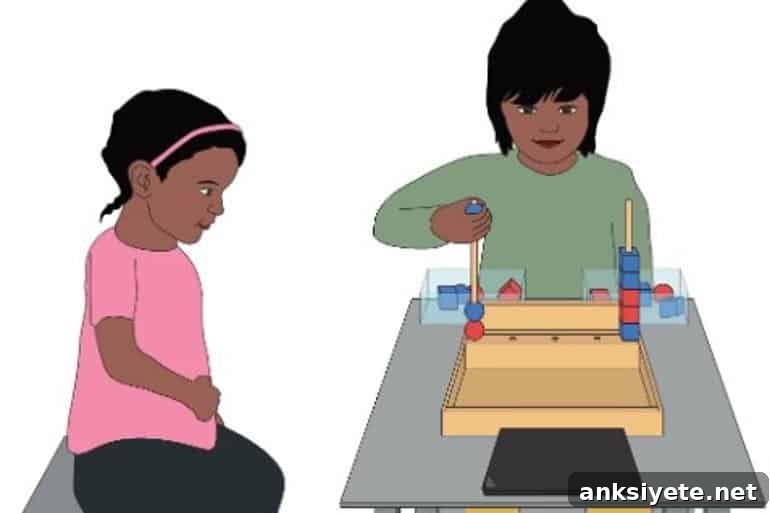
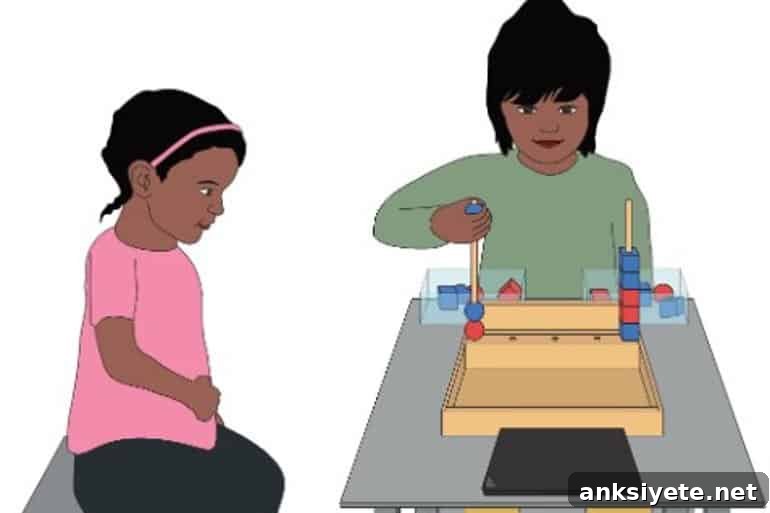
In the experiment, each child learned one of two ways to play a block-sorting game: sorting by color or sorting by shape. Children were then paired so that one worked on the task while the other watched. Observers could see whether the player followed the rule they had been taught or used the other rule instead.
Results showed that observers were more likely to step in when the player appeared to follow the “wrong” set of rules. Interventions ranged from verbal protests to corrective suggestions, and the study found a clear link between interventions and behavioral change: partners who were interrupted were more likely to adjust their actions to match the expected rule.
Importantly, the type and frequency of intervention differed by community. Children from rural, small-scale settings used more direct verbal protests—often imperative statements—than many children from urban areas. This finding challenges the assumption that small communities rely primarily on indirect social mechanisms, such as reputation, to enforce norms. Instead, direct correction was at least as common, and in some cases more frequent, in these rural settings.
Lead author Dr. Patricia Kanngiesser of the University of Plymouth emphasized the value of observing actual behavior: “We didn’t ask children what they would do—we watched how they acted in real social situations. That made it possible to capture natural responses across a wide range of cultural contexts.”
Dr. Kanngiesser added that the variation between locations was striking: “We expected that small-scale communities, where everyone knows each other, might rely more on indirect strategies to maintain cooperation. Instead, children in those communities protested directly and as often as, or more often than, children in urban settings.”
The study advances understanding of how norms are enforced among young children and highlights that norm enforcement is a universal feature of social life, even if its expression differs. Observing these early forms of social policing helps explain how coordination and cooperation are maintained within groups and how children learn to protect shared expectations.
The authors note several paths for further research. Future work could examine the sources of children’s intervention strategies—whether they learn by watching adults, older peers, or through broader cultural practices—and how these strategies develop with age. Understanding these learning processes would clarify how social norms are passed between generations and how children become effective partners in cooperative settings.
About this social neuroscience research news
Author: Press Office
Source: University of Plymouth
Contact: Press Office – University of Plymouth
Image: The image is credited to PNAS
Original Research: The findings will appear in PNAS