
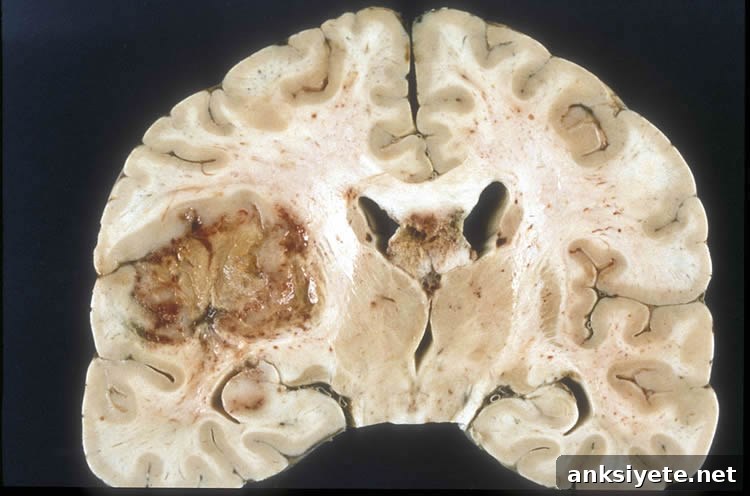
Summary: A new study in PNAS reports that blocking the expression of MDA-9/Syntenin causes glioma stem cells to lose their ability to trigger protective autophagy.
Source: Virginia Commonwealth University.
Researchers at Virginia Commonwealth University report the identification of a potential “Achilles heel” in glioblastoma multiforme (GBM), the most aggressive and fatal form of brain cancer. Their study, published in the Proceedings of the National Academy of Sciences, describes a cellular mechanism that protects glioma stem cells and suggests ways this vulnerability could be targeted to improve GBM treatment.
Autophagy is a cellular recycling process that removes damaged or unnecessary components. Depending on context, autophagy can either harm cells or protect them. The VCU team showed that a form of protective autophagy enables glioma stem cells (GSCs) to resist anoikis—a programmed cell death triggered when cells detach from the extracellular matrix that normally supports them. The researchers identified the gene MDA-9/Syntenin as a key regulator of this protective autophagy.
“We discovered that when we blocked the expression of MDA-9/Syntenin, glioma stem cells lose their ability to induce protective autophagy and succumb to anoikis, resulting in cancer cell death,” says Paul B. Fisher, M.Ph., Ph.D., F.N.A.I., Thelma Newmeyer Corman Endowed Chair in Cancer Research and a member of the Cancer Molecular Genetics research program at VCU Massey Cancer Center. Fisher, who originally discovered the MDA-9/Syntenin gene, has previously shown that this gene is overexpressed in many cancer types.
In collaboration with Webster K. Cavenee, Ph.D., and other colleagues, the team found that MDA-9/Syntenin supports protective autophagy by activating BCL2, a protein that regulates cell survival. MDA-9/Syntenin also prevents autophagy from reaching levels that become toxic to the cell by engaging epidermal growth factor receptor (EGFR) signaling. Excessive EGFR activity is known to drive tumor growth in several cancers.
“Without MDA-9/Syntenin, EGFR can no longer sustain protective autophagy,” Fisher explains. “Instead, extremely high and prolonged autophagy develops, which is toxic and sharply reduces cancer cell survival. This is the first study to link MDA-9/Syntenin directly with protective autophagy and resistance to anoikis. We hope this pathway can be exploited to create new, more effective therapies for GBM and potentially other cancers.”
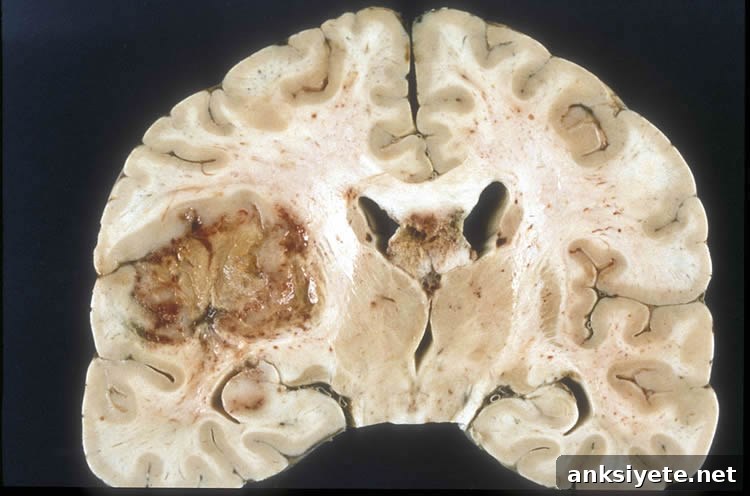
Experiments using patient-derived GBM cells demonstrated that suppressing MDA-9/Syntenin abolishes protective autophagy and sensitizes glioma stem cells to anoikis. The team then tested these findings in mouse models engrafted with human GSCs and observed increased survival when MDA-9/Syntenin was inhibited.
This work extends an extensive body of research by Fisher and collaborators into how MDA-9/Syntenin contributes to cancer progression. The authors plan to investigate whether the same protective-autophagy mechanism operates in stem cells from other tumor types and to develop strategies to block MDA-9/Syntenin expression more effectively. One promising approach described in prior work is an experimental inhibitor called PDZ1i, which reduced MDA-9/Syntenin–driven invasion of GBM cells both in vitro and in vivo.
Fisher’s coauthors include lead postdoctoral investigator Sarmistha Talukdar, Ph.D.; Anjan K. Pradhan, Ph.D.; Praveen Bhoopathi, Ph.D.; Xue-Ning Shen, M.D.; and Laura A. August, all from the Department of Human and Molecular Genetics at VCU School of Medicine. Additional contributors were Luni Emdad, M.B.B.S., Ph.D.; Devanand Sarkar, M.B.B.S., Ph.D.; Swadesh K. Das, Ph.D.; Jolene Windle, Ph.D.; Frank B. Furnari, Ph.D.; and Webster K. Cavenee, Ph.D.
Funding: This study was supported by the National Foundation for Cancer Research, internal funds from the Department of Human and Molecular Genetics at VCU School of Medicine and the VCU Institute of Molecular Medicine, and in part by VCU Massey Cancer Center’s NIH-NCI Cancer Center Support Grant P30 CA016059.
Source: John Wallace — Virginia Commonwealth University
Publisher: NeuroscienceNews.com
Image Source: NeuroscienceNews.com image is in the public domain.
Original Research: Abstract for “MDA-9/Syntenin regulates protective autophagy in anoikis-resistant glioma stem cells,” PNAS, published May 29, 2018. DOI: 10.1073/pnas.1721650115
MLA: Virginia Commonwealth University. “A Potential Achilles Heel in Brain Cancer.” NeuroscienceNews. NeuroscienceNews, 4 June 2018.
APA: Virginia Commonwealth University (2018, June 4). A Potential Achilles Heel in Brain Cancer. NeuroscienceNews. Retrieved June 4, 2018.
Chicago: Virginia Commonwealth University. “A Potential Achilles Heel in Brain Cancer.” NeuroscienceNews. (accessed June 4, 2018).
Abstract
MDA-9/Syntenin regulates protective autophagy in anoikis-resistant glioma stem cells
Glioma stem cells (GSCs) form a small but critical subpopulation within glioblastoma multiforme that drives therapy resistance, poor prognosis, and tumor recurrence. Under nonadherent conditions, GSCs activate a protective form of autophagy that supports resistance to anoikis, the programmed cell death triggered by loss of adhesion to the extracellular matrix. This protective autophagy correlates with expression of melanoma differentiation-associated gene-9/Syntenin (MDA-9; SDCBP). Suppression of MDA-9 triggers autophagic cell death in GSCs, supporting the role of MDA-9 as a regulator of protective autophagy during anoikis. Mechanistically, MDA-9 sustains protective autophagy via phosphorylation of BCL2 and by restraining excessive autophagy through EGFR signaling. MDA-9 accomplishes these effects by modifying FAK and PKC signaling pathways. Gain- and loss-of-function experiments show that MDA-9 controls phosphorylated EGFR and BCL2 levels through FAK and activated PKC. EGFR signaling suppresses autophagy markers (ATG5, Lamp1, LC3B), helping to maintain protective autophagy and cell survival in GSCs. When MDA-9 is absent, this protective network collapses: EGFR fails to maintain balanced autophagy, autophagy becomes highly elevated and sustained, pBCL2 levels drop, and GSC survival decreases. These findings establish a functional link between MDA-9 expression, protective autophagy, and anoikis resistance in glioma stem cells, and demonstrate that inhibiting MDA-9 can reverse protective autophagy and promote cell death in GSCs.