
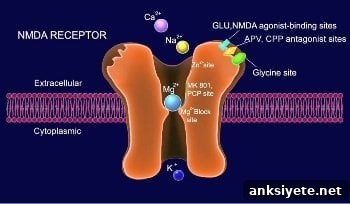
For several years, researchers and pharmaceutical companies have pursued drugs that target the NMDA receptor, a critical neurotransmitter receptor present on nearly every neuron in the human brain. NMDA receptors play essential roles in learning and memory and have been linked to a range of neurological and psychiatric disorders, including Alzheimer’s disease, Parkinson’s disease, schizophrenia, and depression.
Despite the clear importance of NMDA receptor function in brain health and disease, developing clinically effective drugs that directly modulate these receptors has proved difficult. New work from scientists at Oregon Health & Science University’s Vollum Institute sheds light on a possible reason why previous drug development efforts have had limited success and points toward a more accurate receptor target for future therapies.
In a study published in the Journal of Neuroscience, OHSU investigators examined the diversity of NMDA receptor subtypes produced by combinations of different protein subunits. These subunit combinations determine the receptor’s properties, including how it responds to neurotransmitters and drugs. Historically, drug discovery programs have focused on a particular NMDA receptor subtype as their preferred target.
The OHSU team discovered that the receptor subtype emphasized by many previous efforts contributes little to NMDA receptor action at synapses. Instead, the researchers found that a different subtype—one containing both GluN2A and GluN2B subunits—was far more common at synapses than previously recognized. Triheteromeric NMDA receptors that include GluN2A and GluN2B coexisting in the same complex appear to be the dominant form at hippocampal synapses, the study reports.
“Our findings suggest one reason why many drugs designed against a presumed NMDA receptor target have not been as effective as hoped: the assumed target isn’t abundant at the synapse,” said Kenneth R. Tovar, Ph.D., a senior postdoctoral fellow at the Vollum Institute and lead author on the paper. Tovar’s co-authors were Gary L. Westbrook, M.D., senior scientist and co-director of the Vollum Institute, and Matthew J. McGinley, Ph.D., a former graduate student in the Westbrook laboratory.
Recognizing which NMDA receptor subtypes are actually present at synapses changes the strategy for drug development. If the GluN2A/GluN2B-containing receptors predominate where synaptic signaling and plasticity occur, then designing compounds that modulate these triheteromeric receptors could be a more productive route for therapeutic discovery. The study also offers mechanistic clues: when GluN2A and GluN2B subunits coexist within the same receptor complex, drugs selective for one subunit can alter receptor behavior in ways that might be beneficial in clinical settings.
NMDA receptor dysfunction has been implicated across a range of conditions affecting cognition, mood, and motor control. By clarifying the molecular composition of the receptors most active at synapses, the OHSU work helps narrow down realistic targets for disorders that involve synaptic NMDA receptor signaling. Better knowledge of receptor composition should improve the chances of finding selective modulators that produce therapeutic effects without unacceptable side effects.
From a drug development perspective, accurately identifying the molecular nature of the therapeutic target is essential. “Knowing what’s actually there allows researchers to focus resources on targets that matter,” Tovar explained. “Pursuing the wrong target not only reduces the likelihood of success but also drives up development costs that ultimately affect patients and payers.”
The study’s results do not themselves represent a new treatment, but they provide a clearer framework for future research aimed at designing selective modulators of the most relevant NMDA receptor subtypes at synapses. Continued investigation into how GluN2A/GluN2B-containing receptors influence synaptic plasticity and circuit function will be important for translating these basic science findings into therapies for neurodegenerative and psychiatric conditions.
Notes about this NMDA receptor and neuroscience research
The research was supported by grants from the National Institutes of Health (NS 26494 and MH 46613).
Contact: Todd Murphy – Oregon Health & Science University
Source: Oregon Health & Science University press release
Image Source: The NMDA receptor image is credited to NIMH/NIH and is in the public domain.
Original Research: Abstract for “Triheteromeric NMDA Receptors at Hippocampal Synapses” by Kenneth R. Tovar, Matthew J. McGinley, and Gary L. Westbrook in Journal of Neuroscience. Published online May 22, 2013. doi:10.1523/JNEUROSCI.0829-13.2013