
Some people improve and others decline when offered a large bonus. Neuroscientist Esther Aarts of the Donders Institute in Nijmegen has demonstrated for the first time that individual differences in brain dopamine help explain this effect. The journal Psychological Science published the findings on February 13.
Previous research had produced mixed results about whether offering a monetary bonus improves task performance. Esther Aarts’s study clarifies this puzzle by linking the direction and magnitude of the bonus effect to baseline dopamine levels in the striatum, a brain region involved in motivation and cognitive control. Using Positron Emission Tomography (PET), Aarts measured dopamine in participants’ brains and then tested how the same individuals responded to low and high monetary incentives while performing a demanding concentration task.
Dopamine “overdose” and performance
Bonuses increase dopamine signaling in the brain, which normally boosts motivation. Aarts proposes, however, that when baseline dopamine is already relatively high in the striatum, an additional dopamine surge caused by a promised reward can push the system beyond an optimal range. This apparent dopamine “overdose” then impairs performance on tasks that require focused attention. By contrast, participants with lower baseline striatal dopamine benefit from the extra motivational signal and show improved performance when larger rewards are offered.
How the experiment worked
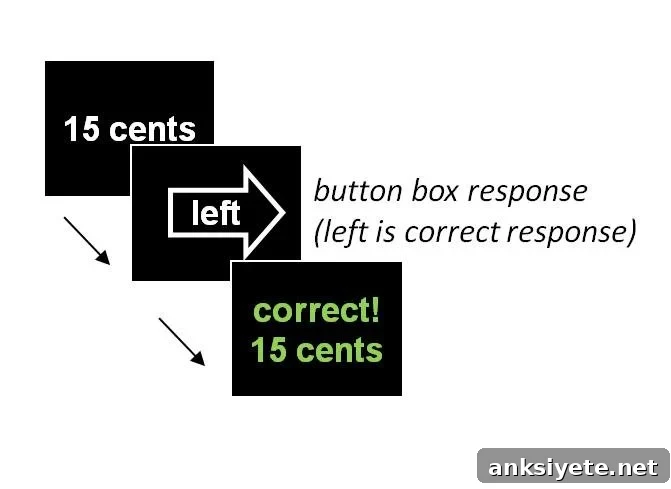
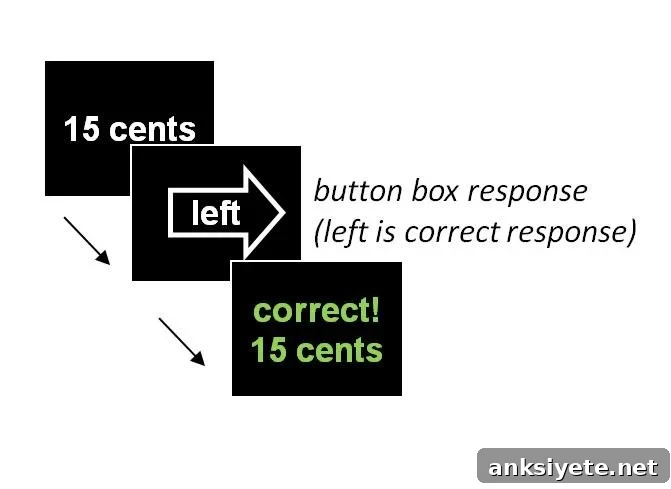
Participants completed a computerized task designed to create a conflict between automatic and controlled responses, so that strong concentration was required to perform well. On each trial an arrow appeared on the screen pointing left or right, and the word “left” or “right” was printed inside the arrow. Participants were instructed to ignore the arrow’s direction and instead report the direction named by the word. For half of the correct responses the promised reward was 15 cents, and for the other half it was only 1 cent. The pattern was clear: individuals with higher baseline dopamine in the striatum tended to do better in the low-reward condition and worse in the high-reward condition, while those with lower baseline dopamine showed the opposite pattern and improved with higher incentives.
Implications for motivation and task design
These findings suggest that the effectiveness of financial incentives depends on both the person and the nature of the task. Aarts emphasizes that whether a reward will help or hinder performance hinges on the interplay between an individual’s dopamine level and the cognitive demands posed by the task. Tasks that require intense focus and suppression of automatic responses may suffer when reward-induced dopamine pushes the system past its optimal point. In contrast, tasks that benefit from increased flexibility, exploration, or general activation may be helped by higher dopamine levels.
From an applied perspective, this work implies that a one-size-fits-all approach to incentives may be counterproductive. Tailoring rewards to the person and the task could improve outcomes in education, workplaces, and clinical settings. However, identifying an individual’s baseline dopamine is not straightforward: PET scans, the method used in this study, are expensive and not practical for everyday use.
Searching for practical measures
Aarts and colleagues are exploring alternative, more accessible ways to estimate dopamine-related traits, such as behavioral assessments or questionnaires that correlate with baseline dopamine functioning. If validated, such measures could help predict who will benefit from larger incentives and who might be impaired by them—without the need for neuroimaging. Until then, the research highlights the complexity of motivation and cautions against assuming that bigger rewards always lead to better performance.
Notes about this research
Esther Aarts is a senior researcher at the Donders Centre for Cognitive Neuroimaging at Radboud University Nijmegen. This work was conducted while she was a postdoctoral researcher in Berkeley, California, and it was carried out within Roshan Cools’s research group on Motivational & Cognitive Control. The study examined how reward-induced changes in dopamine interact with baseline neurochemistry to influence focused cognitive performance.
Contact: Esther Aarts – Donders Institute
Source: Donders Institute press release
Image Source: Image adapted from the Donders Institute press release.
Original Research: “Dopamine and the Cognitive Downside of a Promised Bonus” by Esther Aarts, Deanna L. Wallace, Linh C. Dang, William J. Jagust, Roshan Cools and Mark D’Esposito, published online in Psychological Science on February 13, 2014 (doi:10.1177/0956797613517240).