
Summary: Researchers report that smiles can either reduce or raise physical stress depending on how they are interpreted.
Source: Bar Ilan University.
Sweaty palms, a racing heart, a shaky voice—many people find public speaking distressing. Anticipation of social evaluation activates multiple bodily systems connected to stress, and it especially engages the hypothalamic-pituitary-adrenal (HPA) axis, the central hormonal system that coordinates the body’s response to threat.
How does the HPA axis react to feedback we receive from others during social evaluation? Verbal feedback is known to trigger HPA activation. Until recently, however, little was known about how purely nonverbal signals—particularly facial expressions—affect the body’s stress response.
A new study published in Scientific Reports by teams at the University of Wisconsin–Madison and Bar-Ilan University shows that different kinds of smiles produce distinct physiological effects when perceived as evaluative feedback. Jared D. Martin, Heather Abercrombie and Paula Niedenthal (University of Wisconsin–Madison) together with Eva Gilboa-Schechtman (Bar-Ilan University) found that smiles are not uniformly comforting: depending on their social function and how they are read, smiles can either buffer or escalate HPA axis activity.
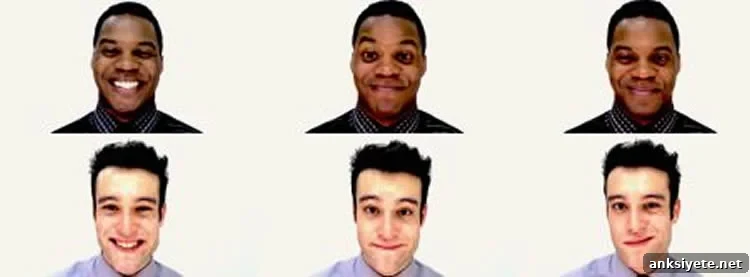
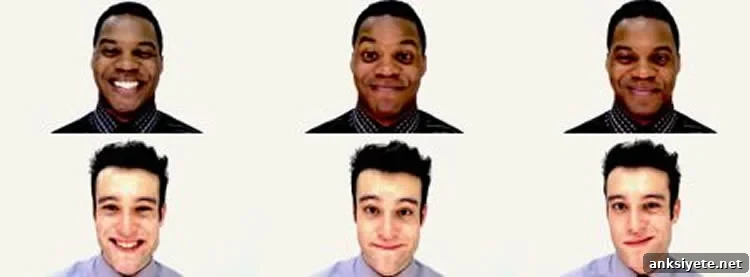
The researchers measured salivary cortisol—a standard index of HPA activity—in 90 male undergraduate volunteers who took part in a modified social stress test. Participants received nonverbal feedback in the form of facial expressions classified into three types of smiles. The results revealed clear differences:
- Dominance smiles, which communicate superiority, disapproval or challenge to another person’s social standing, were linked with increased physiological stress. Participants who perceived dominance smiles showed higher heart rate and greater elevations in salivary cortisol, and they took longer to return to baseline cortisol levels after the stressful task. These effects resemble the body’s response to negative verbal evaluation.
- Reward smiles, which reinforce desired behavior and express positive feeling, produced stress-buffering effects similar to friendly, approving feedback. These smiles lowered or mitigated HPA activation relative to evaluative challenge.
- Affiliation smiles, which signal approachability and lack of threat and help maintain social bonds, also had calming effects on physiological stress responses, supporting social connection and recovery after evaluation.
The study also examined individual differences in physiological sensitivity. Participants with higher baseline high-frequency heart-rate variability (HF-HRV)—a marker of parasympathetic nervous system activity and a predictor of facial expression recognition accuracy—showed more differentiated responses to the different smile types. In other words, people with greater HF-HRV were better at discriminating the social meaning of smiles, and their HPA responses varied more clearly depending on whether a smile was affiliative, rewarding, or dominant. This distinction was especially noticeable for smiles that are more ambiguous in context.
“These findings reinforce the idea that smiles are not universally positive social signals,” the researchers write. “When smiles are perceived as evaluative, they can shape the perceiver’s physiological state—either calming or heightening stress. Cortisol appears to play a role in detecting social threat and coordinating the biological resources needed to respond.” The results add to evidence that people differ in how sensitively they interpret facial expressions and how strongly their bodies react.
The authors note several limitations. The study sample consisted only of male undergraduates, which limits the ability to generalize the findings to women or to broader age groups. Further research is needed to determine whether men and women respond differently to the same smile types and to examine the physiological effects of clearly negative facial expressions beyond the smile categories studied here.
Source: Magdalena Rychlowska, Bar Ilan University.
Publisher: Organized by NeuroscienceNews.com.
Image source: Jared D. Martin and Magdalena Rychlowska.
Original research: Open access research published in Scientific Reports.
DOI: 10.1038/s41598-018-21536-1
Bar Ilan University. “Certain Smiles Aren’t All They Are Cracked Up to Be.” NeuroscienceNews, March 4, 2018.
Abstract
Functionally distinct smiles elicit different physiological responses in an evaluative context
When people face social evaluation, multiple body systems respond. Verbal feedback reliably activates the hypothalamic-pituitary-adrenal (HPA) axis, but the physiological effects of nonverbal evaluative feedback have been less well documented. Recent research identifies three morphologically distinct smile types that serve different social functions—reinforcement (reward), social smoothing (affiliation), and social challenge (dominance). In the present study, participants observed one of these smile types from an evaluator during a modified social stress test. The results support the claim that different smiles are sufficient to either amplify or dampen HPA axis activity. Moreover, responses to the social meaning of smiles were more differentiated in individuals with higher baseline high-frequency heart-rate variability (HF-HRV), a physiological index associated with better facial expression recognition. This differentiation was particularly pronounced for ambiguous smiles. Overall, the findings indicate that facial expressions have meaningful physiological consequences and that smiles regulate social interactions in a nuanced way.