
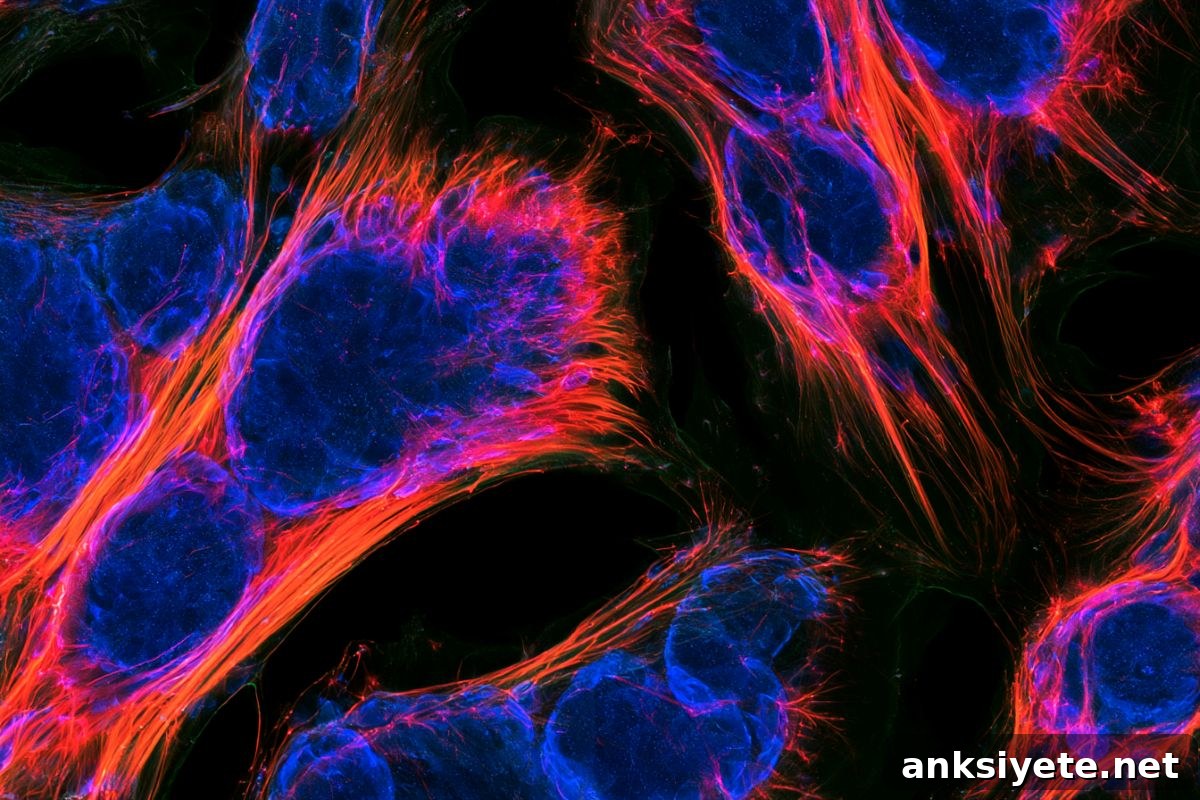
Summary: Researchers reveal an unexpected dual role for the telomeric protein TRF2: in addition to protecting chromosome ends, TRF2 actively preserves muscle stem cell identity and supports tissue regeneration.
New research from the Perelman School of Medicine at the University of Pennsylvania shows that TRF2 functions beyond telomere protection. In skeletal muscle, TRF2 dynamically controls gene programs that enable muscle stem cells to maintain their lineage identity during cycles of injury and repair. This activity is essential for effective regeneration and influences the course of muscular dystrophy in animal models.
Key Facts
- Beyond telomeres: TRF2, long characterized as a telomere-capping protein, also acts as a genome-wide regulator of transcription in skeletal muscle stem cells.
- Identity maintenance, not cell death: Deleting TRF2 in mouse muscle stem cells does not immediately provoke telomere-triggered cell death. Instead, these cells lose the molecular identity required for muscle lineages, undermining repair and causing scar and fat deposition in injured muscle.
- Dynamic regulation: TRF2 levels change as muscle stem cells move between quiescence, activation, proliferation and self-renewal, consistent with a role in coordinating regenerative transitions.
- Worsened muscular dystrophy: In Duchenne muscular dystrophy (DMD) mouse models, TRF2 loss in muscle stem cells accelerates degeneration, increases fibrosis and shortens survival.
- G-quadruplex binding: TRF2 binds non-telomeric regulatory regions enriched for G-quadruplex DNA structures, a class of sequences already under investigation in cancer research.
- Implications for cancer resilience: Findings suggest a mechanism by which skeletal muscle sustains regeneration without promoting tumor formation, pointing to tissue-specific TRF2 regulation that preserves growth control.
Source: University of Pennsylvania
Overview: A protein classically associated with protecting chromosome ends—TRF2—also plays a central role in maintaining muscle stem cell identity and enabling effective repair of injured tissue. The work offers fresh directions for muscular dystrophy research and adds perspective to how tissues balance regeneration with tumor suppression.
Published in Science Advances, the study demonstrates that TRF2 does more than cap telomeres. In muscle stem cells (MuSCs), TRF2 helps sustain the gene expression networks required for these cells to behave as muscle progenitors during repair cycles.
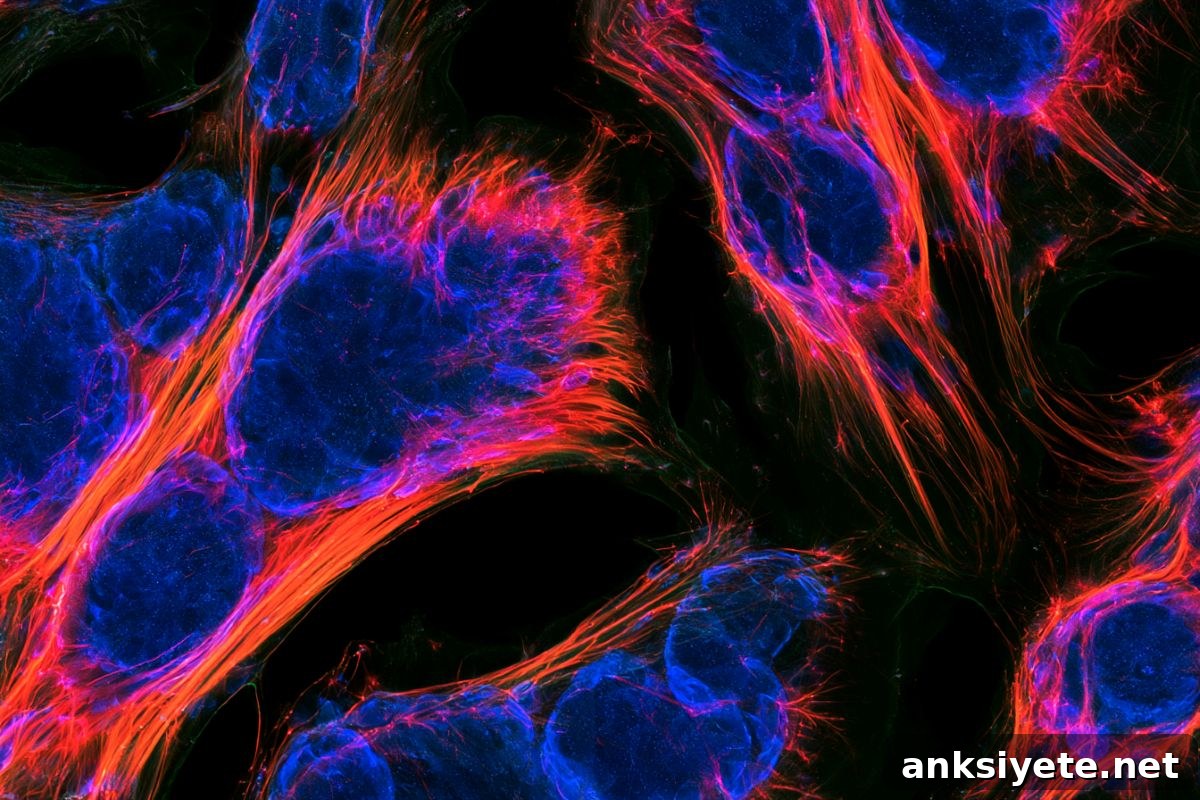
“For years, TRF2 has been viewed primarily as a guardian of chromosome ends,” said senior author Foteini Mourkioti, PhD, associate professor of Orthopaedic Surgery at Penn Medicine. “Our data show that TRF2 is also a critical regulator of muscle regeneration throughout life.”
A surprising regulatory role
Telomeres are protective caps at chromosome termini that prevent DNA ends from being mistaken for damage. TRF2 is a well-known telomeric protein. The new study found that, in MuSCs, TRF2 levels are tightly regulated during the transition from quiescence to activation, through proliferation and back to self-renewal. This temporal regulation suggests TRF2 helps synchronize stage-specific gene programs during regeneration.
When researchers deleted TRF2 specifically in mouse muscle stem cells, the muscle tissue initially looked normal, but the MuSC population declined over time. Rather than undergoing rapid cell death associated with telomere dysfunction in other cell types, these MuSCs lost the transcriptional identity needed to form new muscle. Consequently, injured muscle repaired poorly and accumulated fibrosis and fat instead of new myofibers.
“The consequence was not immediate cellular collapse but loss of lineage fidelity,” Mourkioti noted. “That loss of identity compromises whether tissues can effectively recover from injury.”
Links to muscular dystrophy and cancer biology
In a mouse model of Duchenne muscular dystrophy, MuSC-specific TRF2 deletion markedly accelerated disease progression, increased muscle degeneration and reduced survival. To explain this effect, the team mapped TRF2 binding across the genome and found that TRF2 occupies non-telomeric regulatory regions that control lineage-specific genes. Many of these regions are enriched for G-quadruplex–forming sequences—four-stranded DNA structures implicated in gene regulation and in cancer biology.
By binding these G-quadruplex–rich regulatory elements, TRF2 sustains expression of genes required for MuSC identity and regenerative capacity. This mechanism helps explain how skeletal muscle preserves robust regenerative potential without encouraging uncontrolled growth, offering insight into why primary tumors of skeletal muscle are rare despite high cellular turnover during regeneration.
Mourkioti and colleagues are now exploring whether the muscle-specific functions of TRF2 can be leveraged to develop therapies that maintain regenerative potential in muscular dystrophy while avoiding increased cancer risk.
Funding: Supported by grants from the National Institutes of Health / National Institute of Arthritis and Musculoskeletal and Skin Diseases (R01 DK123356, R01s CA174904, GM101149, and FDN-143330).
Key Questions Answered:
A: In muscle stem cells, TRF2 loss does not trigger immediate telomere-induced death. Instead, MuSCs lose their specialized molecular identity, fail to execute normal repair programs, and injured muscle accumulates scar tissue and fat instead of regenerating healthy muscle fibers.
A: Beyond binding telomeres, TRF2 associates with non-telomeric regulatory regions enriched for G-quadruplex DNA structures. Through these interactions, TRF2 helps maintain expression of lineage-specific genes that preserve MuSC regenerative function.
A: In DMD models, MuSC-specific TRF2 loss exacerbates disease, indicating TRF2 as a potential target to sustain regeneration. Because G-quadruplexes are also central to cancer research, understanding how TRF2 enables regeneration without promoting tumorigenesis could help design safer regenerative therapies and targeted treatments.
Editorial Notes:
- This article was edited by a Neuroscience News editor.
- Journal paper was reviewed in full.
- Additional context was added by editorial staff.
About this genetics research news
Author: Frank Otto
Source: University of Pennsylvania
Contact: Frank Otto – University of Pennsylvania
Image: Image credited to Neuroscience News
Original Research: Open access. “TRF2 couples muscle stem cell identity to regenerative repair” by Ji-Hyung Lee, Kiran Kumar Nakka, Ryan P. Calhoun, Sarah Hachmer, Adity Gupta, Eric Arreza, Lynn A. Megeney, Patrick Seale, Roger A. Greenberg, F. Jeffrey Dilworth, Foteini Mourkioti. Science Advances. DOI: 10.1038/s43856-026-01767-4
Abstract
TRF2 couples muscle stem cell identity to regenerative repair
Stem cell–mediated regeneration is essential for tissue integrity. In skeletal muscle, repair depends on muscle stem cells (MuSCs), which make precise cell-fate transitions during regeneration. The molecular regulators that orchestrate these state changes have been unclear.
This study identifies a noncanonical role for TRF2 in MuSC biology. TRF2 is dynamically regulated after injury and is required to preserve stem cell identity, support reparative myogenesis and sustain self-renewal. MuSC-specific disruption of TRF2 worsens muscular dystrophy pathology in mice, reproducing features of human disease.
Mechanistically, TRF2 associates with regulatory regions enriched for DNA G-quadruplex–forming sequences at lineage-specific genes, maintaining their expression. These results establish TRF2 as a pivotal regulator of adult stem cell function and tissue-specific regenerative responses.