
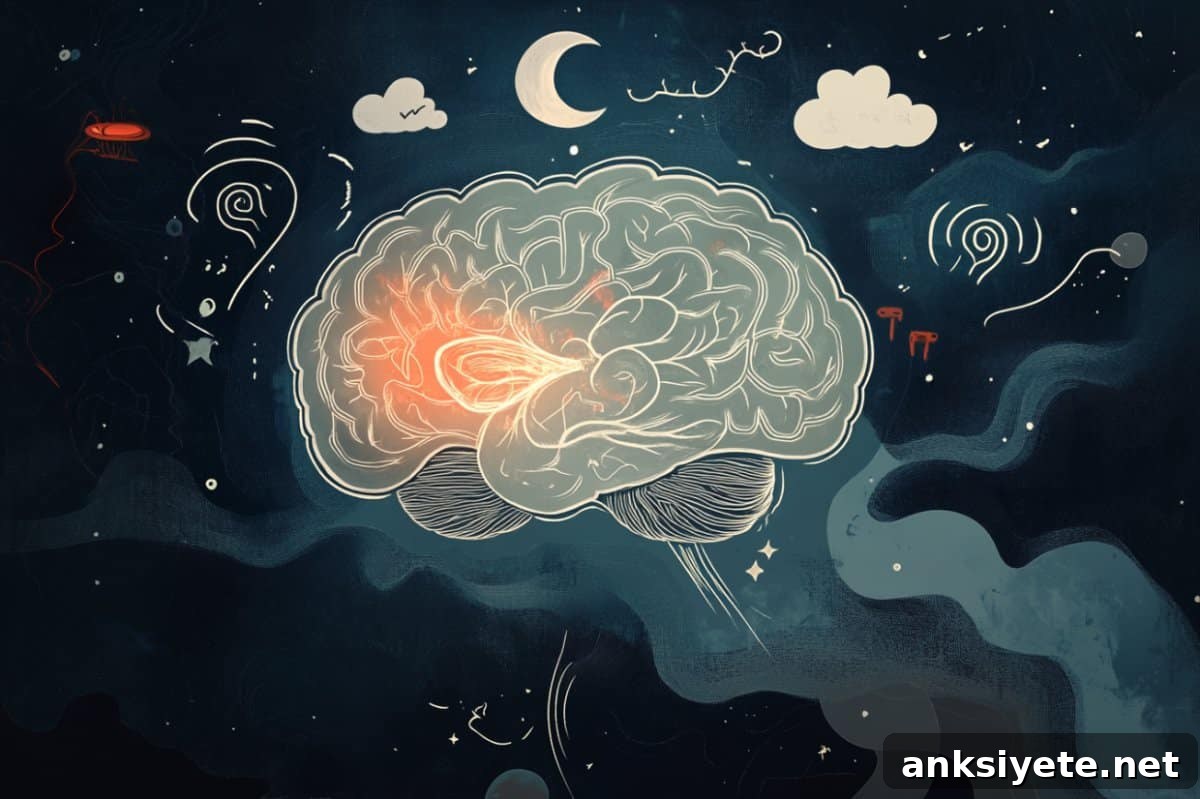
Summary: A large multimodal brain imaging study indicates that insomnia, depression, and anxiety—conditions that frequently co-occur—share overlapping brain abnormalities. Researchers report reduced cortical surface area, smaller thalamic volumes, and weaker functional connectivity across all three symptom profiles, while also identifying disorder-specific neural signatures. Mapped together, these findings point to a common amygdala–hippocampus–medial prefrontal cortex circuit that may underlie vulnerability to these conditions, offering possible explanations for why treatments targeting one condition sometimes benefit the others.
Insomnia, depression, and anxiety are among the most common mental health disorders worldwide. They often occur together, respond partially to current treatments, and frequently recur, highlighting the need for new targets for therapeutic development. To explore whether shared brain mechanisms might explain their overlap, researchers from Vrije Universiteit Amsterdam examined brain imaging data from tens of thousands of participants in the UK Biobank.
Key findings
- Shared structural changes: Across the disorders, more severe symptoms were associated with a smaller total cortical surface area and reduced thalamic volumes.
- Shared connectivity changes: All three conditions showed weaker functional connectivity between brain regions, suggesting disrupted communication across large-scale networks.
- Disorder-specific signatures: Insomnia severity related more strongly to reduced volumes in reward-related subcortical regions. Depression severity was linked to thinner cortex in regions involved in language, emotion and reward. Anxiety severity correlated with reduced amygdala reactivity and weaker connectivity in regions enriched for dopamine, glutamate and histamine signaling.
- Convergent circuit: When the distinct regional effects were mapped together, they converged on an amygdala–hippocampus–medial prefrontal cortex circuit, implying that these disorders may represent different facets of vulnerability within a common neural network.
Study approach and interpretation
The investigators combined multiple MRI modalities to evaluate brain structure and functional connectivity in a large population sample. By comparing associations between symptom severity and brain measures for insomnia, depression and anxiety within the same dataset, the study separated transdiagnostic commonalities from disorder-specific effects. The consistent associations—smaller cortical surface area, decreased thalamic volume and weaker connectivity—suggest shared neural substrates that could help explain why these conditions frequently co-occur and why interventions affecting one condition sometimes influence the others.
At the same time, disorder-specific patterns point to distinct biological processes. For insomnia, links with reward-related subcortical shrinkage may reflect altered motivational or arousal systems. Depressive symptoms were most strongly related to cortical thinning in networks tied to language and emotion processing. Anxiety showed a distinct profile with blunted amygdala responsiveness and impaired connectivity in regions where key neurotransmitters modulate communication, consistent with altered threat processing and neurochemical signaling.
Clinical and research implications
The overlap and divergence observed in this large-scale imaging study have several practical implications. First, identifying a shared circuit helps explain clinical comorbidity and cross-disorder treatment effects: for example, addressing sleep problems can sometimes relieve depressive symptoms. Second, the disorder-specific signatures offer candidate targets for tailored interventions and mechanistic studies. Finally, mapping both common and distinct brain features creates a framework for future longitudinal and interventional work to determine causal relationships and to guide precision treatments.
As the authors note, insomnia has often been overlooked in research that focuses on anxiety and depression, despite its high comorbidity. This study is among the first to analyze all three conditions simultaneously on a large scale, highlighting both shared vulnerabilities and unique neural contributions. Further research—particularly longitudinal studies and trials that manipulate sleep, mood, or anxiety symptoms—will be needed to test whether the observed brain differences predict onset, progression, or treatment response.
About this insomnia and mental health research news
Author: Eline Feenstra
Source: KNAW
Contact: Eline Feenstra – KNAW
Image: The image is credited to Neuroscience News
Original Research: Closed access.
“Multimodal brain imaging of insomnia, depression and anxiety symptoms indicates transdiagnostic commonalities and differences” by Elleke Tissink et al., Nature Mental Health
Abstract (summary)
Insomnia disorder, major depressive disorder and anxiety disorders are common and frequently co-occur, sharing genetic risk factors and suggesting possible shared brain mechanisms. Using multimodal magnetic resonance imaging, the study examined brain features associated with symptom severity across these conditions in a large UK Biobank sample. Smaller total cortical surface area, reduced thalamic volumes and weaker functional connectivity were consistently linked with greater symptom severity across all three disorders. Disorder-specific associations included smaller reward-related subcortical structures with insomnia severity, cortical thinning in language, reward and limbic regions with depressive severity, and weaker amygdala reactivity and connectivity in neurotransmitter-enriched regions with anxiety severity. Many of these symptom-specific effects fell within the amygdala–hippocampal–medial prefrontal circuit, underlining the interconnected nature of these conditions and suggesting new directions for research and therapeutic development.