
Summary: Researchers offer fresh insight into human consciousness, arguing that we do not consciously choose our feelings or thoughts; rather, we simply become aware of them.
Source: The Conversation.
Consciousness feels obvious: it is our immediate sense of self-awareness that seems to give us control over thoughts, emotions and experiences.
Most scientists divide consciousness into two related parts: the subjective experience of being conscious (personal awareness) and the contents of that experience—thoughts, beliefs, sensations, perceptions, intentions, memories and emotions.
It is tempting to assume that these contents are produced, chosen or controlled by our conscious self—after all, a thought seems to exist only when we think it. However, recent work published in Frontiers in Psychology argues this is a misconception.
Instead, the researchers propose that our personal awareness does not create, cause or select our beliefs, feelings or perceptions. These contents are generated “behind the scenes” by rapid, efficient, non-conscious brain systems. Personal awareness functions more like a passenger, observing the products of these non-conscious processes rather than directing them.
In short: we do not consciously choose our thoughts or feelings; we become aware of them.
Evidence beyond intuition
Consider everyday examples: we regain consciousness each morning without effort; emotions and thoughts often appear in our minds fully formed; the colors, shapes and faces we perceive are instantly constructed into meaningful objects without conscious labor.
The neural systems that control bodily movement or speech operate without the need for conscious guidance. The proposal is that the mechanisms responsible for generating the contents of consciousness operate in the same way—fast and non-conscious, presenting results for awareness to register.
This view is informed by research on neuropsychological and neuropsychiatric disorders and by cognitive neuroscience studies using hypnosis. Hypnosis experiments demonstrate that suggestion can profoundly alter a person’s mood, thoughts and perceptions.
In these studies, participants undergo a hypnosis induction to enter a focused, absorbed state. Researchers then offer suggestions designed to change the participant’s perceptions or experiences. For example, in one study, researchers measured brain activity when participants raised their arm intentionally, when the arm was lifted externally by a pulley, and when the arm moved in response to a hypnotic suggestion that it was being lifted by a pulley.
The brain patterns during involuntary and suggested “alien” movements were similar, while the pattern for intentional action differed. Such results indicate that suggestion can function like a communicated idea or belief that—if accepted by the non-conscious systems—alters perception and behavior.
The personal narrative
So where do our thoughts, emotions and perceptions come from? The authors argue that the contents of consciousness are a subset of experiences generated by non-conscious brain processes.
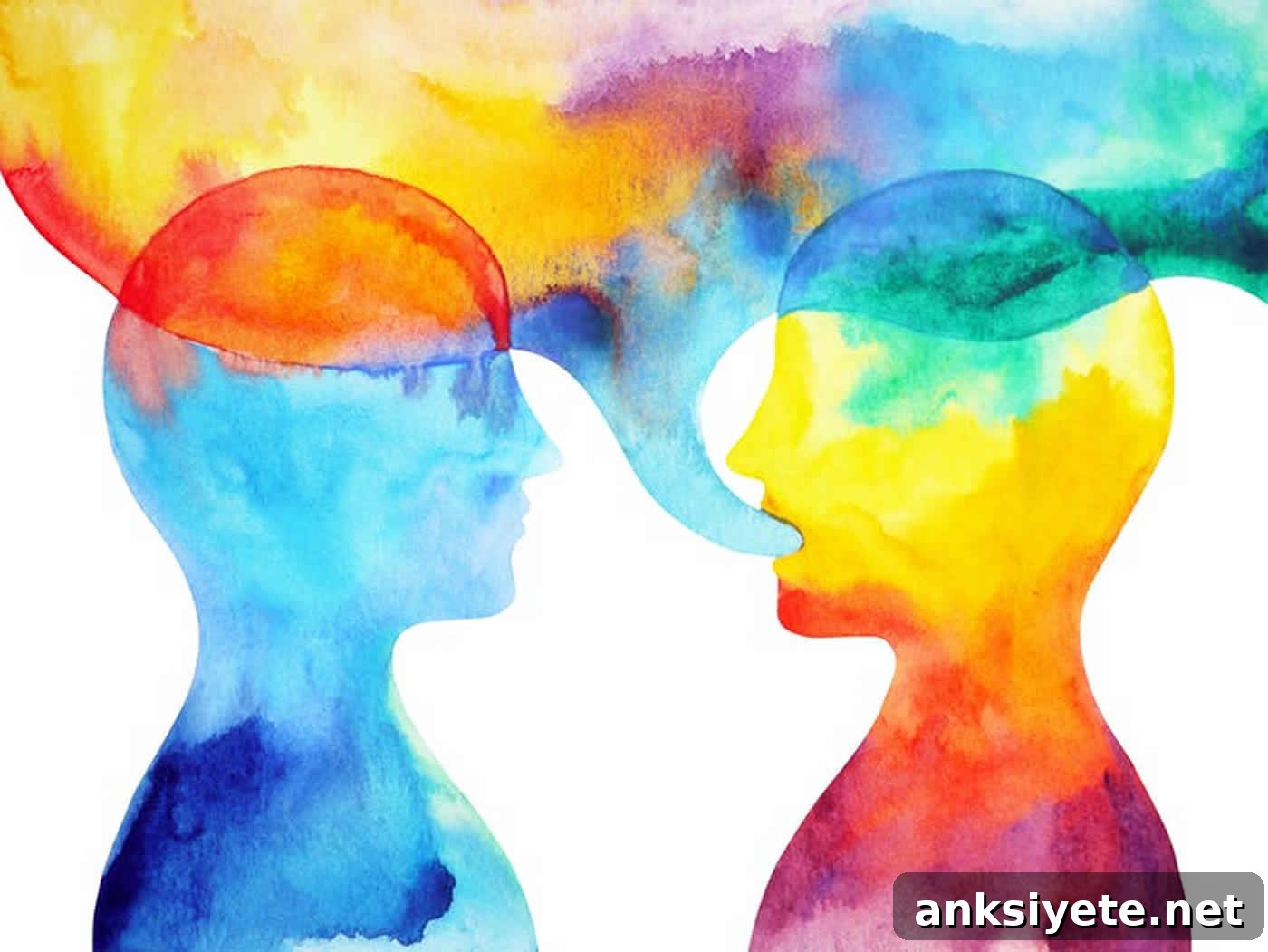
These contents form a continually updated personal narrative that runs in parallel with personal awareness, but without influence from it. The personal narrative serves several important functions: it supplies information to autobiographical memory (the story you tell yourself about yourself), and it enables communication of perceptions and experiences to others.
By sharing narratives, humans learn to predict and interpret other people’s behavior. These interpersonal skills help build social and cultural structures that have supported human survival over millennia. The authors propose that the evolutionary advantage of our species lies less in subjective personal awareness itself and more in the capacity to construct and communicate a coherent personal narrative.
Implications: purpose, free will and responsibility
If conscious awareness is largely a passive accompaniment to non-conscious processes, its evolutionary purpose is unclear. The authors compare it to aesthetic phenomena like rainbows: a byproduct of underlying physical processes rather than a trait that serves a direct function.
Their conclusions also challenge conventional views on free will and moral responsibility. If personal awareness does not drive the contents of the personal narrative—including thoughts, feelings, actions and decisions—then questions arise about how responsibility should be understood.
The researchers respond by noting that concepts such as free will and personal responsibility are social constructs embedded within human psychology. These notions are represented within the non-conscious processes that generate personal narratives and are reinforced through communication and culture. In other words, even if consciousness occupies a passive role, the ideas of agency and accountability remain powerful and functional within societal systems.
Placing consciousness in the “passenger seat” need not force us to abandon everyday notions of choice and responsibility. Those ideas are woven into the non-conscious machinery of the human mind and play a central role in regulation, social cohesion and moral practice.
Source: David A Oakley and Peter Halligan — The Conversation
Publisher: Organized by NeuroscienceNews.com.
Image Source: Image adapted from The Conversation news release.
Oakley, D. A., & Halligan, P. (2017). What if Consciousness is Not What Drives the Human Mind? NeuroscienceNews. Published November 22, 2017.