
Summary: New research shows that witnessing fear in others can alter brain circuitry, increasing vulnerability to stress-related psychological conditions.
Source: Virginia Tech.
Virginia Tech Carilion Research Institute scientists find that observing trauma can change brain signaling with implications for PTSD
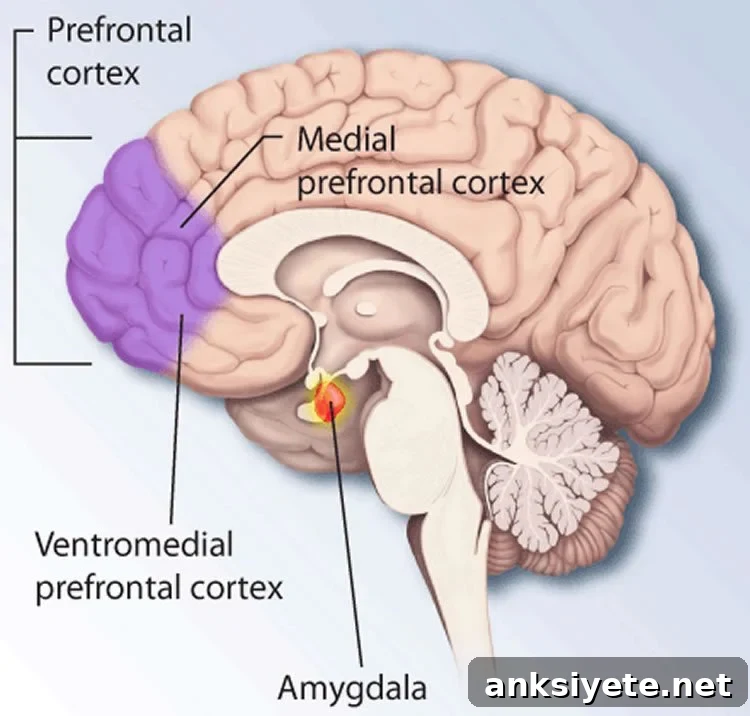
Researchers at the Virginia Tech Carilion Research Institute report that observing fear in others can alter how information flows through the brain’s prefrontal cortex. Their findings, published in the journal Neuropsychopharmacology, suggest that traumatic experiences—even those experienced indirectly—leave measurable traces in brain circuits that may increase risk for anxiety and stress-related disorders.
“Negative emotional experiences leave a trace in the brain, which can make us more vulnerable,” said Alexei Morozov, assistant professor at the Virginia Tech Carilion Research Institute and lead author of the study. “Traumatic experiences, even without physical injury, are a risk factor for mental health disorders.”
Post-traumatic stress disorder (PTSD) is a disabling anxiety disorder that can develop after exposure to shocking, frightening, or dangerous events. While most people who endure such events do not develop PTSD, a significant minority will experience the disorder at some point in their lives. Moreover, PTSD does not only affect direct victims: family members, caregivers, and even bystanders who witness or learn about another person’s suffering can be affected.
“PTSD doesn’t stop at direct victims of illness, injury, or a violent event; it can also affect loved ones, caregivers, and witnesses,” Morozov added, noting that indirect exposure can increase the likelihood of later developing stress-related conditions.
Past research by Morozov and colleagues showed that rodents exposed to stressed conspecifics—animals of the same species—developed stronger fear memories when later faced with their own stressful events. Building on those behavioral results, the current study asked whether observational fear produces physical changes in the prefrontal cortex, the brain region involved in empathy and understanding others’ mental states.
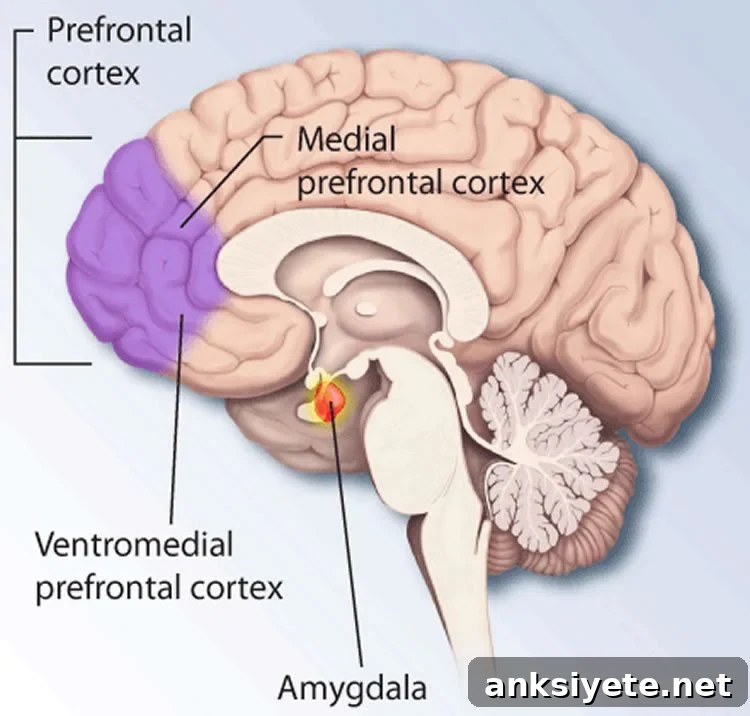
In the study, postdoctoral researcher Lei Liu measured inhibitory synaptic transmission in the prefrontal cortex of mice that had observed a stressed companion. Inhibitory synapses regulate the strength and timing of incoming signals, so changes there can alter how information is routed through cortical circuits.
“Liu’s measurements indicate that observational fear physically redistributes information flow in the prefrontal cortex,” Morozov said. “This redistribution appears to be driven by stress signals that are communicated socially—through body language, vocalizations, and scent—rather than by direct physical harm.”
The researchers observed a shift in how different cortical layers communicated: observational fear appeared to favor increased signaling through synapses that influence deeper cortical layers, while reducing transmission in more superficial layers. The precise circuit-level mechanisms remain under investigation, but these layer-specific changes could reshape how the prefrontal cortex interacts with other brain regions after vicarious trauma.
“Understanding the cellular and molecular mechanisms behind these changes is the next step,” Morozov said. “If we can identify how witnessing trauma alters specific synaptic pathways, we can better understand how disorders such as PTSD develop and look for potential intervention targets.”
Funding: This research was supported by the Virginia Tech Carilion Research Institute, the Whitehall Foundation, and the National Institute of Mental Health (part of the National Institutes of Health).
Source: Ashley WennersHerron, Virginia Tech.
Image Source: NeuroscienceNews.com image used for illustration purposes.
Original Research: Abstract for “GABAb Receptor Mediates Opposing Adaptations of GABA Release From Two Types of Prefrontal Interneurons After Observational Fear” by Lei Liu, Wataru Ito, and Alexei Morozov in Neuropsychopharmacology. Published online December 7, 2016; DOI: 10.1038/npp.2016.273.
GABAb Receptor Mediates Opposing Adaptations of GABA Release From Two Types of Prefrontal Interneurons After Observational Fear
The observational fear (OF) paradigm in rodents—where a subject witnesses a distressed conspecific—induces contextual fear learning and enhances later passive avoidance learning, modeling behavioral changes related to traumatic experiences in humans. Because these OF-driven behaviors rely on the dorsomedial prefrontal cortex (dmPFC), the authors examined synaptic adaptations in dmPFC one day after OF exposure. Electrophysiological recordings from layer V pyramidal neurons showed altered inhibitory postsynaptic current (IPSC) dynamics: OF increased depression of IPSCs evoked by repeated stimulation, while dendritic IPSCs showed reduced depression when somatic GABAa receptors were blocked. Optogenetic dissection revealed that OF produced increased depression of IPSCs originating from perisomatic, parvalbumin-positive interneurons (PV-IPSCs), but decreased depression of IPSCs from dendritically projecting somatostatin-positive interneurons (SOM-IPSCs). These changes were abolished by a GABAb receptor antagonist. OF also reduced SOM-IPSC sensitivity to a GABAb receptor agonist (baclofen), but did not affect PV-IPSC sensitivity. The findings indicate that observational fear causes opposing GABAb receptor–dependent adaptations in GABA release from PV- and SOM-positive interneurons. Such layer- and cell-type-specific changes could alter dmPFC connectivity with regions targeting deep versus superficial layers and thereby contribute to the behavioral consequences of aversive social experiences.
Researchers emphasize that indirect exposure to traumatic events—through witnessing, caregiving, or media exposure—can have measurable effects on brain function and increase vulnerability to stress-related disorders. Continued study of the cellular and receptor-level changes that follow observational fear will help clarify mechanisms underlying PTSD and inform future therapeutic strategies.