
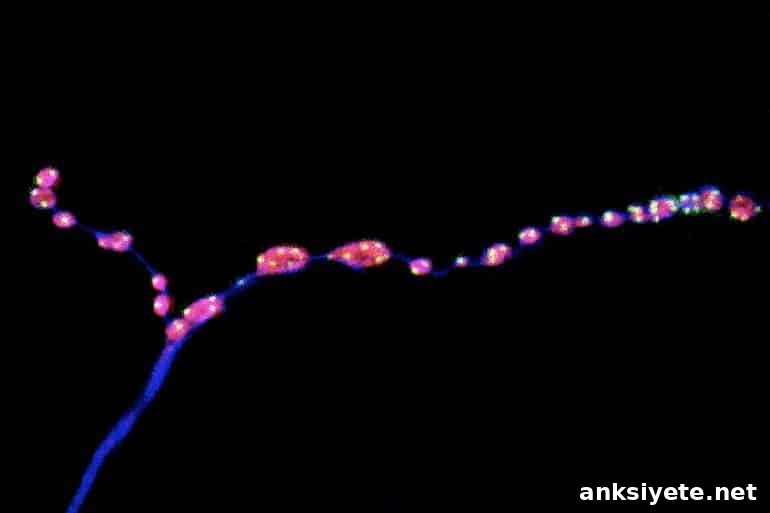
Summary: New research shows that miniature neurotransmitter release events help preserve synaptic structure and motor neuron function during aging in fruit flies.
Source: EPFL
Neurons communicate using rapid electrical impulses that trigger the release of chemical messengers called neurotransmitters. At the point where one neuron meets another—the synapse—these chemical messengers are packaged into small vesicles that fuse with the membrane and release their contents. This activity-driven process is called evoked neurotransmission and is the primary way neurons transmit information.
In addition to evoked release, synapses also discharge single vesicles sporadically without any triggering electrical impulse. These spontaneous events, often called miniature release events or “minis,” were long treated as background noise. Brian McCabe, Director of the Laboratory of Neural Genetics and Disease at the EPFL Brain Mind Institute, explains that minis were historically underestimated, though emerging evidence suggests they have meaningful biological roles.
Earlier work from McCabe’s lab showed minis contribute to synapse development. To test whether they also play a role in maintaining synapses in the mature nervous system, postdoctoral researcher Soumya Banerjee and colleagues examined motor neurons that control movement in Drosophila (fruit flies).
Over time, the researchers observed that presynaptic structures gradually fragmented as the animals aged—a process similar to changes seen in aging mammals. As synapses broke apart, both evoked release and miniature events declined, and the flies developed measurable motor deficits, such as a reduced ability to climb vial walls. These correlated changes suggested a link between neurotransmission dynamics and structural integrity of the synapse.
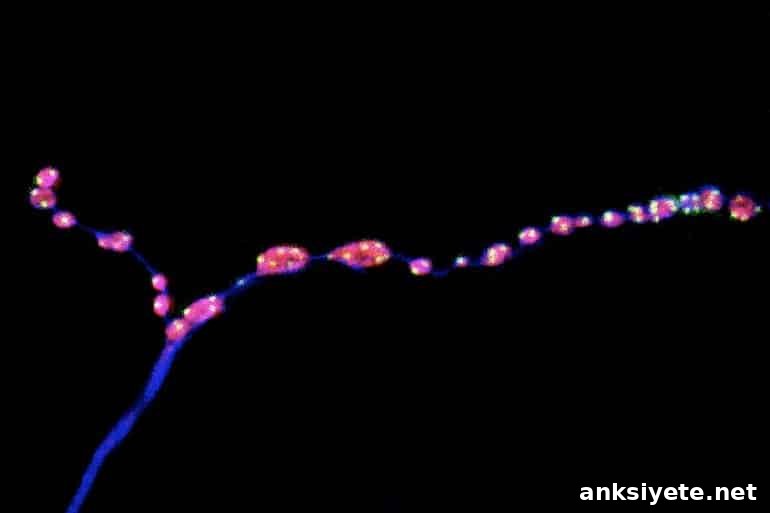
To probe causality, the team selectively manipulated each mode of neurotransmission. When both evoked and miniature release were blocked, synapses deteriorated faster, indicating that changes in neurotransmission can precede and drive structural decay. This challenges the long-standing assumption that synaptic structure breaks down first and then causes functional decline. “The idea has long been that the structure of the synapse breaks down, and that causes a functional change in the synapse, but we found it is the other way around,” McCabe says.
Importantly, stimulating evoked release alone did not prevent age-related synaptic breakdown. By contrast, increasing the frequency of miniature events maintained synaptic structure and preserved motor performance in middle-aged flies to levels similar to young adults. These results identify minis as a critical, active signal that supports the long-term stability of synaptic connections and sustained motor function.
The study, published in Nature Communications, has broader implications for human brain health. Miniature neurotransmission has been detected at every synapse type that has been studied, and disruptions in minis have been associated with various neurodevelopmental disorders. Understanding how reduced miniature neurotransmission alters synaptic architecture—and how those structural changes impact behavior—could shed light on mechanisms that underlie neurodegenerative diseases and age-related functional decline.
Mechanisms and implications
Although the detailed molecular pathways were beyond the scope of this report, the findings point to a maintenance role for spontaneous vesicle release: minis appear to provide ongoing, low-level signaling that keeps presynaptic machinery organized and operational. By contrast, evoked release serves rapid communication but does not substitute for the maintenance function provided by minis. These complementary roles emphasize that synaptic health depends on multiple modes of neurotransmission acting together over time.
For researchers and clinicians, these results suggest new avenues for preserving synaptic integrity. Therapeutic strategies that support or mimic miniature neurotransmission might help slow synaptic fragmentation and related motor decline during aging, though translating findings from Drosophila to humans will require extensive further study.
About this neuroscience research news
Source: EPFL
Contact: Brian McCabe – EPFL
Image: The image is credited to Laboratory of Neural Genetics and Disease / EPFL
Original Research: Open access. “Miniature neurotransmission is required to maintain Drosophila synaptic structures during ageing” by Soumya Banerjee, Samuel Vernon, Wei Jiao, Ben Jiwon Choi, Evelyne Ruchti, Jamshid Asadzadeh, Olivier Burri, R. Steven Stowers & Brian D. McCabe. Nature Communications.
Abstract
Miniature neurotransmission is required to maintain Drosophila synaptic structures during ageing
Age-related decline of neuronal synapses is a well-established feature of ageing, typically accompanied by reduced neuronal function and diminished motor capacity. In this work, the authors studied Drosophila motor neuron synaptic terminals over the course of ageing and observed cumulative fragmentation of presynaptic structures together with reductions in both evoked and miniature neurotransmission and correlated declines in motor ability.
By manipulating each neurotransmission modality independently, the study demonstrates that miniature—but not evoked—neurotransmission is necessary to maintain presynaptic architecture. Increasing the rate of miniature events preserved synaptic structures and prolonged motor ability during ageing, establishing that miniature neurotransmission, once considered an epiphenomenon, is essential for long-term synaptic stability.