New Study Links Body Fat to Memory Loss

featured 11780

Although memory problems become more common with age, many people retain strong memories throughout life, while others experience mild to severe memory decline at earlier ages. Multiple factors increase the risk of dementia, and abnormal fat metabolism has emerged as one important contributor. Research indicates that individuals with high levels of abdominal fat during middle … Read more

Exploring Collective Intelligence Beyond the Individual Brain

featured 78268

Summary: To fully appreciate how knowledge shapes human intelligence, researchers argue we must look beyond isolated brains and study how knowledge is shared and maintained across communities. Source: University of Illinois Researchers propose that to better understand human thought we should expand cognitive neuroscience to include evidence from social sciences, studying not just individual brains … Read more

Why the Brain Processes Smell Like a Painting and a Symphony

featured 81627

Summary: Centrifugal fibers that send signals from other parts of the central nervous system to early sensory regions of the brain play a pivotal role in how odors are processed. Source: University of Rochester What happens in the brain when you smell a rose? Does the olfactory system create a single instantaneous picture of the … Read more

fMRI Shows Toddlers Form Memories During Sleep

featured 49368

Summary: A neuroimaging study of sleeping two‑year‑olds reveals how specific brain regions respond during memory recall. Source: UC Davis Researchers at the Center for Mind and Brain at the University of California, Davis have developed a method to perform functional MRI scans of naturally sleeping toddlers and used it to show, for the first time … Read more

How Motor Learning Shapes Your Sense of Agency

featured 109417

Summary: A new study from the University of Tokyo shows that actively exploring how movements map to outcomes—motor exploration—is essential for developing a genuine sense of agency (SoA) when learning a new motor skill. Using a data glove to control a cursor, researchers found that early judgments of control depend mainly on timing between movement … Read more

Why Humor Is a Key Character Strength

featured 76243

Summary: Researchers report that using and appreciating humor supports overall wellbeing and psychological health. Source: The Conversation Humor appears in all cultures and at every age. For much of the history of psychology it received little respect, often being cast in a negative light as a sign of vulgarity, superiority, or as a defensive mask. … Read more

Chatting with IBM Watson Boosts Human Creativity

featured 25444

Researchers at the Georgia Institute of Technology are expanding the frontiers of artificial intelligence (AI) by collaborating with IBM’s Watson to explore how computers can augment human creativity and problem solving across engineering, architecture, systems design, and computing. “Searching Google still requires a lot of search,” says Ashok Goel, professor in Georgia Tech’s School of … Read more

How the Brain Weighs Risk When Making Decisions

featured 112506

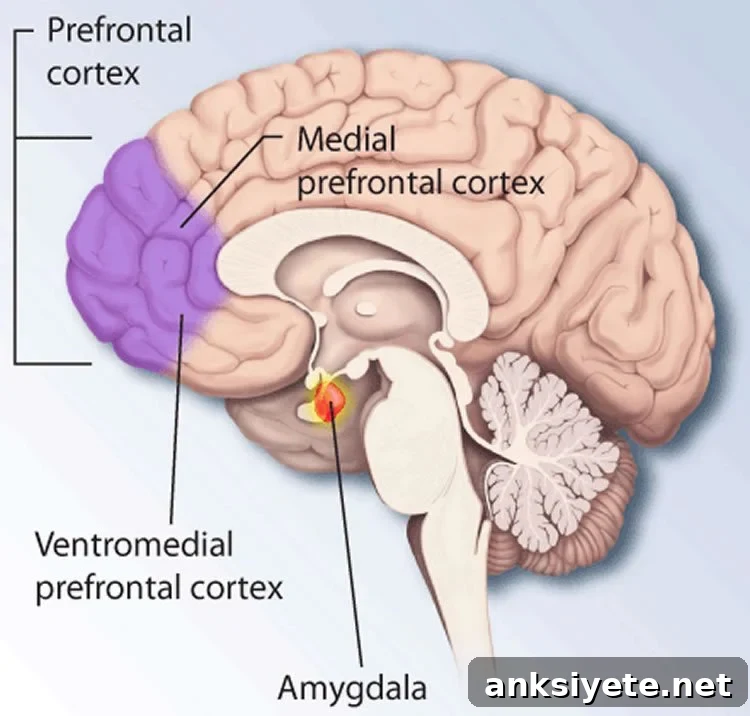
Why This Matters: Why this matters: Reveals neural mechanisms that explain how people balance exploration and exploitation when facing potential rewards or losses. How this aligns with previous research: Extends prior work linking the amygdala to exploration and mood regulation, showing these processes also apply in loss-avoidance settings. Future implications: Could guide development of treatments … Read more

New ALS Research Reveals Promising Treatment Strategy

featured 78739

Summary: Post-mortem analysis of brain tissue from people with amyotrophic lateral sclerosis (ALS) shows an abnormal, hyperphosphorylated form of tau protein mislocalized to novel brain regions where it is not normally found. This altered tau interacts with the mitochondrial fission protein DRP1, promoting mitochondrial fragmentation and increased oxidative stress. Applying a selective tau degrader reversed … Read more

Study Finds Early Communication with Infants Affects Autism Risk

featured 59338

Summary: Researchers find that caregivers who talk and respond to their infants boost language development. This benefit applies to all children, including those later diagnosed with autism spectrum disorder (ASD). Source: UT Dallas New research shows that increased caregiver speech and conversational interaction in infancy supports later language skills for children both with and without … Read more