
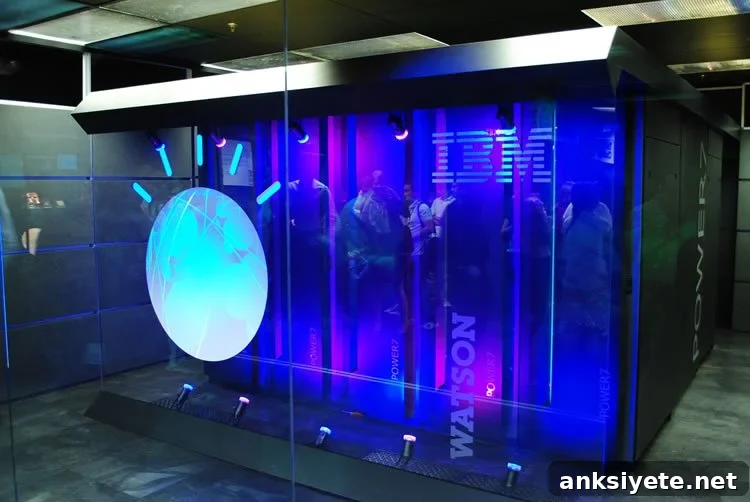
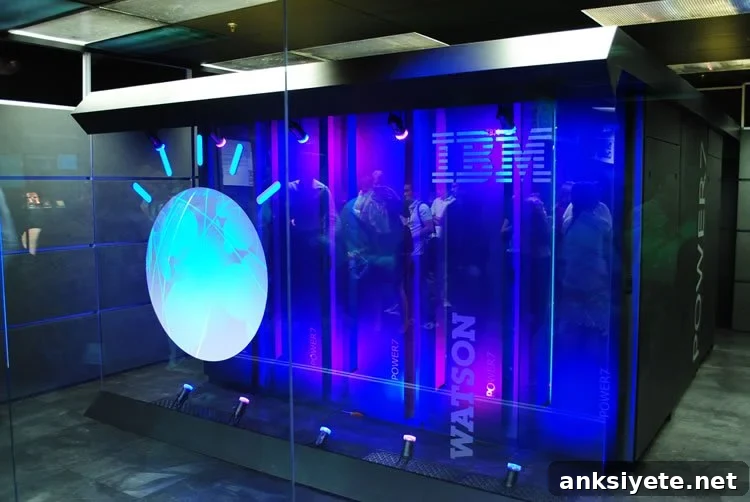
Researchers at the Georgia Institute of Technology are expanding the frontiers of artificial intelligence (AI) by collaborating with IBM’s Watson to explore how computers can augment human creativity and problem solving across engineering, architecture, systems design, and computing.
“Searching Google still requires a lot of search,” says Ashok Goel, professor in Georgia Tech’s School of Interactive Computing. “Imagine asking a search engine a complex question and receiving a direct, conversational answer instead of a list of links. That is the capability we started to build with Watson.”
In a Georgia Tech course, student teams trained Watson using roughly 1,200 question-and-answer pairs—about 200 per team—and several hundred biology articles drawn from Biologue, an interactive biology repository. This training allowed the students to converse with Watson as they sought biologically inspired design ideas: solutions that replicate or adapt mechanisms found in nature for human engineering problems.
Students posed open-ended engineering challenges and used Watson to retrieve relevant biological strategies and examples. For instance, when asked how to improve desalination for potable water from seawater, Watson helped surface solutions observed in seagulls, which remove excess salt through specialized salt glands. When students asked how to develop more durable solar cells for extended space travel, Watson suggested looking at how certain desert and alpine plants use high-temperature fibrous insulation and structural adaptations to regulate heat under extreme conditions. Watson returned these insights in fractions of a second by sifting the Biologue articles and the submitted Q&A training data.
Rather than replacing human expertise, Watson acted as an intelligent sounding board that dramatically reduced the time and effort required to scan wide-ranging literature outside a student’s or professional’s immediate domain. This natural-language retrieval capability enabled learners and practitioners to surface relevant concepts quickly and to judge whether a particular hypothesis or design idea merits deeper exploration.
The students dubbed their system “GT-Watson Plus” to reflect enhancements they layered on top of Watson’s base capabilities. Beyond conversational Q&A, GT-Watson Plus suggests alternative phrasings and follow-up queries to improve search precision. It organizes results in an intuitive visualization described by the team as a “treetop,” where each answer appears as a “leaf” sized proportionally to its relevance or weight. This visual mapping helps users scan and interpret concept clusters quickly, making it easier to navigate complex topics and spot promising directions for design inspiration.
“Researchers get a digestible visual map of concepts related to the query and a sense of how strongly each concept is connected,” says Goel, who taught the course. “We added semantic and contextual layers so the interaction feels more like a conversation with an intelligent collaborator rather than a simple keyword lookup.”
The Georgia Tech experiments highlight several practical benefits of combining AI with domain literature and curated training examples. For professionals, such systems can speed idea generation, surface cross-disciplinary analogies, and reduce the time needed to explore feasible biological analogs. For students and novices, natural-language AI assistants can accelerate learning by allowing them to “train up” quickly on unfamiliar fields and to test whether a preliminary idea is promising enough to pursue.
GT-Watson Plus is a demonstration of how AI-driven natural language retrieval and visual summarization can support creative problem solving and design thinking. The approach supports biologically inspired design workflows where engineers and designers intentionally look to nature for robust, efficient, and adaptive solutions. By making biological knowledge more accessible and searchable in conversational form, Watson-based tools can broaden the set of ideas available to teams working on complex, real-world challenges.
Looking ahead, Goel and his collaborators plan to investigate additional domains where conversational AI could add value, including online education and healthcare applications. In those areas, the ability to quickly surface relevant research, explain concepts conversationally, and present structured visual summaries could help both professionals and learners make faster, more informed decisions.
Source: Joshua Preston – Georgia Institute of Technology
Image Source: Image credited to Clockready, licensed CC BY-SA 3.0
Original Research: This work was presented at the Association for the Advancement of Artificial Intelligence (AAAI) 2015 Fall Symposium on Cognitive Assistance in Government, Nov. 12–14, in Arlington, Va.