
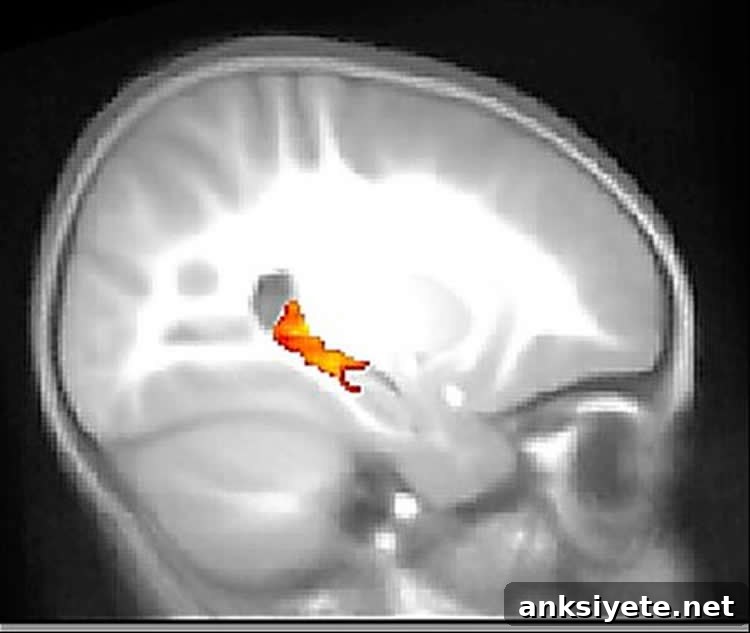
Summary: A neuroimaging study of sleeping two‑year‑olds reveals how specific brain regions respond during memory recall.
Source: UC Davis
Researchers at the Center for Mind and Brain at the University of California, Davis have developed a method to perform functional MRI scans of naturally sleeping toddlers and used it to show, for the first time in humans this young, how memory-related brain regions activate during recall.
The research team, led by Professor Simona Ghetti in the Department of Psychology and the Center for Mind and Brain, investigates how memory and cognition develop in early childhood. Their new protocol addresses longstanding challenges in studying brain activity in infants and toddlers, when conventional fMRI tasks that require cooperation and stillness are not feasible.
The hippocampus, a small but crucial structure deep in the brain, plays a central role in forming and retrieving episodic memories — memories of events tied to specific contexts such as place and companions. Animal studies have suggested that hippocampal development underlies the emergence of episodic memory, but testing this hypothesis in very young children has proven difficult.
Functional magnetic resonance imaging (fMRI) measures patterns of brain activity by detecting changes in blood flow, but its use with very young children is limited by the need for subjects to remain motionless inside a noisy scanner while performing tasks. To overcome these obstacles, Ghetti and postdoctoral researcher Janani Prabhakar designed an alternative approach: they recorded brain responses while toddlers slept naturally at night in the MRI scanner.
Studying memory during sleep
In the lab, each child first listened to a distinctive song while playing with a toy, creating a memory that linked the song to a specific context (the room and the toy character). Later, at the child’s normal bedtime, the toddler was placed in the scanner and allowed to fall asleep. During natural nocturnal sleep, the researchers presented recordings of the previously heard song and of unfamiliar songs while collecting fMRI data.
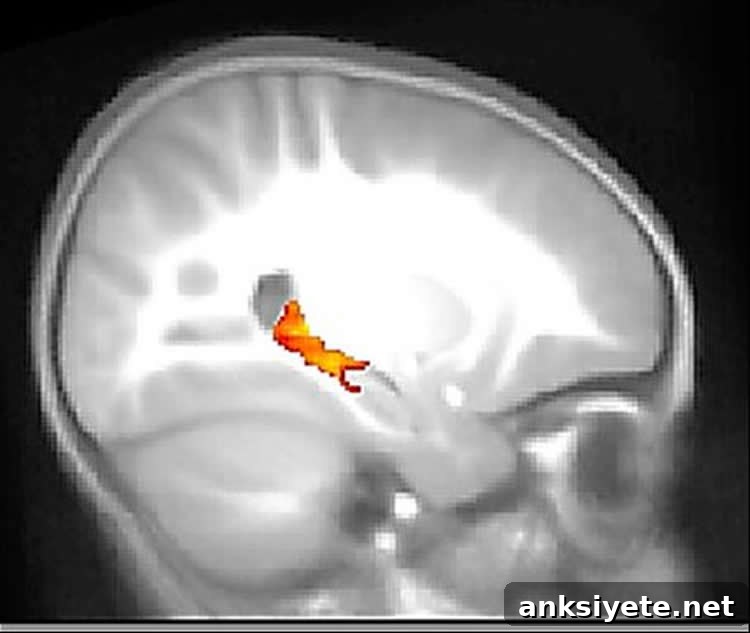
After the overnight scan, the toddlers were tested while awake to determine whether they could remember the context in which they first heard the song: the room and the toy they were playing with. This capacity to recall where and when an event occurred and what accompanied it is known as episodic memory.
Using the sleeping‑scan protocol, Prabhakar and Ghetti observed stronger hippocampal activation when the previously learned song was played compared with novel songs. The hippocampal response remained robust even when the familiar song was altered, for example when played backwards, indicating that hippocampal activation reflected prior experience rather than only an exact acoustic match.
Importantly, toddlers who demonstrated better episodic memory in the awake tests — those who remembered the room and the toy linked to the song — also showed stronger hippocampal activation during the sleeping fMRI. This link between behavior and brain activity supports the interpretation that hippocampal signaling in these toddlers reflects meaningful memory representations.
The study was published on June 4 in the Proceedings of the National Academy of Sciences. Additional authors include graduate student Elliott Johnson and Christine Nordahl, associate professor at the UC Davis MIND Institute and the Department of Psychiatry and Behavioral Sciences. Funding was provided by the National Institutes of Health.
Key takeaways:
- A novel fMRI protocol enables measurement of memory‑related brain activity in naturally sleeping two‑year‑olds.
- The hippocampus shows stronger activation to previously learned stimuli, linking early hippocampal function to episodic memory in toddlers.
- Hippocampal responses during sleep correlated with toddlers’ ability to recall contextual details when awake, tying neural signals to observable behavior.
Implications
These findings illuminate how core memory systems operate early in human development and demonstrate a practical approach for studying neural substrates of memory in very young children. The ability to probe hippocampal function in natural sleep opens opportunities to explore how early experiences shape memory networks and how developmental changes support the emergence of complex memory abilities.
Abstract (condensed)
Delivering a previously learned song and a novel song to two‑year‑old toddlers during natural nocturnal sleep, the researchers found stronger hippocampal activation for the learned song compared with the novel one. The effect held even when the song was modified and was stronger in children who later showed better episodic memory behaviorally. These results indicate that hippocampal activation in toddlers reflects past experience, persists despite some alteration of the stimulus, and is associated with memory performance.
Article source: Andy Fell, UC Davis. Original research: “Memory‑related hippocampal activation in the sleeping toddler” by Janani Prabhakar, Elliott G. Johnson, Christine Wu Nordahl, and Simona Ghetti. Published June 4, 2018. DOI: 10.1073/pnas.1805572115