Silencing One Brain Gene Could Reverse Autism Deficits
featured 117534

Summary: Researchers have identified a precise molecular strategy to restore NMDA receptor (NMDAR) function, addressing a central pathology in autism spectrum disorder (ASD). The approach redirects attention from broadly acting, toxic systemic targets to the glycine transporter Slc6a20a / SLC6A20, which is concentrated in cognition-related brain regions such as the cortex and hippocampus. Using antisense … Read more
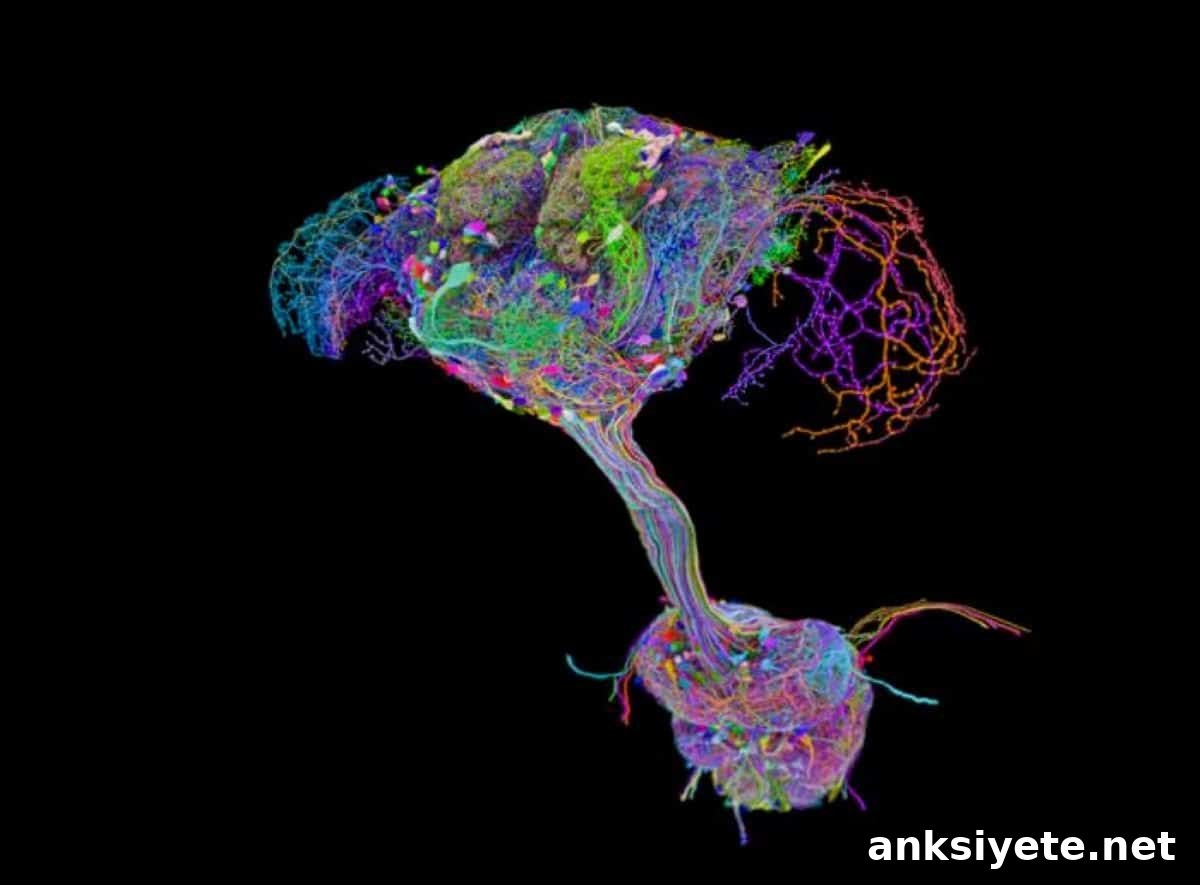

Full Drosophila Nervous System Connectome Revealed

featured 117489 1

Summary: An international team led by researchers at Harvard Medical School and Princeton University has published the first complete synapse-level wiring diagram—the connectome—of an adult fruit fly’s entire central nervous system (Drosophila melanogaster). By combining a newly mapped ventral nerve cord (the fly’s spinal-cord equivalent) with an existing brain connectome, the study delivers a unified, … Read more

How Parents’ Non-Transmitted Genes Shape Child Development

featured 117518

Summary: A new study isolates the distinct, hidden pathways through which parental DNA shapes a child’s development. The research introduces a joint modeling framework that separates a child’s direct genetic inheritance from the environmental influence of parents’ non-transmitted genes — a phenomenon called “genetic nurture” — and distinguishes these from parent-of-origin (imprinting) effects. By analyzing … Read more

Brain Stimulation Reverses Memory Deficits From Sleep Loss

featured 117485 1

Summary: A new study replicated key restorative aspects of sleep in awake mice by recreating the brain’s slow-wave, “on-and-off” firing pattern in targeted, localized regions. Using optogenetic stimulation, researchers induced rhythmic neural alternations that mimic non-rapid eye movement (NREM) sleep for 30 minutes at a time. This localized intervention offset memory deficits caused by sleep … Read more

How Daily Activity and Positive Mood Reinforce Each Other

featured 117509

Summary: A large international study demonstrates a dynamic, two-way relationship between brief bursts of everyday physical activity and short-term improvements in mood. By combining wearable-sensor data and real-time mood reports from more than 8,000 participants across 67 datasets, researchers show that even light, unstructured movement — like walking, climbing stairs, or doing household tasks — … Read more

Father Drinking Before Conception Damages Children’s Mitochondria

featured 117505

Summary: Researchers are conducting a comprehensive study into how a father’s alcohol use before conception can biochemically reprogram sperm and increase risk for developmental disorders, chronic disease, and accelerated aging in children. Supported by a new $2.9 million grant from the National Institute on Alcohol Abuse and Alcoholism (NIAAA) — part of the National Institutes … Read more

Genetic Brake Pathway Predicts Risk of Cocaine Addiction

featured 117481 1

Summary: A new study identifies a heritable biological difference that determines how sensitive an individual is to the unpleasant aftereffects of cocaine. Using multiple genetically distinct rat strains, researchers examined a natural neural “brake” — a brain pathway that produces aversive sensations after the drug’s initial rewarding phase fades. The findings indicate this avoidance trait … Read more

New Compound Prevents Neuron Death in Alzheimer’s Disease

featured 117477 1

Summary: A recent study reveals a new biological pathway involved in Alzheimer’s disease and identifies a promising therapeutic candidate capable of slowing its progression. Researchers found that the cellular enzyme GRK2 becomes inactivated and aggregates in the brains of dementia patients, damaging mitochondria and triggering a self-reinforcing cycle that increases production of toxic amyloid-beta. The … Read more

Preventing Cognitive Decline Caused by Cancer Drugs

featured 117501

Summary: A new study shows that a brain-selective estrogen prodrug can reduce the severe cognitive and physiological side effects caused by anti-estrogen breast cancer treatments. The compound, 10β,17β-dihydroxyestra-1,4-dien-3-one (DHED), is designed to release estrogen only within the brain—particularly the cerebral cortex—while avoiding peripheral tissues where estrogen can promote tumor growth. Using an aged marmoset model … Read more

Partial Binding Keeps Brain Kainate Receptors Open

featured 117497

Summary: Researchers have decoded how the brain’s most prevalent kainate receptor controls its ion channel. Focusing on the GluK2/GluK5 heteromer — a four-subunit complex composed of two GluK2 and two GluK5 proteins that together form a glutamate-activated ion channel — the team combined cryo-electron microscopy and rapid electrophysiology to reveal a surprising gating mechanism with … Read more