A gene signature that can predict the future onset of age-related diseases, including Alzheimer’s, years in advance has been developed, according to research published in the open access journal Genome Biology.
Researchers set out to identify a reproducible molecular profile linked to “healthy ageing” in people around 65 years old. The resulting RNA-based signature aims to improve prediction of biological age and to identify individuals at higher risk of age-related conditions earlier than chronological age or standard clinical measures alone.
Lead author James Timmons of King’s College London explains that current systems rely heavily on chronological age—birth year—to determine medical decisions and risk, yet individuals of the same age can differ greatly in their underlying biological condition. The new molecular signature offers a testable measure of biological age that could change how age is used in clinical settings and help identify people at elevated risk of diseases such as Alzheimer’s before symptoms appear.
The team profiled RNA from healthy 65-year-old volunteers and derived a set of 150 RNA probe-sets that together form a signature of healthy ageing. This multi-tissue RNA classifier was validated across independent cohorts and multiple tissue types, including muscle, skin and brain, showing consistent performance as a biomarker for biological age.
From this signature the authors created a “healthy age gene score” to quantify an individual’s expression profile. Higher scores correlated with better overall health in both men and women and proved predictive of long-term outcomes. When applied to subjects born within the same year and assessed around age 70, the gene score varied widely—up to four-fold—indicating substantial differences in biological ageing despite similar chronological age. Those with higher scores demonstrated better cognitive performance and renal function over the following decade, two important predictors of longevity.
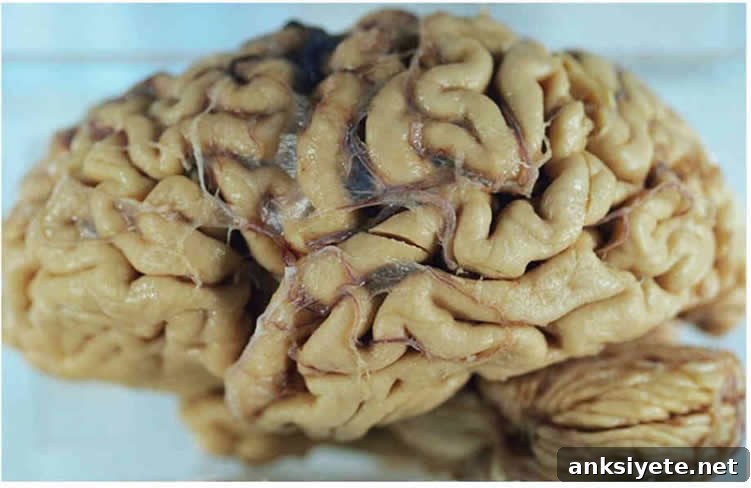
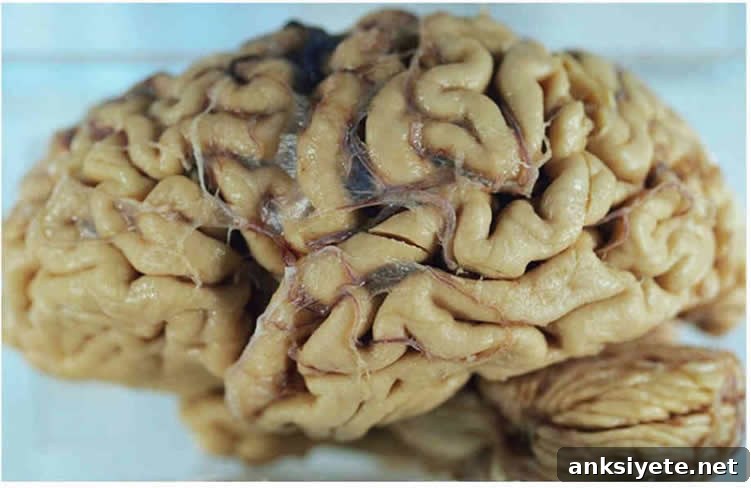
Importantly, the researchers found that people diagnosed with Alzheimer’s disease displayed a distinct change in the healthy ageing RNA signature measured in blood, reflected as a lower healthy age gene score. This association suggests the signature can contribute to dementia risk assessment and supports the idea that dementia may represent a form of accelerated ageing or a failure to engage the normal healthy ageing program at the molecular level.
Because early intervention is crucial in Alzheimer’s and other age-related conditions, the healthy age gene score could be used to select middle-aged individuals for preventative clinical trials years before clinical symptoms emerge. Using a simple peripheral blood sample, clinicians and researchers could potentially identify those at greatest risk and target them for monitoring or early treatment strategies.
Source: Biomed Central (journal coverage summary)
Image credit: Public domain image used for illustration only.
Original research: The findings are reported in the article “A novel multi-tissue RNA diagnostic of healthy ageing relates to cognitive health status” published in Genome Biology. The research presents a robust multi-tissue RNA signature that functions as a diagnostic measure of healthy ageing and relates to cognitive health.
Abstract
A novel multi-tissue RNA diagnostic of healthy ageing relates to cognitive health status
Background
Reliable molecular diagnostics of human ageing could improve prediction of future health needs and guide preventative measures for age-related diseases. This study used transcriptomics to build a reproducible multi-tissue RNA expression signature based on gene-chip profiling of tissues from sedentary but healthy individuals who reached 65 years of age in good health.
Results
A classifier composed of 150 probe-sets accurately distinguished younger from older muscle tissue and performed consistently across independent cohorts of human muscle, skin and brain tissue (total n = 594; AUC = 0.83–0.96), establishing it as a biomarker of biological age. In the Uppsala Longitudinal Study of Adult Men birth cohort (n = 108), the RNA classifier showed independence from common lifestyle confounders. A higher gene score at age 70 was independently associated with better renal function at age 82 and with increased longevity. The gene score increased with healthy ageing in the hippocampus, and when applied to blood RNA profiles from large, age-matched dementia case–control data sets (n = 717), healthy controls had significantly higher scores than those with cognitive impairment. The healthy ageing RNA classifier, alone or combined with an Alzheimer’s disease RNA signature described previously by the group, proved diagnostic for Alzheimer’s disease.
Conclusions
This study identifies a statistically robust multi-tissue RNA signature of human healthy ageing that can predict future health outcomes using a peripheral blood sample. The RNA signature has strong potential to support research into treatments and management strategies for Alzheimer’s disease and other ageing-related conditions.
Authors
Sanjana Sood, Iain J. Gallagher, Katie Lunnon, Eric Rullman, Aoife Keohane, Hannah Crossland, Bethan E. Phillips, Tommy Cederholm, Thomas Jensen, Luc JC van Loon, Lars Lannfelt, William E. Kraus, Philip J. Atherton, Robert Howard, Thomas Gustafsson, Angela Hodges and James A. Timmons.