Summary: New findings clarify how the brain maintains tightly regulated blood flow, with implications for diagnosing conditions from vascular dementia to normal pressure hydrocephalus.
Source: Leeds Beckett University.
UK and Italian researchers discover how we keep blood flow in the brain so tightly controlled
The human brain requires a steady, carefully controlled blood supply despite the rhythmic surges produced by each heartbeat. While people can feel a pulse in their neck as blood rushes to the head with each contraction of the heart, the brain cannot tolerate large swings in pressure or volume: too much blood raises intracranial pressure and risks tissue damage, while too little deprives neural tissue of oxygen.
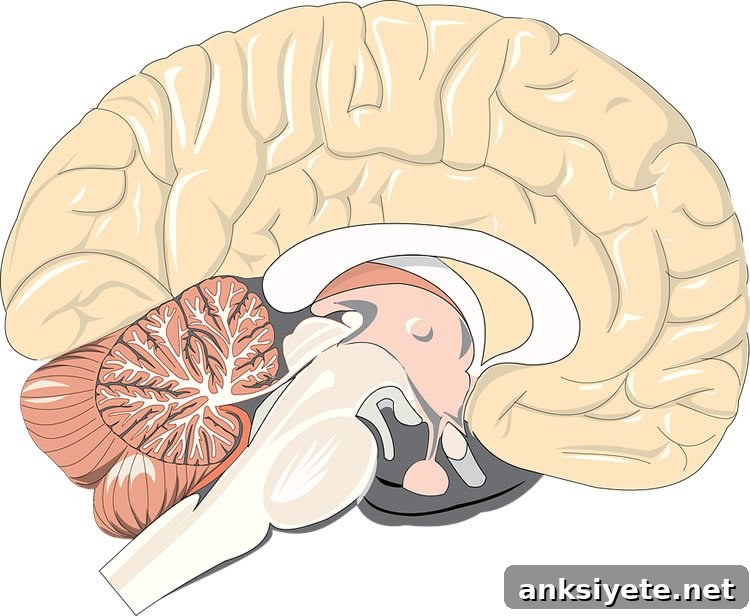
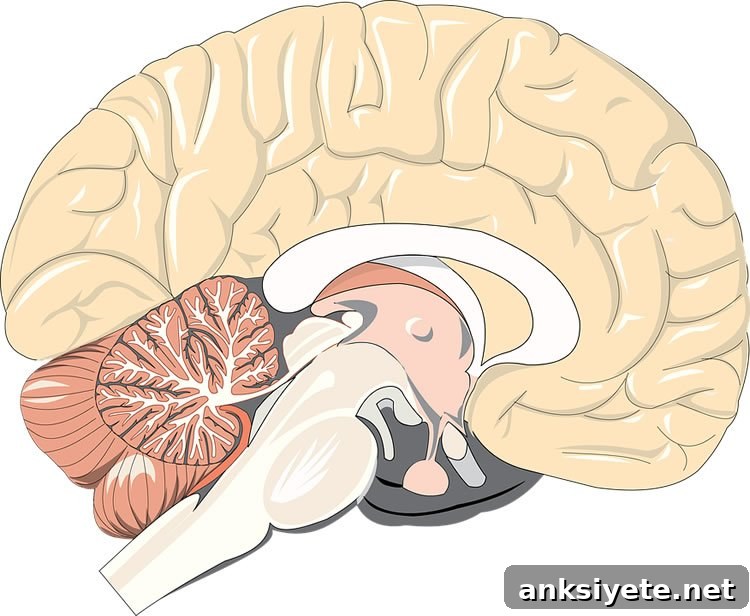
Researchers from Leeds Beckett University, the University of Bradford and the Don Carlo Gnocchi Foundation in Milan have used imaging and mathematical modelling to reveal a coordinated system of vascular and cerebrospinal fluid (CSF) adjustments that stabilizes intracranial conditions across the cardiac cycle.
The team’s study, published in Biomedical Signal Processing and Control, reports that the skull’s arteries and veins, together with the CSF that surrounds the brain, act in concert as a dynamic buffer. When the heart pumps, only a portion of incoming blood reaches the brain’s capillary network; the cranial arteries expand to accommodate the surplus. That arterial expansion forces CSF out of the cranial cavity into the spinal column. As the heart relaxes and arterial pressure falls, those arteries recoil and drive the stored blood into the brain’s microvasculature. Blood that has passed through the brain is then directed into the cerebral veins between the brain and skull, which transiently expand to hold this outflow.
Because the venous storage capacity is smaller than the arterial reserve, CSF flows back from the spinal compartment into the cranium, restoring balance. Rising intracranial pressure subsequently promotes discharge of venous blood from the skull toward the heart, completing the cycle and preparing the system for the next heartbeat.
The investigators emphasize that venous storage and release play a critical role in regulating the entire intracranial fluid system. When venous outflow is impeded, the system’s capacity to absorb cardiac-driven volume changes is reduced, and blood flow through the brain’s capillaries becomes more pulsatile. Persistent increases in capillary pulsatility are associated with age-related vascular damage and have been implicated in conditions such as vascular dementia.
To reach these conclusions the team scanned the necks of 12 healthy young adults using magnetic resonance imaging (MRI). Their scans tracked arterial and venous blood flow and the movement of CSF at the level of the upper spine and through the Aqueduct of Sylvius. Data were collected at the Don Carlo Gnocchi Foundation in Milan and then analysed with algorithms developed by the research team, combining principles from applied physiology, computational mathematics and engineering to model volumetric changes within the cranium over the cardiac cycle.
Model results showed a strong inverse relationship between arterial volume and both venous blood volume and intracranial CSF volume. Arterial volume peaked when venous and intracranial CSF volumes were at their lowest. As arterial volume declined, venous and CSF volumes rose. Importantly, fluctuations in blood flow through the cerebral veins closely paralleled CSF motion through the Aqueduct of Sylvius and the brain’s ventricular system—regions that enlarge in disorders such as normal pressure hydrocephalus.
These temporal relationships suggest that impaired venous drainage or altered venous compliance could hinder the normal redistribution of intracranial volumes and amplify pulsatile forces within the brain’s microvasculature. The authors propose that such changes may contribute to neurodegenerative processes associated with aging and to specific pathologies in which CSF dynamics or venous outflow are disrupted.
Professor Clive Beggs, of Leeds Beckett University, commented that the study offers the first comprehensive description of how intracranial arterial, venous and CSF volumes interact throughout the cardiac cycle, and that this knowledge is crucial for understanding brain disorders linked to aging. Professor Simon Shepherd, of the University of Bradford, highlighted the importance of applying rigorous mathematical and engineering tools to medical problems to strengthen theoretical foundations and improve clinical acceptance.
The research team hopes the quantitative approach they used can be translated into clinical studies of patients with neurological disease. Dr. Marcella Laganà, who coordinated MRI scanning at Don Gnocchi Foundation, noted that the model could be applied to subjects with various neurological conditions to test whether abnormal intracranial fluid behaviour is a contributing factor.
Future work will compare healthy subjects with patients who have conditions affecting CSF circulation or venous outflow to determine if the volumetric patterns identified here are altered in disease. If validated, these methods could support earlier diagnosis, better monitoring, and potentially new therapeutic strategies for disorders such as vascular dementia and normal pressure hydrocephalus.
Source: Carrie Braithwaite – Leeds Beckett University
Image Source: NeuroscienceNews.com image used for illustration.
Original Research: Abstract for “Intracranial volumetric changes govern cerebrospinal fluid flow in the Aqueduct of Sylvius in healthy adults” by Maria Marcella Laganà, Simon J. Shepherd, Pietro Cecconi, and Clive B. Beggsine in Biomedical Signal Processing and Control. Published online April 8, 2017. doi:10.1016/j.bspc.2017.03.019
Leeds Beckett University. “Unraveling Fluid Flow in the Brain.” NeuroscienceNews, May 2, 2017.
Abstract
Intracranial volumetric changes govern cerebrospinal fluid flow in the Aqueduct of Sylvius in healthy adults
Purpose
To characterize intracranial volumetric changes that influence the cerebrospinal fluid (CSF) pulse in the Aqueduct of Sylvius.
Materials and methods
Neck MRI data were acquired from 12 healthy adults (8 female, 4 male; mean age = 30.9 years) using a 1.5 T scanner. Intracranial arterial, venous and CSF volume changes, together with aqueductal CSF (aCSF) volume, were estimated from flow rate data recorded at the C2/C3 level and within the Aqueduct of Sylvius. Correlations and temporal relationships among these volumes were computed.
Results
aCSF volumetric changes were strongly correlated (r = 0.967, p < 0.001) with intracranial venous volume changes. The venous peak occurred about 7% of the cardiac cycle before peak aCSF volume (p = 0.023). Correlations with intracranial arterial and overall CSF volume changes were weaker (r = −0.664 and 0.676 respectively, p < 0.001). Intracranial CSF change correlated with venous change (r = 0.820, p < 0.001), with the venous peak preceding the CSF peak by roughly 4.2% of the cardiac cycle (p = 0.059).
Conclusion
The aCSF pulse is strongly linked to intracranial venous volume, with cortical vein expansion preceding CSF flow toward the third ventricle. Both caudal-to-cranial aCSF flow and venous blood retention occur when arterial blood volume is minimal.
“Intracranial volumetric changes govern cerebrospinal fluid flow in the Aqueduct of Sylvius in healthy adults” by Maria Marcella Laganà, Simon J. Shepherd, Pietro Cecconi, and Clive B. Beggsine. Biomedical Signal Processing and Control. Published online April 8, 2017. doi:10.1016/j.bspc.2017.03.019