How the Brain Encodes Changing Rewards with Neuronal Patterns
featured 72625

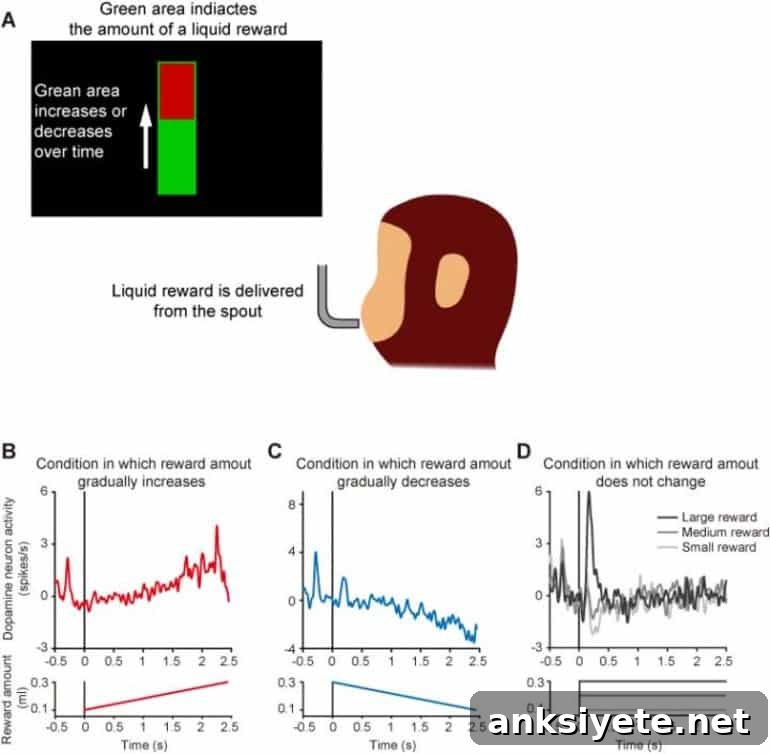
Summary: Researchers report that midbrain dopamine neurons display a previously unrecognized pattern of activity—tonic firing—when an animal evaluates rewards whose value shifts moment by moment. Source: University of Tsukuba Decisions in everyday life require animals to estimate the value of future rewards. While phasic bursts of dopamine neuron firing have long been linked to reward … Read more


Why ChatGPT Mirrors Users’ Language to Seem Intelligent

featured 91191

Summary: Researchers find that large language models such as ChatGPT often mirror the intelligence, beliefs, and style of the person interacting with them. These systems adopt a persona shaped by the user and reflect it back in their responses. Source: Salk Institute The conversational AI ChatGPT has drawn global attention for its ability to generate … Read more

Fetal Brain Imaging Predicts Outcomes in Infants with CHD

featured 83371

Summary: Smaller fetal brain volume measured by prenatal MRI predicts later neurodevelopmental outcomes in children with congenital heart disease across cognitive, language, motor, and adaptive domains. Source: Boston Children’s Hospital Children born with congenital heart disease (CHD) frequently experience neurodevelopmental difficulties. Historically these problems were attributed largely to surgical complications or reduced oxygen delivery after … Read more

New Study Finds Possible Earliest Stage of Alzheimer’s

featured 41537

Summary: New analysis finds elevated amyloid plaque is not merely a risk factor but an early stage of Alzheimer’s disease, detectable years before symptoms appear. Clusters of a sticky protein — amyloid plaque — in the brain predict cognitive decline years before clinical symptoms emerge, according to a new USC-led study. Researchers at the Keck … Read more

Aging Neurons Die More Slowly, New Study Shows

featured 100983

Summary: Mature oligodendrocytes—cells essential for healthy brain function and for producing the myelin sheath that insulates axons—can undergo a remarkably prolonged death process after severe DNA damage, surviving up to 45 days after injury. This contrasts sharply with younger oligodendrocyte lineage cells, which die within hours to a day. The discovery reveals a previously unrecognized … Read more

Air Pollution Impairs Semantic Memory and Cognition

featured 117373

Summary: A new 17-year study has identified a direct association between long-term exposure to fine particulate air pollution (PM2.5) and accelerated decline in a specific area of cognition: semantic memory. The research followed a cohort of Black adults enrolled in the Study of Healthy Aging in African Americans (STAR). The results show that prolonged exposure … Read more

Study: Infants Hear More Speech Than Music at Home

featured 102698

Summary: A new University of Washington study compared how much music and speech infants hear at home. Using full-day audio recordings, researchers found that infants consistently hear more spoken language than music, and that the gap increases as infants grow older. The study also shows that most of the music in infants’ soundscapes comes from … Read more

How Attitude Bias Fuels Procrastination

featured 100371

Summary: New research examines how valence weighting bias—people’s tendency to give greater weight to negative or positive attitudes—contributes to procrastination. By measuring how people respond to real-world tasks such as filing tax returns and participating in academic research, the researchers found a consistent link between a negative-weighting bias and a greater tendency to delay action. … Read more

Brain Differences Linked to Antisocial Traits in Psychopathy

featured 111218

Summary: A new neuroimaging study identifies distinct structural brain differences in individuals with psychopathy, especially those with pronounced antisocial traits. Using detailed MRI analysis and the Julich-Brain Atlas, researchers found reduced volumes in several subcortical and cortical regions involved in emotion, decision-making, impulse control, and social behavior. These structural changes were most strongly associated with … Read more

Schwann Cells’ New Role in Synapse Protection

featured 54816

Summary: Researchers report that Schwann cells protect nerves from a blood-clotting protein that can cause degeneration. Source: Salk Institute Salk Institute scientists have discovered for the first time that a protein best known for its role in blood clotting can unexpectedly damage nerves, and that nerve-supporting glial cells—particularly Schwann cells—shield nerves from this damage. Published … Read more