How Selective Breeding Shapes Dog Brain Wiring

featured 88813

Summary: Genomic regions tied to brain development contain variants that appear to explain behavioral differences among dog lineages. Differences between breeds are linked to nervous system development, and some canine genes implicated in behavior overlap with genes known to influence human neurodevelopment. Source: NIH Researchers at the National Institutes of Health have identified genomic regions … Read more


Asthma and Hay Fever Linked to Higher Mental Health Risks

featured 48136

Summary: Researchers report that people with asthma or hay fever face a higher risk of developing psychiatric disorders. Over a 15-year follow-up, 10.8% of individuals with allergic conditions developed psychiatric disorders compared with 6.7% of those without allergies. Source: Frontiers. New research published in the open-access journal Frontiers in Psychiatry shows that common allergic diseases—such … Read more

Is Neuroticism Genetic? What the Science Says

featured 30058

Researchers identify genetic associations of neuroticism An international research team led by the University of Glasgow has discovered nine new genetic associations linked to neuroticism — a personality dimension strongly connected to depression, anxiety and a range of physical health conditions including cardiovascular disease. The findings, published in Molecular Psychiatry, improve our understanding of the … Read more

Why Do I Feel Eyes in the Back of My Head?

featured 48673

Summary: Researchers used a visual search experiment to show that the human visual system can form spatial representations of objects that lie beyond the limits of our immediate visual field. Source: Tohoku University Spatial representations of the environment, including areas outside the immediate visual field, are essential for guiding movement through three-dimensional space. Although we … Read more

Why Robots That Admit Mistakes Improve Human Conversation

featured 63000

Summary: Robots that display vulnerability change how people talk and interact within teams. Source: Yale Robots Showing Vulnerability Boost Team Conversation and Positive Group Experience In a Yale-led experiment, teams of three people and a robot played a collaborative game in which the robot occasionally made errors and reacted in different ways. When the robot … Read more

What Your Forehead Reveals About Emotions and Voice

featured 45656

Summary: New research shows frontal brain regions are essential for interpreting emotions conveyed by the voice. Source: University of Geneva. Gestures and facial expressions reveal our feelings, but our voices do as well. Simple changes in intonation let us infer emotions over the phone or in conversation. Researchers at the University of Geneva (UNIGE) used … Read more

Genetic Test May Predict Depression Risk in Children and Teens

featured 55201

Summary: Polygenic risk scores derived from large adult studies can identify children and adolescents at increased risk of developing depression, predict likely severity and age of onset, and provide insight for targeted prevention—especially when combined with information about childhood abuse. Source: Max Planck Institute Genetic Score Predicts Depression Risk and Severity in Youth An international … Read more

AI Predicts Human Movement from Brain Signals

featured 100822

Summary: Researchers at Kobe University have developed an AI algorithm that predicts whether a mouse is moving or resting by analyzing whole-cortex functional imaging data. The end-to-end deep learning approach reaches approximately 95% accuracy and operates without conventional preprocessing steps. Remarkably, the system can make reliable predictions from as little as 0.17 seconds of imaging … Read more

How Horror Movies Rewire Your Brain to Heighten Fear

featured 61811

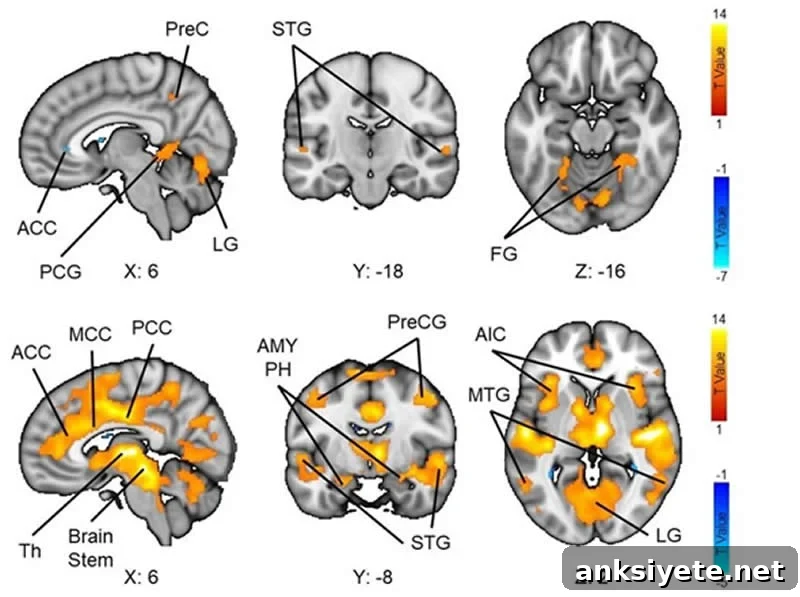
Summary: Neuroimaging shows that brain regions responsible for visual and auditory processing become more active as anxiety builds slowly during horror films. After sudden, shocking moments, activity increases in areas associated with emotion, threat assessment, and decision-making. Source: University of Turku Finnish researchers map how the brain responds while watching horror movies. A study from … Read more

Study Finds Gum Disease Raises Alzheimer’s Risk

featured 86522

Summary: Two new studies strengthen the evidence linking gum disease to the development of Alzheimer’s disease. The research examines how the bacterial enzyme gingipains interacts with tau protein and how gingipains may drive the production of amyloid-beta. Source: UCLan Researchers at the School of Dentistry, University of Central Lancashire (UCLan), who first reported a connection … Read more