
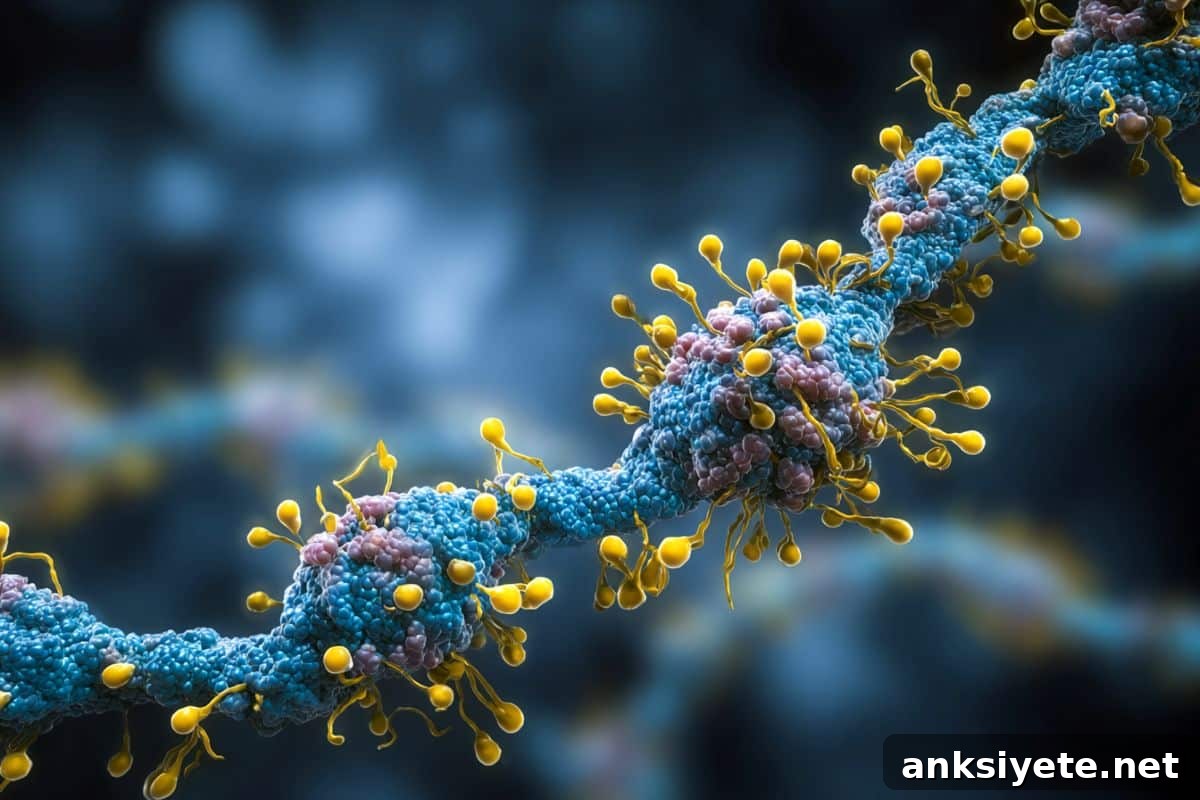
Summary: A precise neuropharmacology and molecular pain study has mapped how HIV infection can produce chronic neuropathic pain. Using mammalian models, researchers show that the viral envelope protein glycoprotein 120 (gp120) forces a long-lasting increase in spinal pain signaling, effectively lowering the nervous system’s threshold for pain. This work defines a clear biological pathway that can be disrupted to reverse pain hypersensitivity and guide development of highly targeted, non-addictive treatments.
The study demonstrates that gp120 drives overactivation of specific spinal nerve receptors within a discrete population of neurons. By identifying the molecular interactions responsible, the researchers could both explain why standard pain medicines often fail in people with HIV and outline therapies that selectively restore normal nerve function without broadly suppressing sensation.
Key Facts
- Widespread, difficult-to-treat pain in HIV: More than half of people living with HIV experience chronic pain at some point. Conventional analgesics often provide limited relief because they do not address the molecular mechanisms by which HIV causes persistent nerve hypersensitivity.
- The role of gp120: Previous studies separately associated the HIV viral protein gp120 with heightened pain sensitivity and linked overactive spinal nerve receptors—specifically NMDA receptors bound to α2δ-1—to chronic neuropathic pain. This study tested whether gp120 directly hijacks that receptor complex.
- Targeted spinal effects: Delivering gp120 directly to the spinal cord of mice rapidly increased electrical signaling through α2δ-1–associated NMDA receptors, demonstrating that the viral protein amplifies pain transmission at the spinal gateway.
- Cell-type specificity: The effect was localized to a defined population of excitatory dorsal horn neurons and their presynaptic primary afferent terminals, rather than being a nonspecific, systemic change across all spinal neurons.
- Reversible mechanism: Using a combination of pharmacological agents and genetic interventions to disrupt α2δ-1–NMDAR interactions, the team reversed gp120-induced receptor hyperactivity and normalized pain sensitivity in the animal models.
- Implications for precision therapy: By shifting focus from generalized pain suppression to blocking the specific protein interactions that drive hypersensitivity, the findings point to a therapeutic roadmap for HIV-associated neuropathic pain and potentially other chronic neuropathic conditions that share the same receptor pathway.
Source: SfN
Overview: More than half of people living with HIV develop chronic pain at some stage, and that pain is frequently resistant to standard treatments. In a new Journal of Neuroscience paper, Hui-Lin Pan and colleagues at The University of Texas MD Anderson Cancer Center used mouse models to examine how HIV leads to persistent pain. Building on prior work that connected gp120 to pain and α2δ-1–bound NMDA receptor hyperactivity to neuropathic pain, the team investigated whether gp120 amplifies signaling through that receptor complex.
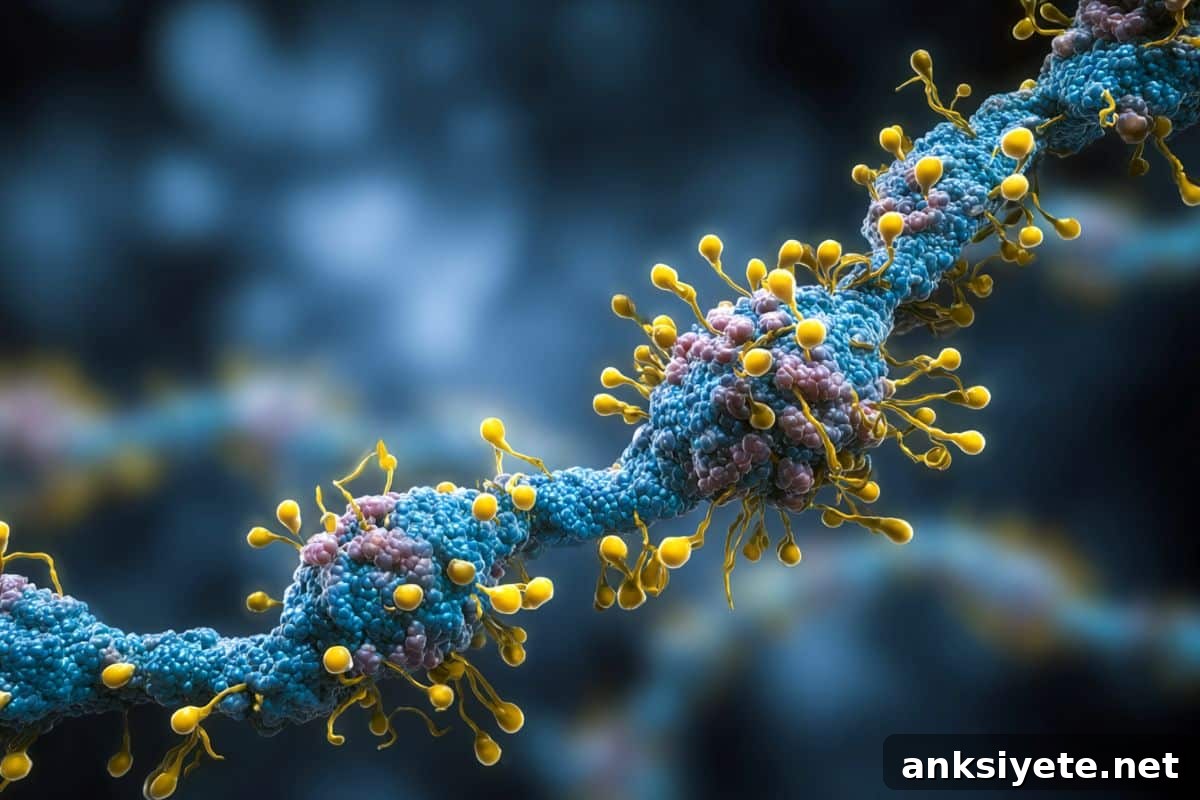
Intrathecal administration of gp120 heightened expression of α2δ-1 and the NMDA receptor subunit GluN1 in dorsal root ganglia and the spinal cord, increased interactions between α2δ-1 and GluN1, and promoted their trafficking to synapses. Functionally, gp120 produced hyperactivity of presynaptic NMDARs on primary afferent terminals and postsynaptic NMDARs in VGluT2-expressing excitatory dorsal horn neurons, while VGAT-expressing inhibitory neurons were spared. These combined presynaptic and postsynaptic changes amplify nociceptive transmission from peripheral afferents to spinal excitatory circuits.
Importantly, disrupting the α2δ-1–NMDAR interaction reversed receptor hyperactivity and the associated pain phenotype. Treatment with the α2δ-1 inhibitory ligand gabapentin or an α2δ-1 C-terminal peptide that interferes with the α2δ-1–NMDAR interaction consistently reversed gp120-induced nociceptive hypersensitivity. Genetic deletion of Cacna2d1 or selective ablation of GluN1 in dorsal root ganglion neurons also significantly reduced the hypersensitivity caused by gp120.
These results show that gp120 drives persistent pain by strengthening α2δ-1–bound NMDAR activity at primary afferent–excitatory neuron synapses. Targeting α2δ-1–associated NMDAR complexes therefore represents a promising, mechanism-based strategy to treat HIV-associated chronic neuropathic pain and may provide a template for therapies against other causes of chronic neuropathy.
Key Questions Answered:
A: The study indicates that a viral protein, gp120, physically alters spinal pain circuits by enhancing α2δ-1–bound NMDA receptor activity in specific neurons. This structural and molecular hijacking converts normal sensory input into persistent neuropathic pain. Standard analgesics generally do not address these precise cellular changes, which is why they often fail to provide durable relief.
A: After mapping the exact pathway gp120 uses to enhance nociceptive signaling, the team applied targeted pharmacological agents and genetic manipulations to block the α2δ-1–NMDAR interaction. These precision interventions stopped the pathological amplification while preserving normal neuronal signaling, restoring pain sensitivity to baseline in the animal models.
A: Yes. The α2δ-1–bound NMDA receptor complex implicated in the gp120 mechanism is also central to many other forms of neuropathic pain. By developing strategies that prevent proteins from binding to and over-activating this receptor complex, researchers can create a broadly applicable, precision-based framework to treat diverse chronic nerve pain conditions.
Editorial Notes:
- This article was edited by a Neuroscience News editor.
- The Journal of Neuroscience paper was reviewed in full.
- Additional contextual information was added by staff.
About this HIV and pain research news
Author: SfN Media
Source: SfN
Contact: SfN Media
Image: Image credited to Neuroscience News
Original Research: Closed access. “HIV-1 gp120 Induces Nociceptive Hypersensitivity via α2δ-1–bound NMDA Receptors at Primary Afferent-Excitatory Neuron Synapses” by Vipasha Gautam, Yuying Huang (黄玉莹), Hong Chen (陈红), Shao-Rui Chen (陈少瑞) and Hui-Lin Pan (潘惠麟). Journal of Neuroscience. DOI: 10.1523/JNEUROSCI.0368-26.2026
Abstract (summary):
HIV-1 gp120 Induces Nociceptive Hypersensitivity via α2δ-1–bound NMDA Receptors at Primary Afferent-Excitatory Neuron Synapses
Sensory neuropathy and chronic pain are common complications of HIV-1 infection. Viral proteins such as gp120 have been implicated in neuronal injury and pain, but their precise impact on nociceptive signaling was previously unclear. Hyperactivity of N-methyl-D-aspartate receptors (NMDARs) in the spinal dorsal horn is a hallmark feature of neuropathic pain.
This study shows that intrathecal gp120 elevates expression of α2δ-1 and the NMDA receptor subunit GluN1 in dorsal root ganglia and spinal cord, increases α2δ-1–GluN1 interactions and their synaptic trafficking, and produces hyperactivity of presynaptic NMDARs on primary afferent terminals as well as postsynaptic NMDARs in VGluT2-positive excitatory dorsal horn neurons. The pathological activity is reversed by the α2δ-1 inhibitory ligand gabapentin or by an α2δ-1 C-terminal peptide that disrupts α2δ-1–NMDAR binding. Genetic deletion of Cacna2d1 or targeted loss of GluN1 in primary afferents also attenuated gp120-induced hypersensitivity.
Together, these results indicate that gp120 augments nociceptive transmission by enhancing both presynaptic and postsynaptic activity of α2δ-1–bound NMDARs, and suggest that targeting this receptor complex could offer a focused therapeutic approach for HIV-associated chronic neuropathic pain.