
Summary: Researchers report that Schwann cells protect nerves from a blood-clotting protein that can cause degeneration.
Source: Salk Institute
Salk Institute scientists have discovered for the first time that a protein best known for its role in blood clotting can unexpectedly damage nerves, and that nerve-supporting glial cells—particularly Schwann cells—shield nerves from this damage. Published March 14, 2019 in the journal PLOS Genetics, the study demonstrates that Schwann cells protect neuromuscular synapses by blocking thrombin and other potentially harmful enzymes released by muscle cells. These findings may be relevant to a range of neurological conditions in which thrombin accumulation or dysregulation has been implicated, including amyotrophic lateral sclerosis (ALS), multiple sclerosis (MS), Alzheimer’s disease and schizophrenia.
“This is the first study to show that a molecule typically associated with blood clotting, thrombin, has a biological function outside the liver and can contribute to nerve degeneration,” says Salk Professor Kuo-Fen Lee, senior author of the paper. “We also show that Schwann cells protect nerves against thrombin. The results were unexpected and raise important questions about how synapses are formed and maintained in both healthy and diseased nervous systems.”
Schwann cells are glial cells that wrap around axons—the long, threadlike projections of neurons—to provide insulation and support, and they participate in forming and maintaining synapses, the points of communication between nerve cells and target tissues. To clarify how Schwann cells support nerve health, the Salk team focused on the neuromuscular junction (NMJ), a specialized synapse where motor neurons communicate with muscle fibers and where Schwann cells, nerves and muscles interact closely.
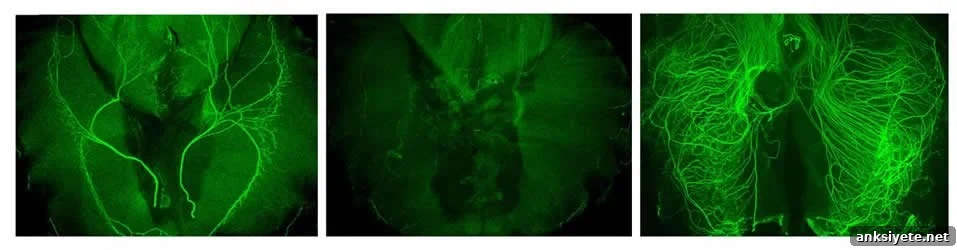
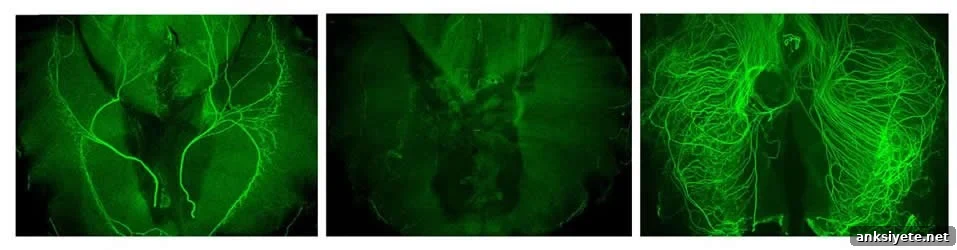
In a mouse model lacking Schwann cells, the researchers observed rapid degeneration of the NMJ synapse within two days, confirming the essential role Schwann cells play in synapse stability and growth. Investigating the cause of this degeneration, the team found that acetylcholine—the principal neurotransmitter used at the NMJ—was a primary driver of the damage when Schwann cells were absent. Further experiments revealed the mechanism behind this effect: acetylcholine prompts muscle cells to release thrombin and other proteolytic enzymes, and these molecules can degrade nerve axons when left unchecked. In normal, healthy conditions, Schwann cells release factors that inhibit thrombin activity and thereby protect the synapse from enzymatic damage.
“We were surprised to find that Schwann cells preserve developing neuromuscular synapses indirectly by blocking harmful factors released from active muscle. One of those factors is thrombin, which is best known for its role in blood clotting,” says Thomas Gould, first author of the paper and former Salk researcher now at the University of Nevada Reno School of Medicine.
To test thrombin’s direct role in axon degeneration, the team analyzed mice genetically lacking thrombin or bearing nonfunctional thrombin and found a marked reduction in axon degeneration at the NMJ. These findings support the conclusion that thrombin contributes to nerve axon degeneration in this model and that inhibiting thrombin can preserve synaptic integrity when Schwann cell protection is absent.
“This work clarifies genetic and molecular pathways that influence synapse development and maintenance,” says Lee, who holds the Helen McLoraine Chair in Molecular Neurobiology. “Our next steps are to dissect how thrombin and related enzymes dismantle synaptic connections at the molecular level and to use that information to guide development of therapeutic approaches for diseases—such as ALS, MS and Alzheimer’s—where thrombin dysregulation may play a role.”
Additional contributors to the study include Bertha Dominguez and Fred de Winter of the Salk Institute; Gene W. Yeo, Patrick Liu, Balaji Sundararaman, Thomas Stark and Anthony Vu of the University of California San Diego; Jay L. Degen of Cincinnati Children’s Hospital Research Foundation; and Weichun Lin of the University of Texas Southwestern Medical Center.
Funding: Research support came from multiple grants from the National Institutes of Health (including GM103554, NS107922, NS055028, NS075449, HG004659, HL096126, NS044420, NS060833, AG0476669, OD023076, MH114831 and AG062232), as well as funding from The Clayton Foundation, the Schlink Foundation, the Gemcon Family Foundation, the Brown Foundation and the Freeburg Foundation.
Source:
Salk Institute
Media Contacts:
Kuo-Fen Lee – Salk Institute
Image Source:
Image credit: Salk Institute.
Original Research: The study appears in PLOS Genetics.