
Summary: New research identifies why many people with severe temporal lobe epilepsy continue to have seizures after surgery and points to imaging markers that may predict postoperative outcomes.
Source: University of Liverpool.
New work from the University of Liverpool, published in the journal Brain, investigates why a substantial proportion of patients with temporal lobe epilepsy (TLE) continue to experience seizures after surgery and identifies preoperative imaging markers that predict outcome.
Background: persistent seizures after temporal lobe surgery
Epilepsy is one of the most common serious neurological disorders. For patients with medically intractable temporal lobe epilepsy, surgical removal of the seizure focus in the temporal lobe — typically a temporal lobe resection or amygdalohippocampectomy — is a standard treatment option. The goal of surgery is to remove or disconnect the brain tissue generating seizures.
Despite surgery, about half of patients with TLE are not rendered completely seizure-free. Understanding why seizures persist after surgery and developing reliable preoperative biomarkers to predict who will benefit are major clinical priorities.
Diffusion tensor imaging and white matter tracts
Researchers led by Dr. Simon Keller at the University’s Institute of Translational Medicine, in collaboration with teams in Germany, the USA and the UK, used diffusion tensor imaging (DTI) to study white matter tracts in patients with TLE. DTI is an MRI-based technique that reveals microstructural properties of white matter and helps map connectivity between brain regions.
By applying automated fibre quantification, the investigators examined regional tissue characteristics along temporal lobe white matter bundles. White matter consists primarily of axons that connect different grey matter regions and enable communication across the brain. The study compared preoperative and postoperative scans and related imaging features to seizure outcome after surgery.
Study design
The study included 43 patients with mesial temporal lobe epilepsy associated with hippocampal sclerosis and 44 healthy controls. All patients received preoperative DTI, underwent standard anterior temporal surgery (amygdalohippocampectomy), and had postoperative seizure outcome classified using the International League Against Epilepsy outcome scale.
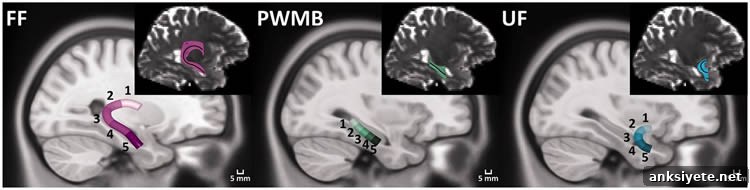
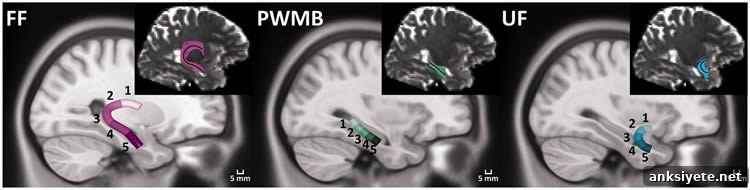
The investigators reconstructed three key temporal lobe tracts from the preoperative scans: the fimbria‑fornix, the parahippocampal white matter bundle, and the uncinate fasciculus. Scalar diffusion metrics were calculated at multiple points along each tract to localize microstructural abnormalities.
Key findings
Approximately 51% of patients became completely seizure-free after surgery, while 49% continued to experience seizures. Compared with controls, both patient groups showed marked diffusion abnormalities along the uncinate fasciculus bilaterally, in the ipsilateral parahippocampal bundle, and in the ipsilateral fimbria‑fornix within the medial temporal lobe.
Crucially, only the patients who continued to have postoperative seizures exhibited additional preoperative pathology in two specific regions that lie outside the standard surgical resection margins: the ipsilateral dorsal fornix and the contralateral parahippocampal white matter bundle. Diffusion measurements in these regions were predictive of outcome, classifying individual patients with 84% sensitivity and 89% specificity for continued postoperative seizures.
The uncinate fasciculus was abnormal across patient groups, suggesting its role in the epileptogenic network. However, co-registration of preoperative tract maps with postoperative surgical lacunae showed that patients who became seizure-free had a significantly larger portion of the uncinate resected. This suggests that insufficient removal or disconnection of the uncinate may leave anterior temporal seizure pathways intact in some patients.
Clinical implications
These findings provide new insight into why some patients still have seizures after temporal lobe surgery. Preoperative microstructural abnormalities in specific white matter tract regions that lie beyond the typical resection zone may indicate a more widespread or bilateral epileptogenic network. Identifying these abnormalities before surgery could help predict who is at higher risk of persistent seizures.
Additionally, the extent of resection or disconnection of the uncinate fasciculus appears to influence outcome, implying that surgical planning that accounts for individual tract pathology may improve seizure control for some patients.
Although further validation and prospective testing are needed before routine clinical application, these results support the development of DTI-based prognostic imaging markers to guide surgical decision-making and patient counseling.
Source: Simon Wood — University of Liverpool
Image credit: Keller et al./Brain
Original research: Full open access article published in Brain titled “Preoperative automated fibre quantification predicts postoperative seizure outcome in temporal lobe epilepsy” by Simon S. Keller et al. (published online November 15, 2016, doi:10.1093/brain/aww280).
Abstract (summary)
Approximately half of patients with pharmacoresistant temporal lobe epilepsy are not rendered seizure-free by standard anterior temporal lobe surgery. The causes are likely multifactorial and not fully understood. This study used diffusion tensor imaging and automated fibre quantification to assess preoperative microstructural properties of temporal lobe white matter tracts involved in seizure generation and propagation. In 43 patients with mesial TLE and hippocampal sclerosis and 44 controls, the fimbria‑fornix, parahippocampal bundle and uncinate fasciculus were reconstructed and sampled along their length.
Both seizure-free and non–seizure-free patient groups showed significant abnormalities in the uncinate bilaterally, the ipsilateral parahippocampal bundle, and the ipsilateral fimbria‑fornix. Only patients with persistent postoperative seizures demonstrated additional pathology in the ipsilateral dorsal fornix and contralateral parahippocampal bundle—regions outside standard resection margins. Diffusion metrics from these regions classified individual outcomes with high sensitivity (84%) and specificity (89%). The extent of uncinate resection was greater in seizure-free patients, suggesting that incomplete disconnection of anterior temporal networks may contribute to persistent seizures. These imaging signatures have potential as prognostic markers and shed light on network-level reasons for continued postoperative seizures.