How Social Inequality Accelerates Biological Aging

featured 117645

Summary: A large-scale meta-analysis has established a clear, empirically robust link between social inequality and accelerated biological aging. Researchers from the Biosocial team at the Max Planck Institute for Human Development, in collaboration with Columbia University, synthesized 1,065 effect sizes from 140 independent studies, totaling 65,919 participants aged from birth to 86. The analysis shows … Read more
Cerebellar Matrix Dysfunction Disrupts Brain Social Networks

featured 117628 1

Summary: Researchers have identified a structural mechanism in the cerebellum that regulates large-scale brain circuits involved in social behavior—circuits that are disrupted in Autism Spectrum Disorder (ASD). The study shifts part of the focus away from cortical synaptic dysfunction toward alterations in the extracellular matrix of subcortical regions. Using two complementary mouse models that capture … Read more

Concussions Turn Brain Stabilizers Into Harmful Disruptors

featured 117641

Summary: Researchers mapped a precise molecular cascade that turns the brain’s immune response into a destructive force after a concussion, identifying a neuron-specific TLR4-MMP-9 pathway that drives long-term circuit dysfunction. Using rat and mouse models of mild-to-moderate traumatic brain injury (TBI), the team discovered a highly specific pathological sequence: activation of neuronal toll‑like receptor 4 … Read more

Ebola Virus Persists in Survivors’ Brains, Study Shows

featured 117624 1

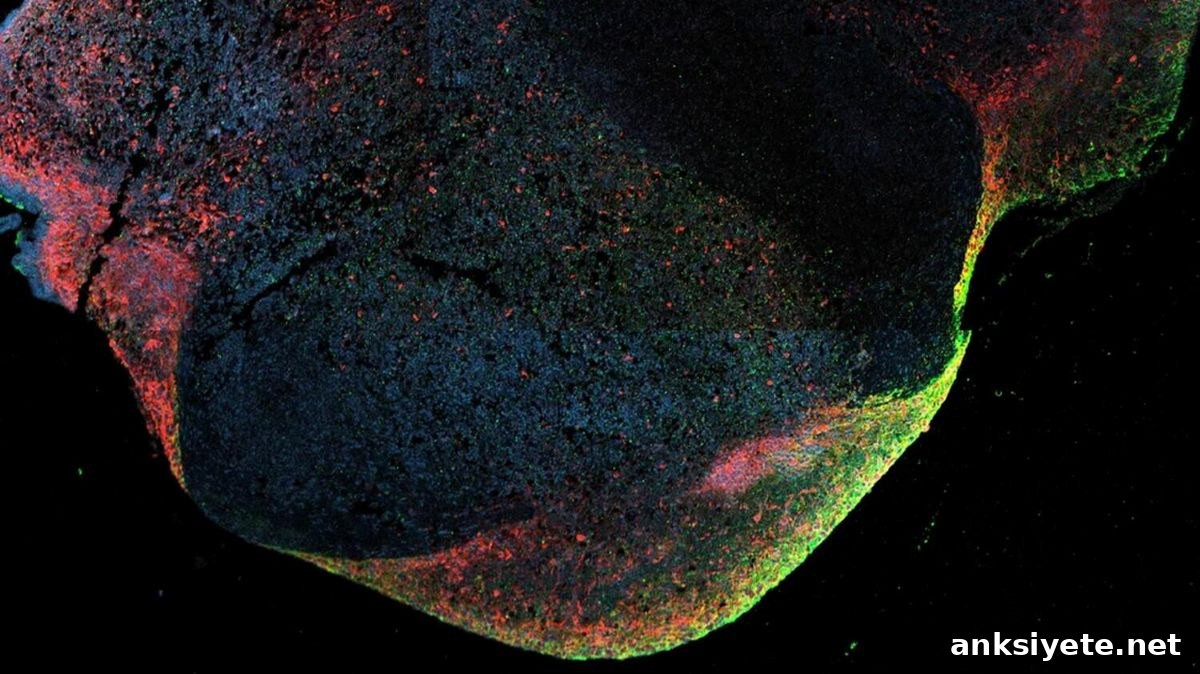
Summary: Researchers have uncovered how the Ebola virus can persist undetected in the human central nervous system for months or even years. An international team used human induced pluripotent stem cells (iPSCs) to grow three-dimensional cerebral organoids and studied long-term infections in a fully human tissue model. The study shows that Ebola and related filoviruses … Read more

Brain Hub Predicts Sensory Input Across Changing Bodies

featured 117637

Summary: A new study mapped, for the first time across an entire neural circuit, how the brain predicts and suppresses self-generated sensory input. The work reveals a single, compact neural hub—the mesencephalic command-associated nucleus (MCA)—that synchronizes corollary discharge signals so animals can distinguish their own actions from external events. All animals use an internal copy … Read more

Why Reciprocity Breaks Down in Unequal Social Relationships

featured 117620 1

Summary: A new study from MIT reshapes how we understand cooperation. It shows that deliberate mental bookkeeping of favors—keeping strict score of who owes whom—is uncommon and mainly used among equals. In most unequal relationships, people rely on established patterns of generosity instead of reciprocal turn-taking. Instead of relying on traditional game-theory experiments that pair … Read more

How Your Unconscious Mind Blocks Distressing Language

featured 117633

Summary: A new study overturns a common intuition about attention and emotion: when people concentrate on a visual task, the brain can nonconsciously filter out negative spoken words before they reach awareness. Using an auditory task that bypassed standard visual masking techniques, the research team probed how emotional language interacts with the brain’s selection mechanisms … Read more

CES1 Gene Variants Linked to Compulsive Cocaine Addiction

featured 117616 1

Summary: A large genetic study expands the biological map of substance use disorder by identifying a primary genetic driver of cocaine addiction that operates in the liver rather than solely in the brain. Using a genetically diverse cohort of nearly 900 heterogeneous stock rats to better mirror human population genetics, researchers mapped millions of genetic … Read more

Cerebellar Matrix Failures Disrupt the Brain’s Social Circuits

featured 117628

Summary: Researchers have identified a structural mechanism in the cerebellum that controls large-scale social behavior circuits often disrupted in autism spectrum disorder (ASD). This work shifts attention from a strictly cortical view of ASD to the extracellular matrix and subcortical circuitry, revealing how changes in local scaffolding can silence broad brain networks essential for social … Read more

How Sluggish Dopamine Drives Teen Substance Use

featured 117612 1

Summary: A new University of Pittsburgh study overturns a long-standing idea about teenage risk-taking. Instead of being driven by excess dopamine, early experimentation with alcohol, cannabis, nicotine and other substances appears linked to lower baseline dopamine activity. The research used a decade-long dataset and a non-invasive brain imaging proxy to show that some adolescents seek … Read more