
Summary: A new laboratory study suggests a mechanism by which Zika virus exposure during pregnancy may contribute to microcephaly and craniofacial abnormalities.
Source: Cell Press
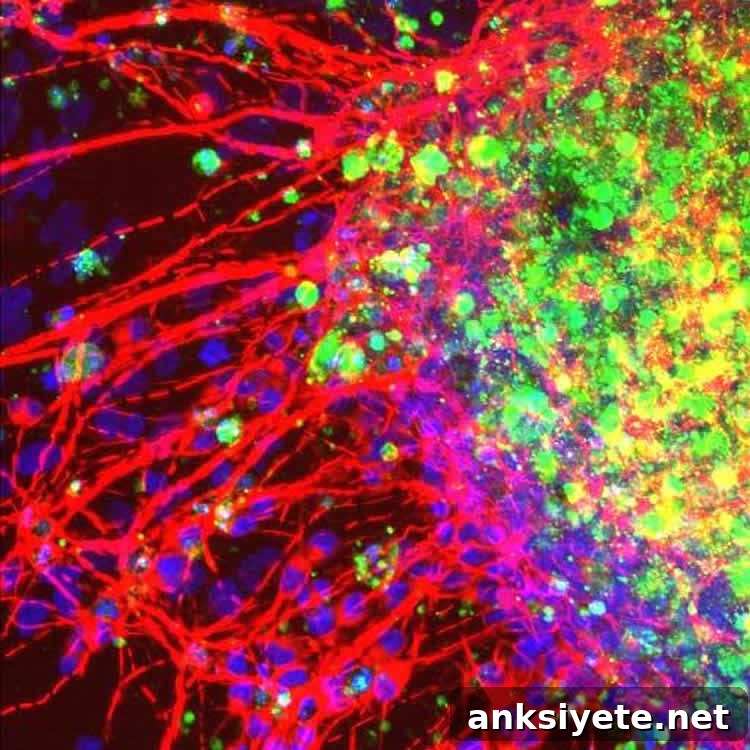
Researchers at Stanford University School of Medicine report that cranial neural crest cells — the embryonic cells that form much of the skull’s bone and cartilage — are susceptible to Zika virus infection, according to a study published September 29 in Cell Host & Microbe. Using human cell cultures, the team uncovered a pathway by which infected cranial neural crest cells can alter signaling to the developing brain, offering a plausible explanation for how prenatal Zika exposure might produce smaller skull size and abnormal facial features.
The study shows that Zika affects cranial neural crest cells (CNCCs) differently than neural progenitor cells, which have been the focus of much previous research on Zika-associated microcephaly. Neural progenitors are highly vulnerable to Zika-induced cell death. By contrast, CNCCs infected with Zika do not undergo widespread apoptosis. Instead, they begin secreting cytokines and growth factors that influence nearby neural progenitors. In vitro, the elevated levels of these signaling molecules were sufficient to cause premature differentiation, migration and increased death of human neural progenitor cells.
“Beyond direct infection of neural progenitors, our data suggest Zika virus may disrupt brain formation indirectly through altered paracrine signaling between embryonic cell types,” says co-senior author Joanna Wysocka, a chemical and systems biologist at Stanford. “Cranial neural crest cells are one clear example of a cell population that normally communicates with the developing brain during head formation and may transmit harmful signals when infected.”
Co-senior author Catherine Blish, a clinician-scientist at Stanford, noted the developmental importance of CNCCs. During early embryogenesis these cells not only form the majority of cranial bones and cartilage but also engage in signaling interactions that shape brain development. The authors hypothesized that if CNCCs become infected by Zika during the first trimester — the period when neural crest formation and craniofacial patterning are most active — altered signaling could perturb brain development as well as skull and facial formation.
In laboratory experiments, Zika-infected CNCCs produced increased levels of specific cytokines and growth factors, including LIF and VEGF. When those factors were applied to neural progenitor cultures at concentrations similar to those produced by infected CNCCs, the neural progenitors showed premature neuronal differentiation and higher rates of apoptotic cell death. These results indicate that CNCC-derived signals alone, without direct infection of neural progenitors, can impair neurogenesis in vitro.
The authors emphasize that their findings derive from in vitro human cell models and do not constitute direct evidence that cranial neural crest cells are infected by Zika virus in human embryos or animal models. Nor do the results by themselves prove that CNCC infection alone is sufficient to cause microcephaly in vivo. Nevertheless, the study provides a mechanistic hypothesis linking infection of a particular embryonic cell population to altered signaling that can harm neurogenesis.
Funding: The research was supported by Stanford Child Health Research Institute and Stanford University School of Medicine, the National Institutes of Health, the March of Dimes Birth Defects Foundation, the Howard Hughes Medical Institute, the National Institute of Dental and Craniofacial Research, the Eunice Kennedy Shriver National Institute of Child Health and Human Development, and a Stanford Systems Biology Seed Grant.
Source: Joseph Caputo – Cell Press
Image credits: Rachel Greenberg; Bayless and Greenberg et al./Cell Host & Microbe, 2016.
Original research: Nicholas L. Bayless, Rachel S. Greenberg, Tomek Swigut, Joanna Wysocka, and Catherine A. Blish. “Zika Virus Infection Induces Cranial Neural Crest Cells to Produce Cytokines at Levels Detrimental for Neurogenesis.” Cell Host & Microbe, published online September 29, 2016. DOI: 10.1016/j.chom.2016.09.006.
Abstract
Zika Virus Infection Induces Cranial Neural Crest Cells to Produce Cytokines at Levels Detrimental for Neurogenesis
Zika virus (ZIKV) infection during pregnancy is associated with microcephaly, a condition commonly linked to infection of developing brain structures. While ZIKV is known to infect neural progenitor cells in vitro, its effects on other embryonic stem cell populations had not been fully characterized. Cranial neural crest cells (CNCCs) generate most cranial bones and influence brain development through paracrine signaling. This study reports that human CNCCs are productively infected by ZIKV but not by the related dengue virus. Infected CNCCs show limited apoptosis yet secrete cytokines that promote cell death and abnormal differentiation in neural progenitor cultures. Two of those factors, LIF and VEGF, when applied at concentrations comparable to levels secreted by infected CNCCs, were sufficient to induce premature neuronal differentiation and apoptotic death in neural progenitors. These findings suggest that ZIKV infection of CNCCs could contribute to developmental defects through disruptive signaling between face-forming and brain-forming cell populations.
Paper: “Zika Virus Infection Induces Cranial Neural Crest Cells to Produce Cytokines at Levels Detrimental for Neurogenesis” by Bayless, Greenberg, Swigut, Wysocka, and Blish. Cell Host & Microbe, 2016. DOI: 10.1016/j.chom.2016.09.006.