
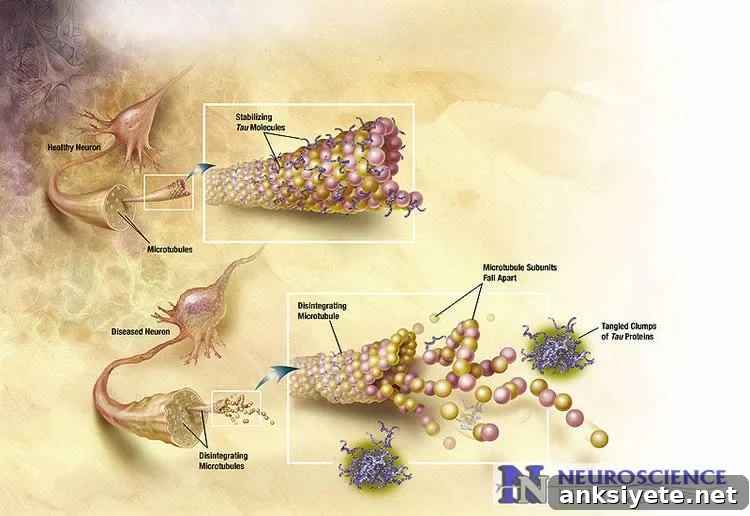
A new Alzheimer’s treatment designed to help the brain clear abnormal clumps of the tau protein — known as tau tangles — has entered an early-stage clinical trial in the UK. The candidate, called ACI-35, is being developed by Swiss biotechnology company AC Immune and will be evaluated in a first-in-human study coordinated by Professor Roy Jones, a consultant geriatrician based in Bath. The trial will run at sites in Bath and Liverpool in the UK, with additional participation in Finland.
Tau is a normal protein that helps stabilise the internal structure of nerve cells. In Alzheimer’s disease, tau undergoes changes that cause it to form twisted filaments and aggregates, commonly referred to as tangles. These tangles are associated with damage to neurons and progressive cognitive decline. ACI-35 is an active immunotherapy — a vaccine-like approach — intended to stimulate the patient’s immune system to recognise and remove the disease-associated form of tau, reducing its accumulation in the brain.
The primary aim of this early-stage (Phase 1) clinical trial is to evaluate safety and tolerability of ACI-35 in people living with Alzheimer’s. Early trials typically monitor participants closely for adverse effects and collect information on immune responses triggered by the treatment. Investigators will also look for signals about whether the vaccine engages its intended target and may measure relevant biomarkers to inform the design of later-stage studies.
Dr Laura Phipps of Alzheimer’s Research UK, the UK’s leading dementia research charity, commented on the significance of moving new approaches into human testing. She noted that targeting tau is a logical and much-anticipated strategy because tau pathology is a central hallmark of Alzheimer’s disease. While trials are the only way to determine whether a new therapy is both safe and effective, she emphasised that proving benefit takes time and many steps through clinical development. Continued investment in dementia research remains essential to support progress and translate promising laboratory science into treatments for people affected by the condition.
Early-stage trials like this one are a critical step in assessing novel approaches to Alzheimer’s. They provide researchers with essential information about dosing, immune activation and any immediate safety concerns. If ACI-35 proves safe and shows encouraging biological activity, it could progress to larger trials designed to test whether reducing pathological tau translates into measurable benefits for memory, thinking and daily function.
This study is part of a growing global effort to develop treatments that target different aspects of Alzheimer’s biology. Alongside approaches aimed at amyloid protein, tau-directed strategies seek to intervene in the cascade of events that lead to neuronal injury and cognitive decline. Vaccines and antibody therapies directed at tau are among the experimental modalities now under evaluation.
People who are interested in taking part in dementia research or learning more about clinical trials can contact national or local dementia research registries and charities for guidance on current opportunities and how to register. Alzheimer’s Research UK provides information and support for those considering involvement in studies and can advise on local trial listings and recruitment.
Source: Alzheimer’s Research UK
Image Credit: The image is in the public domain