
Approach developed at UCLA holds promise for 60 percent of patients with the deadly disease.
Researchers at the UCLA Eli and Edythe Broad Center of Regenerative Medicine and Stem Cell Research and the Center for Duchenne Muscular Dystrophy at UCLA have developed a stem cell gene‑editing approach that could one day treat a majority of people with Duchenne muscular dystrophy. The technique, combining induced pluripotent stem cells (iPS cells) with CRISPR/Cas9 gene editing, is designed to correct mutations in the dystrophin gene that cause the disease and could be applicable to roughly 60 percent of Duchenne patients. Duchenne affects about 1 in 5,000 boys in the United States and remains the most common fatal childhood genetic disorder.
The study, led by co‑senior authors April Pyle and Melissa Spencer and first author Courtney Young, was published in the journal Cell Stem Cell. The investigators intentionally designed the platform with clinical translation in mind, conducting critical steps in an FDA‑compliant facility to help bridge preclinical research and human trials.
“This method is likely 10 years away from being tested in people,” said Melissa Spencer, professor of neurology at the UCLA David Geffen School of Medicine and co‑director of the Center for Duchenne Muscular Dystrophy. “It is important that we take all the necessary steps to maximize safety while quickly bringing a therapeutic treatment to patients in clinical trials.”
Duchenne muscular dystrophy typically results from mutations in the dystrophin gene, which codes for the dystrophin protein. In healthy individuals dystrophin strengthens and connects muscle fibers; when dystrophin is absent or insufficient, muscle tissue degenerates and becomes progressively weaker. Symptoms usually appear in early childhood; affected individuals lose mobility over time and commonly die in early adulthood from heart or respiratory failure. Current medications may alleviate symptoms but do not halt disease progression or restore lost muscle function.
Focusing on the hot spot
The UCLA platform targets a mutation‑dense “hot spot” within the dystrophin gene where about 60 percent of Duchenne mutations occur. To evaluate the approach, the team obtained skin cells from consenting patients whose mutations lay within that hot spot and reprogrammed them into iPS cells in an FDA‑compliant facility. iPS cells carry the donor’s genetic code and can be differentiated into any human cell type, making them a powerful tool for patient‑specific therapies.
Using a CRISPR/Cas9‑based gene‑editing strategy, the researchers removed large regions of the dystrophin hot spot to reframe the gene and restore expression of dystrophin. The platform employs a pair of guide RNAs to target and excise specific DNA segments within the hot spot, enabling non‑homologous end joining to reconnect the gene in a way that restores the reading frame and produces a functional, internally deleted dystrophin protein.
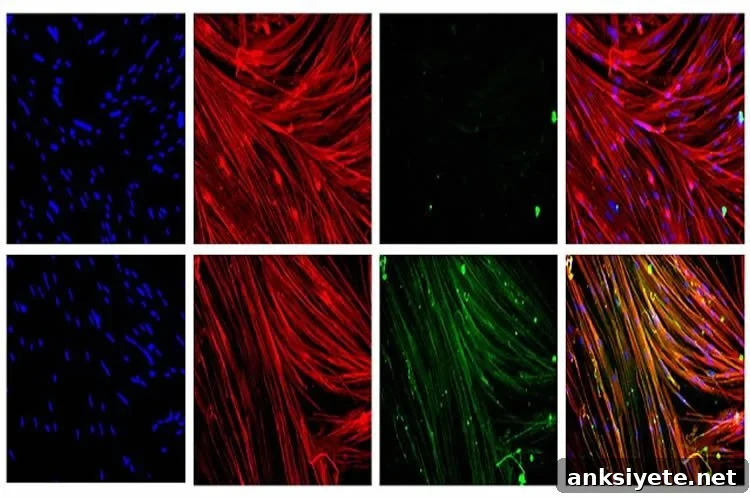
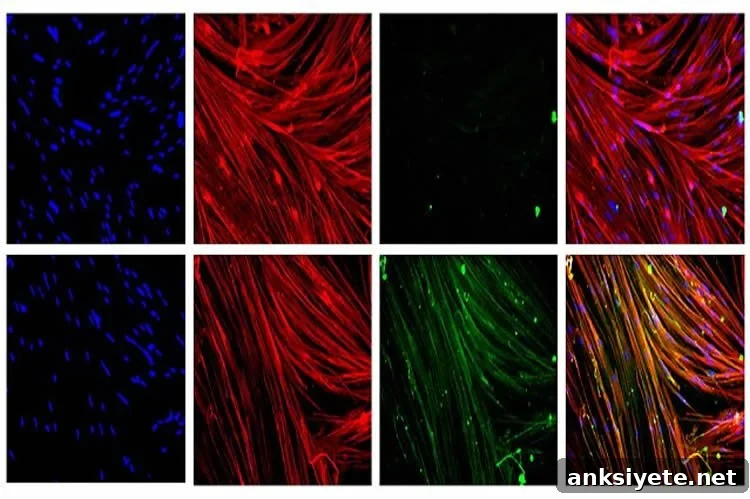
CRISPR/Cas9 is adapted from a natural bacterial defense system that can be programmed to find and cut precise DNA sequences. In this work, the researchers used the system to delete up to 725 kilobases from the dystrophin gene — the largest CRISPR/Cas9‑mediated deletion reported for DMD to date — successfully reframing the gene in patient‑derived iPS cell lines.
After correcting the mutations in iPS cells, the team differentiated these cells into cardiac and skeletal muscle cells. When corrected skeletal muscle cells were transplanted into mice that carry dystrophin mutations, the cells produced human dystrophin and contributed to restored muscle function. The internally deleted dystrophin restored membrane integrity and the dystrophin glycoprotein complex, demonstrating functional benefit both in vitro and in vivo.
“This work demonstrates the feasibility of using a single gene‑editing platform combined with the regenerative power of stem cells to correct genetic mutations and restore dystrophin production for 60 percent of Duchenne patients,” said April Pyle, associate professor of microbiology, immunology and molecular genetics.
A personal connection
First author Courtney Young, a UCLA predoctoral fellow and president of a student group focused on Duchenne, is personally motivated: she has a cousin with Duchenne and chose to dedicate her research to the disease. “After my cousin’s diagnosis I decided to dedicate my career to finding a cure for Duchenne,” she said. “Knowing I’m contributing to progress for boys who will come after my cousin makes this work deeply meaningful.”
The UCLA team plans to continue refining and testing the Duchenne‑specific CRISPR/Cas9 platform in animal models as they advance toward a method suitable for human trials. The platform is not yet available in clinical trials and has not been approved by the U.S. Food and Drug Administration for use in humans.
About this research
Funding: This research received support from the National Science Foundation Graduate Research Fellowship Program, the National Institute of Arthritis and Musculoskeletal and Skin Diseases of the National Institutes of Health, the Rose Hills Foundation Research Award, the California Institute for Regenerative Medicine Bridges Program, and the UCLA Broad Stem Cell Research Center. The FDA‑compliant facility was funded in part by a grant from the California Institute for Regenerative Medicine.
Source: Mirabai Vogt‑James, UCLA. Image credit: UCLA Broad Stem Cell Research Center.
Original research: Abstract for “A Single CRISPR‑Cas9 Deletion Strategy that Targets the Majority of DMD Patients Restores Dystrophin Function in hiPSC‑Derived Muscle Cells” by Courtney S. Young et al., Cell Stem Cell. Published online February 12, 2016. doi:10.1016/j.stem.2016.01.021
Abstract
A Single CRISPR‑Cas9 Deletion Strategy that Targets the Majority of DMD Patients Restores Dystrophin Function in hiPSC‑Derived Muscle Cells
Highlights
• Largest CRISPR/Cas9‑mediated deletion reported in DMD: 725 kb
• Reframed DMD hiPSCs differentiated to cardiac and skeletal muscle express dystrophin
• Internally deleted dystrophin demonstrates functionality in vitro and in vivo
• A single guide RNA pair is therapeutically relevant to about 60% of DMD mutations
Summary
Mutations in the DMD gene disrupt the reading frame, preventing dystrophin translation and causing Duchenne muscular dystrophy. The researchers describe a CRISPR/Cas9 platform applicable to approximately 60 percent of DMD patient mutations. Applied to patient‑derived hiPSCs, successful deletions followed by non‑homologous end joining reframed the DMD gene, restoring dystrophin protein in derived cardiomyocytes and skeletal myotubes. The internally deleted dystrophin improved membrane stability and reconstituted the dystrophin glycoprotein complex, with benefits observed both in cell culture and in animal models. These results demonstrate the feasibility of using a single CRISPR pair to correct the reading frame for the majority of DMD patients.