How Tone of Voice Affects Communication
featured 25336

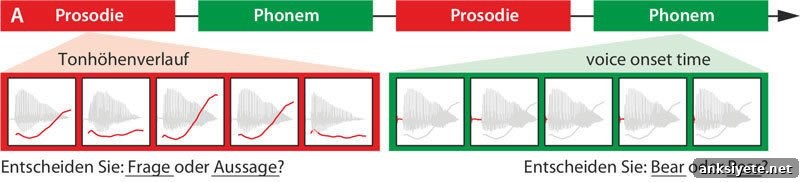
Scientists discover neural communication pathways for prosody Researchers at the Max Planck Institute for Human Cognitive and Brain Sciences in Leipzig have mapped, for the first time, the neural pathways that link brain regions involved in perceiving subtle changes in a speaker’s tone of voice. The Otto Hahn Group led by Daniela Sammler identified a … Read more

How AI Mimics Human Decision-Making to Improve Accuracy

featured 103662

Summary: Researchers at Georgia Tech have developed a neural network that models human decision-making by integrating uncertainty and evidence accumulation. Trained on handwritten digits, this model—called RTNet—produces stochastic, human-like decisions, matching human patterns of accuracy, response time, and confidence more closely than traditional deterministic networks. RTNet’s approach blends a Bayesian neural network with an evidence … Read more

Study: Enzyme Protects Brain Cells in Parkinson’s Model

featured 20309

Researchers at the Florida campus of The Scripps Research Institute (TSRI) have identified how the enzyme serum glucocorticoid kinase 1 (SGK1) protects neurons in laboratory and animal models of Parkinson’s disease. These findings improve our understanding of cellular mechanisms that can guard brain cells against neurodegeneration and could guide development of drug candidates aimed at … Read more

How Long Does Coronavirus Live on Surfaces?

featured 63162

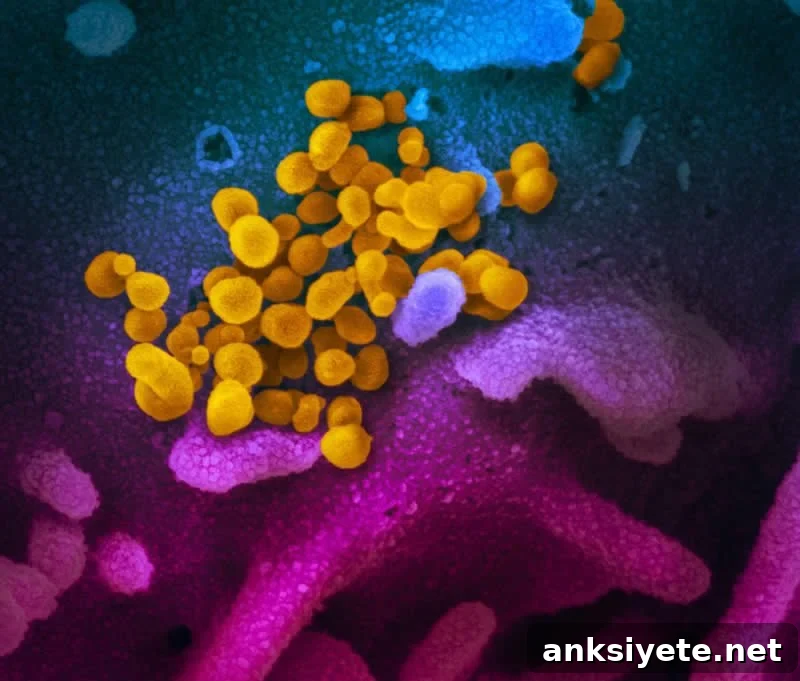
Summary: SARS-CoV-2 remains detectable in aerosols for up to three hours, up to four hours on copper, up to 24 hours on cardboard, and up to two to three days on plastic and stainless steel. These observations indicate that the virus can spread both through airborne particles and via contact with contaminated surfaces. Source: NIH … Read more

Huntington’s Disease Protein Shapes Developing Brain Wiring

featured 15361

Protein linked to neurodegenerative disease shapes early neuronal circuit formation New research from Duke University shows that the protein mutated in Huntington’s disease plays a vital role in wiring the brain during early development. The findings suggest that some features of Huntington’s and potentially other neurodegenerative disorders may originate long before clinical symptoms appear. Huntington’s … Read more

How the Brain Maps Objects in the Visual Cortex

featured 12934

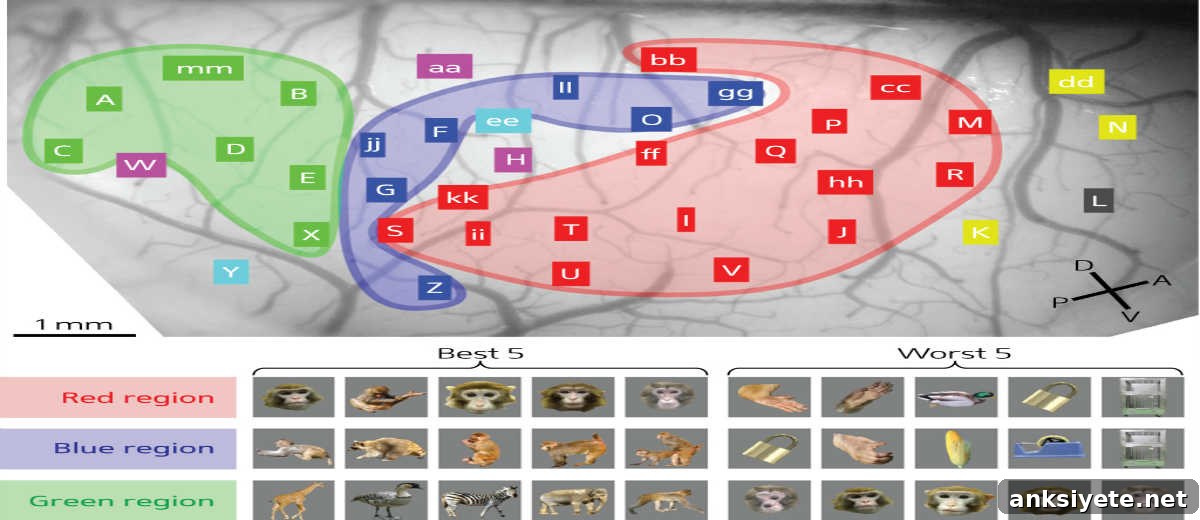
Brain region tuned to object categories is made of small neuronal clusters that encode visual features The brain’s capacity to recognize objects depends on its ability to integrate and interpret vast amounts of visual information. Researchers at the RIKEN Brain Science Institute, led by Takayuki Sato and Manabu Tanifuji, have shown that in macaque monkeys … Read more

Why Empathetic People Read Dogs’ Expressions More Deeply

featured 38779

Summary: A new study shows that human empathy influences how people perceive dogs’ facial expressions. Source: University of Helsinki. Human empathy extends to dogs: people with higher empathy interpret dogs’ facial expressions more intensely A collaborative study by the University of Helsinki and Aalto University investigated how empathy, personality traits and experience with dogs influence … Read more

Researchers Discover Brain Mechanism That Regulates Appetite

featured 40387

Summary: Researchers at Hiroshima University report that NPGL, a recently discovered hypothalamic protein, increases appetite during fasting and reduces it after overeating, suggesting a role in maintaining body weight and energy balance. Source: Hiroshima University. Why food seems more appealing when you diet Scientists have identified a small hypothalamic protein called neurosecretory protein GL (NPGL) … Read more

How Dopamine Drives Reward: Mechanisms of the Signaling Pathway

featured 86814

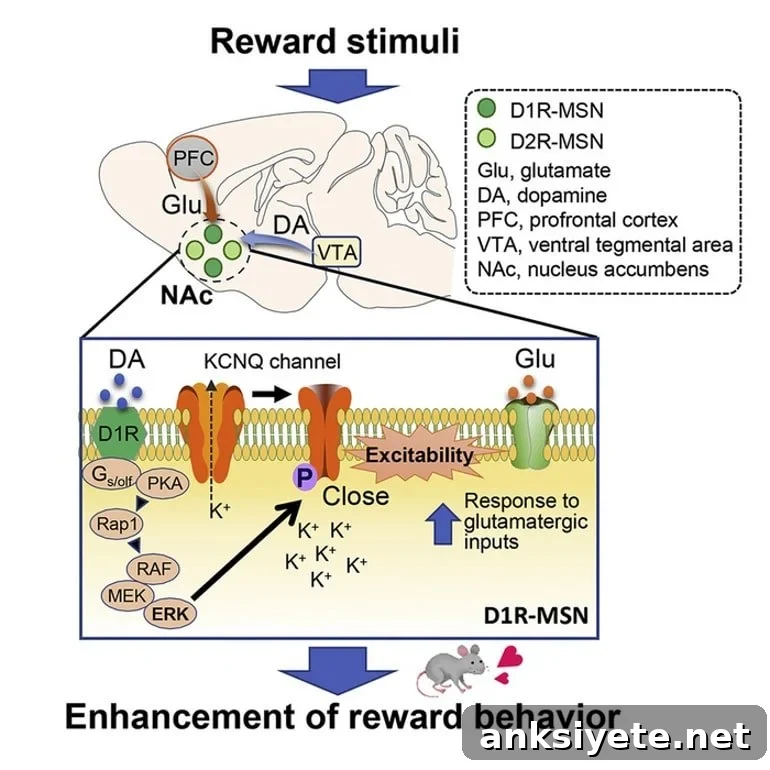
Summary: ERK directly phosphorylates the KCNQ2 potassium channel downstream of dopamine signaling in the nucleus accumbens, altering neuronal excitability and promoting reward-related behavior in mice. Source: Fujita Health University The nucleus accumbens (NAc), a key component of the basal ganglia, is populated largely by medium spiny neurons (MSNs). These MSNs express dopamine D1 and D2 … Read more

Scientists Identify Brain Region That Controls Fullness

featured 80517

Summary: Researchers have identified a specific brain region and a connected neural circuit that help produce the sensation of being full after a meal. Source: University of Arizona Feeling full, or satiated, after eating is a healthy and essential signal, but the exact brain mechanisms that produce that sensation remain incompletely understood. New research led … Read more