
Summary: SARS-CoV-2 remains detectable in aerosols for up to three hours, up to four hours on copper, up to 24 hours on cardboard, and up to two to three days on plastic and stainless steel. These observations indicate that the virus can spread both through airborne particles and via contact with contaminated surfaces.
Source: NIH / NIAID
Stability of SARS-CoV-2 in Air and on Surfaces: Key Findings from NIH, CDC, UCLA and Princeton Researchers
Researchers from the National Institutes of Health, Centers for Disease Control and Prevention, UCLA and Princeton University published a study in The New England Journal of Medicine evaluating how long the virus that causes COVID-19 (SARS-CoV-2) remains infectious in aerosols and on common surfaces. The team measured virus survival under experimental conditions designed to approximate deposition on surfaces from coughing or touching, and in aerosolized form.
The principal findings are:
- SARS-CoV-2 was detectable in aerosols for up to three hours.
- On copper surfaces, the virus was detectable for up to four hours.
- On cardboard, the virus was detectable for up to 24 hours.
- On plastic and stainless-steel surfaces, the virus was detectable for two to three days.
These results offer practical information about the environmental stability of SARS-CoV-2 and support the possibility that transmission can occur both through airborne particles and by touching contaminated objects and then touching the face. The authors originally shared their data on a preprint server to enable rapid review by the scientific community before formal publication.
Comparison with SARS-CoV-1
The study compared environmental stability of SARS-CoV-2 with that of SARS-CoV-1, the coronavirus responsible for the 2002–2003 SARS outbreak. Both viruses showed similar stability profiles in aerosols and on surfaces. This similarity in environmental persistence does not explain why SARS-CoV-2 has caused a much larger and more sustained global outbreak. The researchers note a likely contributing factor: people infected with SARS-CoV-2 appear to be able to shed and transmit the virus before they develop symptoms, or while experiencing only mild symptoms, which makes containment more difficult than it was for SARS-CoV-1.
Another important distinction is the setting of transmission. For SARS-CoV-1, many secondary infections were linked to healthcare settings where case detection and isolation were effective in stopping spread. For SARS-CoV-2, a substantial portion of transmission is occurring within community settings in addition to healthcare environments, and the virus’s persistence on surfaces likely contributes to spread in hospitals as well.
Experimental Methods (Summary)
To mimic realistic exposure, the investigators generated aerosols smaller than 5 micrometers using a three-jet Collison nebulizer and maintained them in a Goldberg drum to study airborne stability. They tested two virus strains: SARS-CoV-2 nCoV-WA1-2020 and SARS-CoV-1 Tor2. The starting inocula used in the experiments produced cycle-threshold values similar to those observed in clinical specimens from infected patients. The team estimated virus decay rates using a Bayesian regression model to quantify how rapidly infectious virus titers declined over time in each condition.
Practical Implications and Recommendations
The study’s findings reinforce public health guidance designed to reduce transmission of respiratory viruses, including SARS-CoV-2. Practical precautions include:
- Avoid close contact with people who are sick.
- Avoid touching your eyes, nose, and mouth with unwashed hands.
- Stay home when you are ill to limit spread to others.
- Cover coughs and sneezes with a tissue or your elbow; dispose of tissues promptly and wash hands.
- Clean and disinfect frequently touched objects and surfaces regularly using standard household cleaning products.
Source: NIH / NIAID
Media Contact: Ken Pekoc – NIH/NIAID
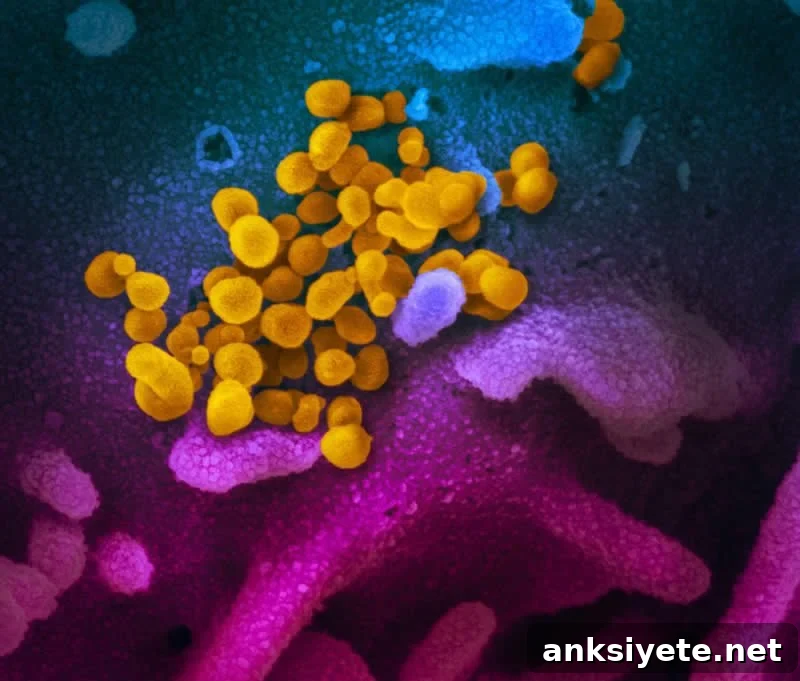
Image credit: NIAID Rocky Mountain Laboratories (NIAID RML)
Original Research Citation
Title: “Aerosol and surface stability of HCoV-19 (SARS-CoV-2) compared to SARS-CoV-1”
Authors: N. van Doremalen, et al.
Published in: The New England Journal of Medicine.
DOI: 10.1056/NEJMc2004973
Abstract (Condensed)
A novel human coronavirus, now named severe acute respiratory syndrome coronavirus 2 (SARS-CoV-2), emerged in Wuhan, China, in late 2019 and has since become a global pandemic. The researchers analyzed aerosol and surface stability of SARS-CoV-2 and compared it with SARS-CoV-1. Using controlled aerosol generation and surface inoculation, they measured infectious virus over time and modeled decay rates. The results quantify how long the viruses remain viable in air and on common materials, providing data that inform infection prevention strategies in both community and healthcare settings.