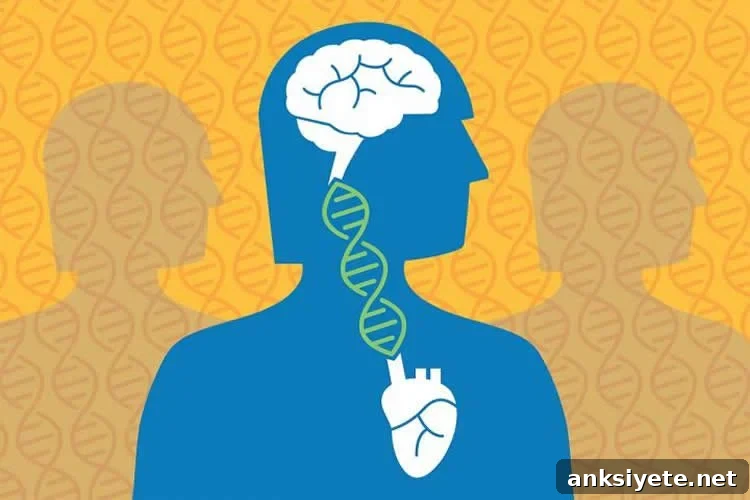
Genetic Link Between Alzheimer’s and Heart Disease
featured 52360

Summary: Researchers have identified specific points on chromosome 11 and other genomic regions that increase risks for both cardiovascular disease and Alzheimer’s disease. The study suggests that managing cholesterol and triglyceride levels could help reduce Alzheimer’s risk in some people. Source: WUSTL Overview Analyzing DNA from more than 1.5 million people, an international team led … Read more

Uncommon Gut Bacteria May Be Linked to Restless Legs Syndrome

featured 56932

Summary: A small preliminary study suggests a possible link between small intestinal bacterial overgrowth (SIBO) and restless legs syndrome (RLS). Source: American Academy of Sleep Medicine Small intestinal bacterial overgrowth (SIBO) may be more common in people with restless legs syndrome (RLS), according to preliminary results from a small observational study. The study found SIBO … Read more

Stem Cell Therapy Could Restore Vision in Macular Degeneration

featured 92442

Summary: Researchers have developed a new technique to produce photoreceptor progenitor cells that closely resemble those found in human embryos. When transplanted into damaged retinas in preclinical models, these cells can restore retinal function and improve vision, offering a promising avenue for treating blinding conditions such as age-related macular degeneration and retinitis pigmentosa. Source: Duke-NUS … Read more

Scientists Identify Brain Region That Encodes New Memories

featured 22706

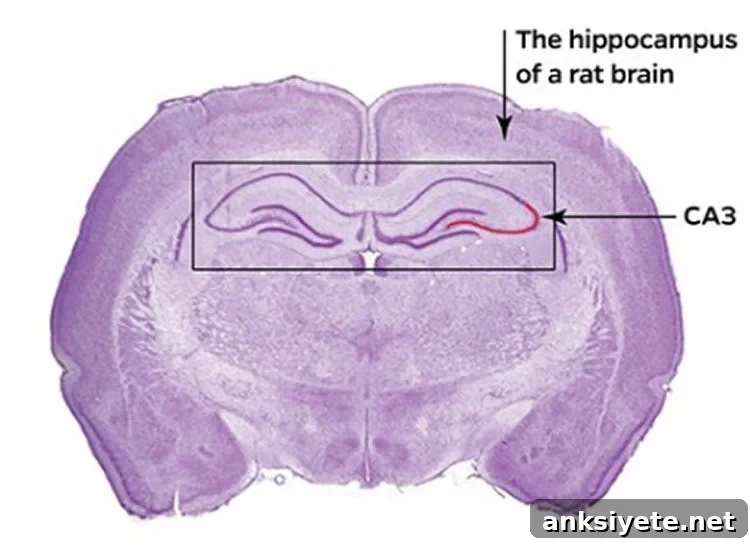
Two parts of the hippocampus work together to decide whether a stimulus is entirely new or a variant of something familiar. You spot a man in the grocery store and pause: is that the college friend you haven’t seen in years, or merely someone who looks like him? Neuroscientists at Johns Hopkins University have pinpointed … Read more

Meal Timing Impacts Circadian Rhythms and Metabolism

featured 66806

Summary: Both food timing and the integrity of the liver’s internal clock change metabolic rhythms in mice. Nearly half of the genes that cycle across the day are influenced by both the liver clock and when food is eaten. Source: University of Pennsylvania Every cell in the body carries its own roughly 24-hour circadian clock, … Read more

How Exercise Improves Memory and Focus During Sleep Deprivation

featured 98513

Summary: New research shows that a brief session of moderate exercise can improve cognitive performance (CP), even when people are sleep deprived or exposed to low oxygen (hypoxia). Researchers ran two controlled experiments with a total of 24 healthy participants to examine how partial and total sleep deprivation, and reduced oxygen levels, affect cognitive functions. … Read more

How Insomnia Keeps Your Brain in Daytime Mode

featured 114161

Summary: People with chronic insomnia display a delayed and weakened daily rhythm of mental activity, leaving the brain in a more alert, daytime-like state during the night. In tightly controlled laboratory conditions, individuals with insomnia did not show the normal nighttime decrease in goal-directed thinking observed in healthy sleepers. Their peak cognitive activity was shifted … Read more

Climate Change Could Cut Global Life Expectancy by 6 Months

featured 99529

Summary: New research indicates that climate change could shorten the average human lifespan by roughly six months. The study assessed temperature, rainfall, and life expectancy across 191 countries over the period 1940–2020, and introduced a composite climate change index to capture the combined effects of temperature and precipitation changes. The author developed a novel composite … Read more

Study: Young Blood Reverses Retinal Aging and Restores Vision

featured 111804

Summary: Researchers have shown that circulating factors from young mice can rejuvenate the aged retina by reducing cellular senescence, lowering inflammation, and restoring mitochondrial function. Using heterochronic parabiosis and single-cell RNA sequencing, the study highlights adiponectin receptor 1 (AdipoR1) and its downstream AMPK signaling pathway as central mediators of retinal rejuvenation. Pharmacological activation of AdipoR1 … Read more

Do Humans Have an Innate Biological Blueprint for Music?

featured 115390

Summary: For decades music was often treated as a cultural invention or luxury of human civilization. New interdisciplinary research now argues that humans are fundamentally musical animals: our capacity for music arises from biological foundations rather than solely from culture. This synthesis, drawing on two decades of research, presents evidence that musicality — the innate … Read more